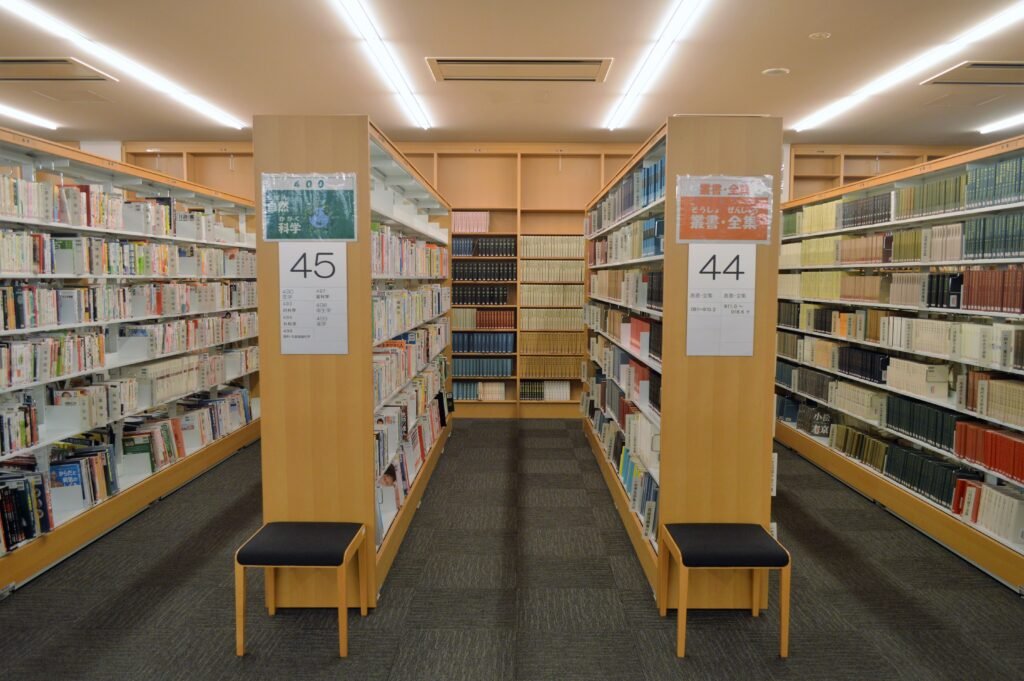
The Dewey Decimal Classification is a numeric system for organizing library materials by subject, dividing all knowledge into ten broad main classes represented by the numbers 000 through 999, with each class further subdivided through additional digits and decimal points to represent increasingly specific topics.
Developed by Melvil Dewey and first published in 1876, the system assigns every subject area a place within one of the ten main classes, such as 500 for natural sciences and mathematics or 800 for literature, and then narrows further through subclasses, so that a specific work on astronomy might receive a number like 520, while a narrower topic within astronomy receives additional decimal digits. This hierarchical numeric structure lets items on similar topics sit near one another on the shelf regardless of which specific number they ultimately receive.
Structure and Notation
Each of the ten main classes is divided into ten divisions, and each division into ten sections, creating a logical hierarchy that in principle can be extended indefinitely through additional decimal digits for ever more specific subjects. A classifier assigns a call number by consulting published schedules and tables that map subjects to their corresponding numbers, often combining the classification number with additional notation representing the author or title to create a complete, unique shelf location.
Adoption and Maintenance
The Dewey Decimal Classification is used by a large majority of public and school libraries, particularly in the United States and many other countries, though academic and research libraries more often use the Library of Congress Classification instead. The system is maintained and periodically revised by OCLC, a library cooperative, which issues updated editions to accommodate new and changing subject areas as human knowledge evolves.
Limitations
Critics have noted that the system original structure reflects the cultural assumptions and subject priorities of its late nineteenth-century creation, sometimes allocating disproportionate space to topics important at that time while underrepresenting newer fields or non-Western subject matter, prompting ongoing revision efforts to address these structural imbalances.
Economic Considerations
Libraries using the Dewey Decimal Classification typically pay licensing or subscription fees to OCLC for access to current classification schedules and related cataloging tools, an ongoing cost that smaller libraries must budget for alongside their general collection development expenses. Reclassifying an existing collection to a newer edition of the schedules, when numbers change significantly, can also represent a substantial one-time labor cost.
International Perspectives
The Dewey Decimal Classification has been translated and adapted for use in many countries beyond the United States, though some national library communities have developed or favor their own classification systems better suited to local subject priorities, language structures, or collection emphases not well served by a system originally designed for a particular cultural and historical context.
Looking Ahead
Ongoing revisions to the Dewey Decimal Classification continue to address underrepresented or rapidly growing subject areas, reflecting broader efforts across the library classification community to keep long-established schemes relevant as the overall shape of human knowledge and publishing output continues to shift over time.
Practical Guidance
Library staff assigning Dewey numbers are generally advised to consult the full published schedules and relative index rather than relying on memory or approximation, since subtle distinctions between closely related numbers can significantly affect where an item ultimately sits relative to similar material, and inconsistent assignment undermines the systematic browsing experience the scheme is meant to provide.
Related Specialties
Working effectively with the Dewey Decimal Classification draws on cataloging and classification training, often supplemented by subject expertise in particularly complex areas such as law or technology, where correctly interpreting the nuances of a work content requires more than mechanical application of the published schedules alone.
Relationship to Subject Access
The Dewey Decimal Classification determines only the physical shelf position of an item, assigning each work a single primary location even though many works genuinely touch on more than one subject. Libraries address this limitation by supplementing Dewey numbers with subject headings in the catalog, which can describe a work multiple topical dimensions regardless of its single assigned shelf position, giving patrons more complete subject access than shelf browsing alone could ever provide.
This division of labor between classification and subject headings reflects a broader pattern found across nearly every library cataloging system, where the practical need for one physical shelf location coexists with the reality that intellectual content often resists being reduced to a single category.
Training and Staff Expertise
New catalogers typically require substantial training and supervised practice before they can reliably assign Dewey numbers to complex or ambiguous items, since the published schedules, while detailed, still require judgment calls about which of several plausible numbers best represents a given work primary focus.
Ongoing professional development, including workshops and certification offered through library associations, helps catalogers stay current as new editions of the schedules are released and as the subject landscape they must represent continues to shift.
Digital Collections and Classification
Even as libraries increasingly manage born-digital and electronic resources, many still apply Dewey numbers to these items within their catalog records, extending the familiar organizing logic of physical classification into digital discovery interfaces even though the items themselves have no physical shelf location requiring a printed label.
This extension of a physical-world organizing principle into purely digital contexts illustrates how deeply embedded classification logic has become in how library patrons expect to browse and discover material, regardless of format.
Patrons who understand the basic logic of the ten main classes often find they can orient themselves quickly in any Dewey-organized library, even one they are visiting for the very first time.
Key facts
- Array
Quick checkHow many main classes does the Dewey Decimal Classification divide knowledge into?Show answer
The Dewey Decimal Classification divides all knowledge into ten main classes numbered 000 through 999, with each class further subdivided by additional digits and decimals for more specific topics.
Sources
- Array
Editorially reviewed by Specialty Digest Editorial TeamLast reviewed November 3, 2026Researched and drafted with AI assistanceReport an issue