What Maritime Shipping Covers
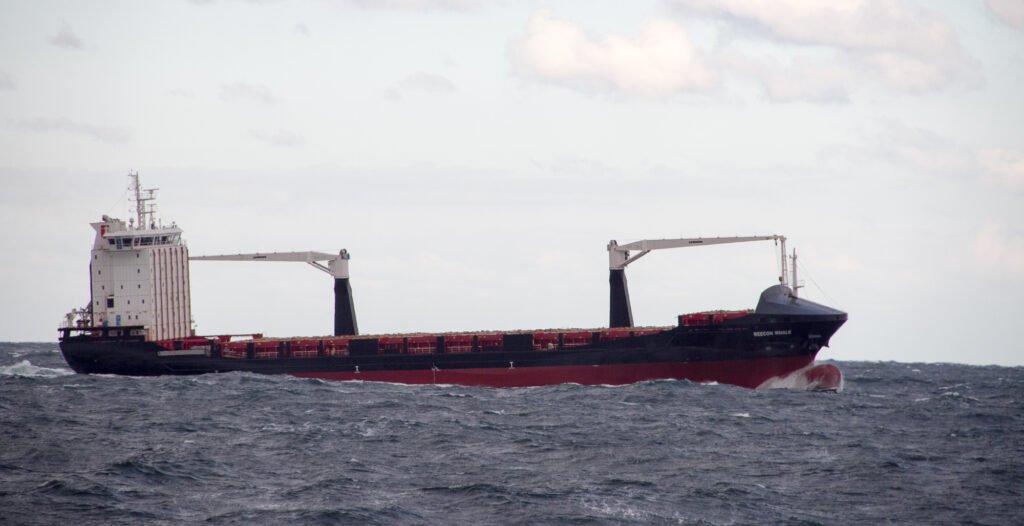
Maritime shipping is the movement of goods and passengers across oceans, seas, and other navigable waterways. It carries the overwhelming majority of world trade by volume, since ships can transport far larger quantities of cargo at a much lower cost per unit than trucks, trains, or aircraft, making sea transport the backbone of global commerce.
Major Shipping Segments
The industry divides broadly into container shipping, which carries general manufactured goods in standardized containers on fixed liner schedules; bulk shipping, which moves raw commodities such as grain, coal, and ore; tanker shipping, which carries crude oil, refined fuels, and liquid chemicals; and specialized shipping for cargo such as vehicles, livestock, or heavy industrial equipment that does not fit standard vessel types.
International Regulation of Shipping
Maritime shipping operates under international conventions coordinated through the International Maritime Organization, a United Nations agency that sets global standards for vessel safety, pollution prevention, and crew training. Because ships regularly cross between the jurisdictions of different countries, this international coordination is essential for consistent safety and environmental standards across the industry.
Economic Importance of Shipping
Maritime shipping costs represent a relatively small share of the final price of most traded goods, which is one reason global supply chains have been able to source components and finished products from distant countries so extensively. Shipping rates fluctuate with global trade volume and available vessel capacity, making freight rates a closely watched indicator of global economic activity.
Shipping Lines and Liner Service
Container shipping lines typically operate on fixed liner schedules, publishing regular sailing dates between specific ports much like an airline publishes a flight schedule, allowing shippers to plan around predictable transit times even though any individual voyage may experience some delay due to weather, port congestion, or mechanical issues.
Vessel Size and Economies of Scale
Shipping lines have steadily increased vessel sizes over decades to capture economies of scale, since larger ships can carry significantly more cargo per crew member and per unit of fuel consumed, though this trend has also required continuous port infrastructure investment to accommodate deeper drafts and handle larger cargo volumes per vessel call.
Environmental Regulation of Shipping
Maritime shipping faces growing environmental regulation, including limits on sulfur emissions from ship fuel and increasing attention to greenhouse gas emissions, prompting the industry to explore alternative fuels, slower steaming speeds, and more efficient hull designs to meet tightening international environmental standards.
Shipping Alliances
Major container shipping lines frequently form alliances, sharing vessel capacity and coordinating schedules across combined networks rather than each operating entirely independent services, allowing smaller individual carriers to offer broader route coverage than they could sustain alone while still competing commercially against other alliances for cargo bookings.
Charter Markets in Shipping
Beyond operating their own vessels, shipping companies also participate actively in charter markets, leasing vessels for specific periods or voyages rather than owning every ship they operate, a flexible capacity model that allows shipping lines to scale their operated fleet up or down in response to shifting trade volumes without the full capital commitment of vessel ownership.
Piracy and Maritime Security
Certain shipping routes have historically faced significant piracy risk, prompting naval patrols, onboard security measures, and route adjustments by shipping lines operating through affected waters, with international cooperation among naval forces helping substantially reduce piracy incidents in some previously high-risk regions over time.
Classification Societies and Vessel Standards
Classification societies such as DNV, Lloyd’s Register, and the American Bureau of Shipping play a central role in maritime shipping by independently verifying that a vessel’s design, construction, and ongoing maintenance meet published technical standards covering hull strength, machinery, and stability. A ship cannot obtain insurance or trade internationally in practice without a valid class certificate, making these societies a powerful quality gate that operates alongside, and sometimes in tension with, flag state regulation. Class surveys occur at regular intervals throughout a ship’s life, including intermediate and special surveys that require detailed inspection of structural elements, and a vessel that fails to maintain its class can be detained in port or refused cargo insurance. The International Association of Classification Societies coordinates technical standards among the major class societies, helping maintain consistency even though each society remains a separate commercial entity competing for shipowners’ business.
Decarbonization Pressures on the Industry
Maritime shipping has come under growing regulatory pressure to reduce its carbon footprint, since the sector burns heavy fuel oil that has historically been exempt from the fuel taxes and emissions rules applied to road transport. The International Maritime Organization has adopted a strategy targeting net-zero greenhouse gas emissions from shipping by around mid-century, pushing operators toward measures such as slower steaming, hull air lubrication, rotor sails, and a gradual shift toward alternative fuels including methanol, ammonia, and liquefied natural gas. The transition is complicated by the long operating life of ships, often twenty-five years or more, meaning vessels ordered today will still be sailing well past the industry’s near-term emissions targets, and by the absence of widespread refueling infrastructure for most alternative fuels at ports around the world.
Crewing is another area of significant variation across the industry, with flag states and classification societies setting minimum safe manning levels that shipowners must meet, though actual crew sizes on modern automated vessels have fallen substantially compared with ships of a few decades ago.
Insurance arrangements for maritime shipping typically combine hull and machinery coverage with protection and indemnity club membership, the latter providing liability coverage for cargo damage, pollution, and crew injury claims that can otherwise expose an owner to catastrophic financial risk.
Key facts
- Array
In the news
Quick checkWhy does maritime shipping dominate global trade by volume?Show answer
Ships can carry enormous quantities of cargo at a lower cost per unit than any other transportation mode, making sea transport the most economical choice for most international trade.
Sources
- Array
Editorially reviewed by Specialty Digest Editorial TeamLast reviewed November 4, 2026Researched and drafted with AI assistanceReport an issue