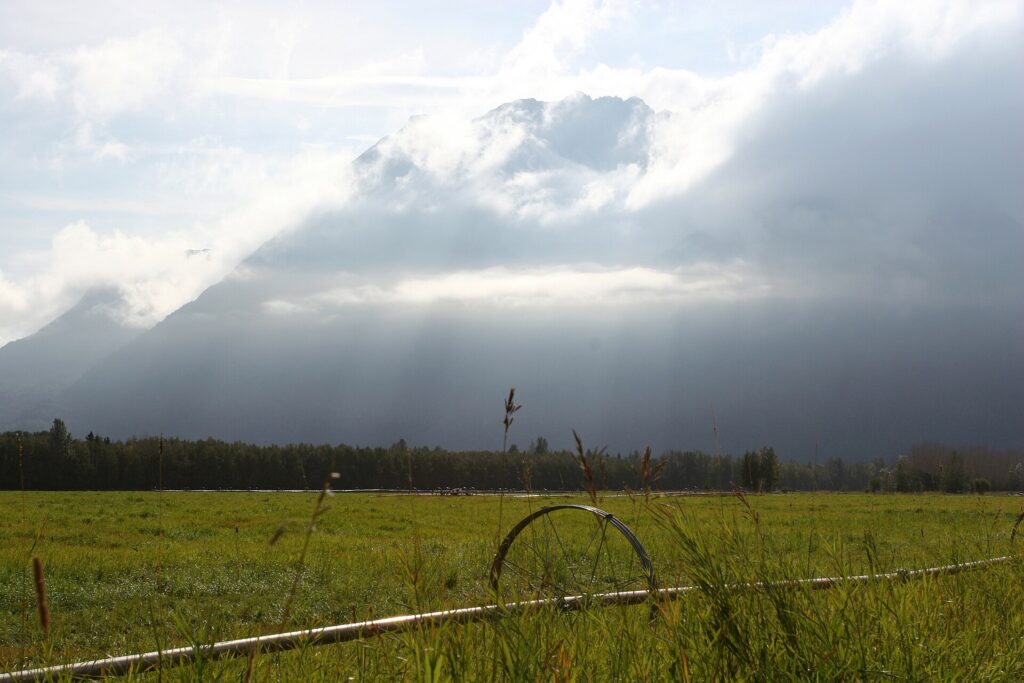
Agriculture in Alaska is small but distinctive: about 500 farms cover roughly 830,000 acres, mostly in the Matanuska Valley northeast of Anchorage. Long summer days produce record-sized vegetables, but a short growing season and generally poor soils limit production.[1]
| Farms (2015) | About 500 |
|---|---|
| Farmland | About 830,000 acres |
| Hay | 20,000 tons |
| Potatoes | 140,000 cwt |
| State soil | Tanana series |
Crops and livestock
Greenhouse and nursery crops, hay, potatoes, barley and oats are the main crops. Milk was the top livestock commodity by value in 2015, followed by eggs and beef. Livestock include cattle, reindeer, bison, yak, chickens, hogs and sheep.[1]
Giant vegetables
Long summer days allow record-sized produce, including a 19-pound carrot, a 76-pound rutabaga and a 127-pound cabbage.[1]
Challenges and soils
Farming faces a harsh climate, a short growing season and generally poor soils. Tundra soils with permafrost at depth are common, and crops are grown mainly on subarctic brown forest soils, which are rich in potassium but low in nitrogen and organic matter.[1]
FAQs
Where is most Alaska farming? In the Matanuska Valley northeast of Anchorage.
Why are Alaska vegetables so large? Long summer daylight allows rapid growth.
What are the main challenges? A short growing season and poor soils.
Sources
Key facts
- About 830,000 acres
- 127-lb cabbage
- Matanuska Valley focus
Quick checkHow many farms in Alaska?Show answer
About 500 (2015).
Sources
- Wikipedia. Agriculture in Alaska. 2026 (accessed 2026-11-12)
Editorially reviewed by Specialty Digest Editorial TeamLast reviewed November 12, 2026Researched and drafted with AI assistanceReport an issue