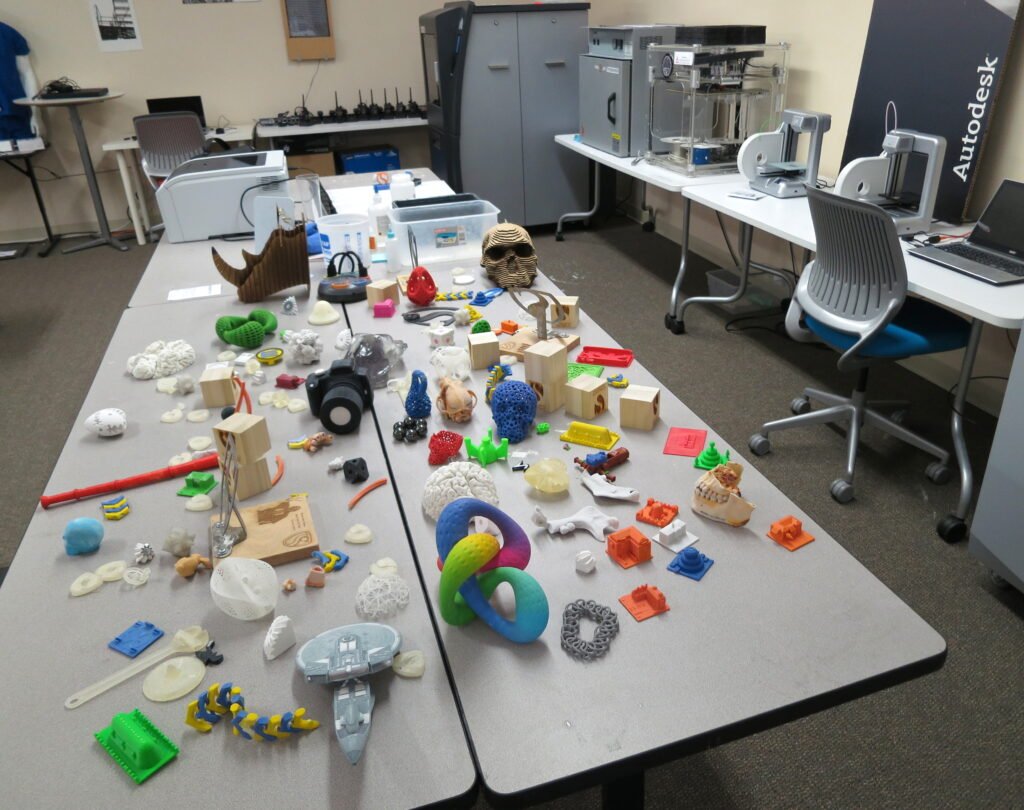
3D printing, also called additive manufacturing, is a family of processes that build a physical object from a digital design by adding material layer by layer. It contrasts with subtractive manufacturing, such as drilling, which makes a part by cutting material away. The technique is used for prototypes, tools and, increasingly, finished parts in medicine,
3D printing Read More »
A set of manufacturing processes that build a physical object from a digital design by adding material layer by layer.
Amazon GuardDuty is a threat detection service within Amazon Web Services that continuously monitors a customer’s AWS accounts and workloads for malicious activity and unauthorized behavior. The service uses artificial intelligence and machine learning, combined with threat intelligence feeds from AWS and third-party security vendors, to flag suspicious activity without requiring a customer to deploy
Amazon GuardDuty Read More »
Amazon GuardDuty is an AWS threat detection service that uses AI and machine learning to monitor cloud accounts for malicious activity.
Augmented reality (AR) is a technology that overlays digital content, such as images, text or three-dimensional models, onto a person’s view of the real world. The U.S. Food and Drug Administration (FDA) describes it as a real-world experience that mixes simulated digital imagery with the physical world as seen through a camera or a display,
Augmented reality Read More »
A technology that overlays digital content onto a live view of the real world through a phone, glasses or headset.
Biometrics is the measurement of physical or behavioral characteristics, such as fingerprints, iris patterns or facial features, to identify an individual. The U.S. National Institute of Standards and Technology (NIST) defines it as the measurement of physiological characteristics that can be used to identify a person. Biometric systems are used to unlock phones, control access
Biometrics Read More »
The measurement of physical or behavioral traits, such as fingerprints, iris patterns or face shape, to identify a person.
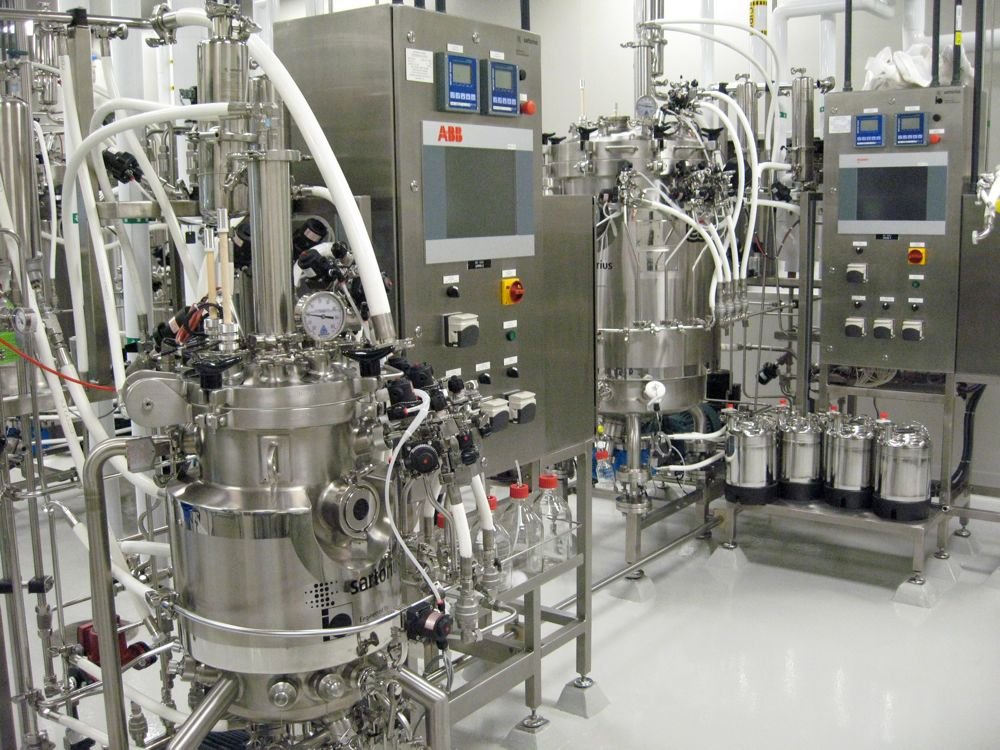
Biotechnology is the use of living organisms, cells or cell components, such as enzymes, to make products or develop new technologies. The journal Nature describes it as a broad discipline in which biological processes, organisms, cells or cellular components are exploited to develop new technologies. It covers old practices such as brewing and bread-making as
Biotechnology Read More »
Biotechnology uses living organisms, cells or cell components to make medicines, crops, foods and materials, and to develop new technologies.
Blockchain is a distributed digital ledger in which records of transactions are grouped into blocks and each block is cryptographically linked to the one before it. Copies of the ledger are kept by many participants, usually without a central authority such as a bank, company or government. The design makes earlier records tamper evident, because
Blockchain Read More »
A distributed digital ledger of transactions grouped into blocks that are cryptographically linked, making earlier records tamper evident.
Bluetooth is a short-range wireless standard that lets nearby devices exchange data and audio by radio, without cables. It works in the 2.4 GHz band, which can be used worldwide without a license, and it is developed and certified by an industry group called the Bluetooth Special Interest Group (SIG). Everyday examples include wireless headphones,
Bluetooth Read More »
A short-range wireless standard that connects nearby devices by radio in the 2.4 GHz band, used for audio, accessories and sensors.
Carbon capture and storage (CCS) is a set of technologies that capture carbon dioxide (CO2) from industrial plants or power stations, move it to a storage site and inject it deep underground so it stays out of the atmosphere. It targets emissions from sources such as fossil-fuel power plants, cement kilns, steel mills and gas
Carbon capture and storage Read More »
A set of technologies that capture carbon dioxide from industrial sources and inject it deep underground so it stays out of the atmosphere.
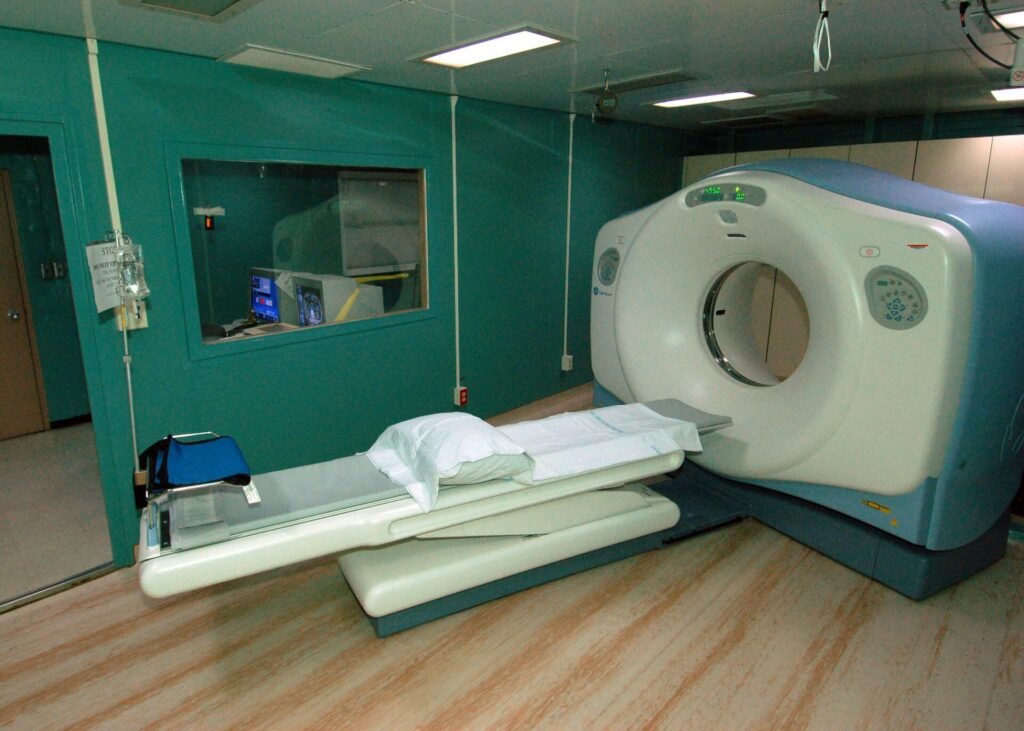
Computed tomography, or CT, is a medical imaging technique that uses a rotating X-ray source and a computer to produce cross-sectional pictures of the body. Each image is a thin slice, and slices can be combined into three-dimensional views of organs, bones, blood vessels and other tissues. History of computed tomography CT grew out of
Computed tomography Read More »
Computed tomography uses a rotating X-ray source and a computer to build cross-sectional images, or slices, of the body.
Cryptography is the practice of protecting information with mathematical techniques so that only the intended people can read it, alter it, or confirm where it came from. The U.S. National Institute of Standards and Technology (NIST) describes it as the principles, means and methods that provide information security, including confidentiality, data integrity, authentication and non-repudiation.
Cryptography Read More »
The practice of protecting information with mathematical techniques so only intended parties can read it, change it, or verify its source.