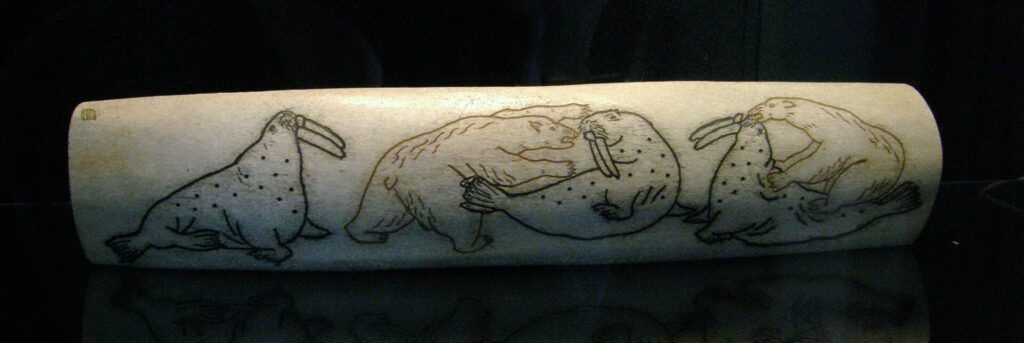
Ivory carving is a long-standing art of the Bering Strait region and Arctic coastal Alaska, where walrus ivory artifacts thousands of years old have been found. Alaska Native carvers continue the tradition today, working walrus tusk and fossil ivory into tools, ornaments and sculptures.[1]
| Region | Bering Strait and Arctic coastal Alaska |
|---|---|
| Materials | Walrus ivory, bone, soapstone |
| Early tools | Bow drills and files |
| Commercial buying | Alaska Commercial Company, 1870s |
| Walrus population | Hundreds of thousands to about 50,000 by the 1950s |
| Fossil ivory colours | Creamy white to chestnut brown |
Ancient roots
Walrus ivory artifacts thousands of years old have been found across the Bering Strait region. Before European contact, carvers used bone, soapstone and walrus ivory, with ivory more durable than wood and easier to work than stone. Early items included ancestral images, amulets, needle cases, harpoons, snow goggles, fishing lures, arrow straighteners and combs, with soot or red clay rubbed into grooves to highlight designs.[1]
Change after contact
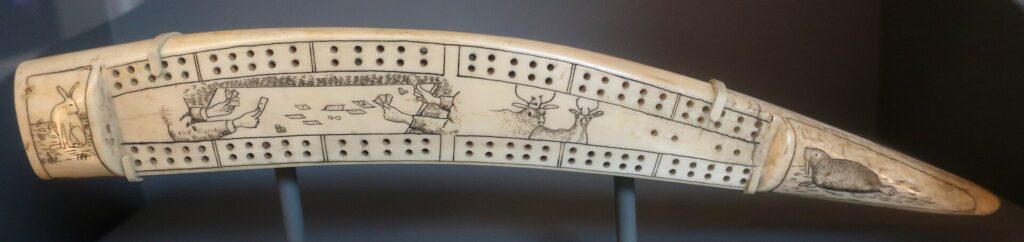
In the late 19th century, demand from sailors, traders, miners and missionaries shifted subjects toward scenes of daily life, scrimshaw, pipes, letter openers and souvenirs. Carving became a cash enterprise in places such as Saint Michael, Teller and Nunivak Island, and the Alaska Commercial Company bought tusks in the 1870s. Commercial harvesting reduced Arctic walrus populations from hundreds of thousands to about 50,000 by the 1950s.[1]
Techniques and materials today
Carvers historically used bow drills and files, and today many use dental or electric tools and markers for fine lines. Fossil ivory, dug from thawing ground and beaches, ranges from creamy white to chestnut brown from mineral staining and polishes without a finish.[1]
Market
Carvers make statuettes and skulls, some with baleen inlays, that can cost thousands of dollars. Buyer confusion between legal walrus ivory and illegal elephant ivory has reportedly cut some artists’ sales by 40 percent, and mass-produced fakes from elephant tusks also circulate.[1]
FAQs
What is ivory carving in Alaska? The art of carving walrus and fossil ivory by Alaska Native artists.
What is fossil ivory? Walrus teeth dug from thawing ground and beaches.
What did early carvers make? Amulets, harpoons, needle cases, combs and more.
Sources
Key facts
- Thousands of years old
- Fossil ivory polishes without finish
Quick checkWhat is fossil ivory?Show answer
Walrus teeth found in thawing ground and on beaches
Sources
- Arctic Relations. Working the Ocean’s White Gold: A Living Bering Strait Tradition. 2026 (accessed 2026-11-14)
Editorially reviewed by Specialty Digest Editorial TeamLast reviewed November 14, 2026Researched and drafted with AI assistanceReport an issue