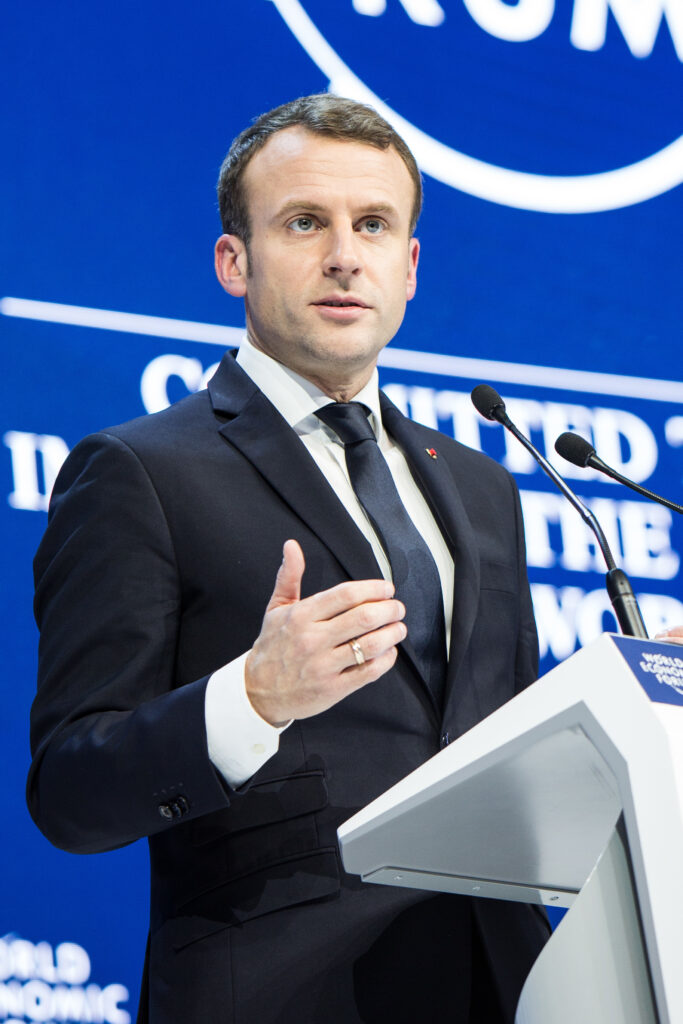
Emmanuel Macron (born 1977) is a French politician who has served as President of France since 2017, becoming the youngest person to hold the office in the country’s modern history. A former investment banker and economy minister, his presidency has been marked by significant economic reforms, a reshaping of France’s traditional political party system, and an active role in European Union affairs.
Emmanuel Macron at a Glance
| Full name | Emmanuel Jean-Michel Frederic Macron |
| Born | December 21, 1977, Amiens, France |
| Known for | President of France since 2017; founding of the En Marche political movement; economic and labor reforms |
| Occupation | Politician, former investment banker and civil servant |
| Major events | Appointment as Minister of the Economy in 2014; founding of En Marche in 2016; election as President in 2017; re-election in 2022 |
| Nationality | French |
Early Life and Education
Macron was born in Amiens, France, to a family of physicians, and showed early academic promise, studying philosophy at Paris Nanterre University before attending the prestigious Sciences Po and the Ecole Nationale d’Administration, institutions that have historically produced many of France’s political and administrative leaders. His education provided a foundation in both philosophical reasoning and public administration that would later shape his political approach.
Career Before Politics
Macron began his career as a civil servant in the French finance inspectorate before moving into the private sector as an investment banker at Rothschild & Co, where he worked on major corporate transactions and built substantial financial expertise. This background in both public administration and private finance distinguished him from many traditional French political figures and later informed his economically liberal policy positions.
Entry into Government
Macron entered government service as a deputy secretary-general in the office of President Francois Hollande before being appointed Minister of the Economy, Industry, and Digital Affairs in 2014, a position in which he pursued business-friendly economic reforms. His tenure as economy minister included a controversial labor law reform, sometimes referred to as the “Macron Law,” that aimed to modernize French business regulations.
Founding of En Marche
Macron resigned from the Hollande government in 2016 to found his own political movement, En Marche, positioning it as a centrist alternative to France’s traditional left-right political divide. This independent political project, launched without the backing of an established party, represented an unconventional path to the presidency within French politics.
Becoming President
Macron won the 2017 French presidential election, defeating far-right candidate Marine Le Pen in the runoff and becoming, at 39 years old, the youngest president in the history of the French Fifth Republic. His election was followed by his movement, renamed La Republique En Marche, winning a legislative majority that allowed him to pursue his reform agenda with substantial parliamentary support.
Economic and Labor Reforms
Macron’s government pursued significant changes to French labor law, pension systems, and taxation intended to increase economic competitiveness and reduce structural unemployment. These reforms, including a contentious increase to the retirement age, generated substantial public opposition and large-scale protests, reflecting the politically difficult nature of structural economic change in France.
The Yellow Vest Protests
Beginning in late 2018, Macron’s government faced sustained nationwide protests known as the Yellow Vest movement, initially triggered by a proposed fuel tax increase but which expanded into broader demonstrations over economic inequality and living standards. The protests, among the most significant social unrest of his presidency, led the government to abandon the fuel tax and launch a national public consultation process.
Re-election and Second Term
Macron won re-election in the 2022 presidential election, again defeating Marine Le Pen in the runoff, becoming the first French president to win re-election in two decades. His second term, however, saw his party lose its outright parliamentary majority, requiring him to govern through coalition negotiations and complicating his ability to pass legislation.
European Union Leadership
Macron positioned himself as one of the European Union’s most prominent advocates for deeper European integration, pursuing a vision of expanded EU strategic autonomy in defense, technology, and economic policy. His government hosted and participated in numerous EU summits and initiatives, and he frequently articulated ambitious proposals for European institutional reform during his tenure.
Foreign Policy and International Relations
Macron pursued an active foreign policy throughout his presidency, engaging extensively with world leaders on issues including the war in Ukraine, relations with Africa’s former French colonies, and transatlantic ties with the United States. His government provided significant military and diplomatic support to Ukraine following Russia’s 2022 invasion, positioning France among the more active Western supporters of Ukrainian sovereignty.
Pension Reform Controversy
Macron’s government pursued a major pension reform in 2023 that raised the retirement age from 62 to 64, a policy that triggered months of nationwide strikes and protests among French workers and unions. The government ultimately used special constitutional powers to pass the legislation without a full parliamentary vote, a decision that generated significant political controversy over democratic process.
Digital and Technology Policy
Macron’s government pursued initiatives aimed at positioning France as a leading European hub for technology investment and innovation, including efforts to attract international startups and venture capital through regulatory and tax incentives. His administration also engaged with broader European debates over digital regulation, data privacy, and artificial intelligence governance throughout his presidency.
Immigration and Security Policy
Macron’s government navigated ongoing national debates over immigration policy and domestic security, pursuing legislation intended to tighten asylum procedures while facing criticism from both political opponents who viewed the measures as insufficient and civil society groups who viewed them as overly restrictive. His administration also responded to several terrorist attacks during his tenure, implementing enhanced security measures and counterterrorism initiatives.
Legacy
Emmanuel Macron remains a significant figure in contemporary European politics, remembered for his unconventional rise to the presidency, his economic reform agenda, and his advocacy for European integration during a period of global geopolitical instability. His tenure has left a substantial and still-evolving imprint on French domestic politics and the European Union’s institutional development, and his record continues to be studied and debated by historians and political analysts.
References
- New World Encyclopedia – Emmanuel Macron
- History.com – Emmanuel Macron
- History.com – Emmanuel Macron (France)
Frequently Asked Questions
What is Emmanuel Macron best known for? He is best known as President of France since 2017, for founding the centrist En Marche political movement, and for pursuing significant economic and labor reforms.
What did Macron do before becoming president? He worked as an investment banker at Rothschild & Co and later served as France’s Minister of the Economy before founding his own political movement.
What were the Yellow Vest protests? They were a series of nationwide demonstrations that began in late 2018, initially sparked by a proposed fuel tax increase, that expanded into broader protests over economic inequality.
Did Macron win re-election? Yes, he won re-election in 2022, defeating Marine Le Pen again in the runoff and becoming the first French president to win re-election in two decades.
Editorially reviewed by Specialty Digest Editorial TeamLast reviewed November 29, 2026Researched and drafted with AI assistanceReport an issue