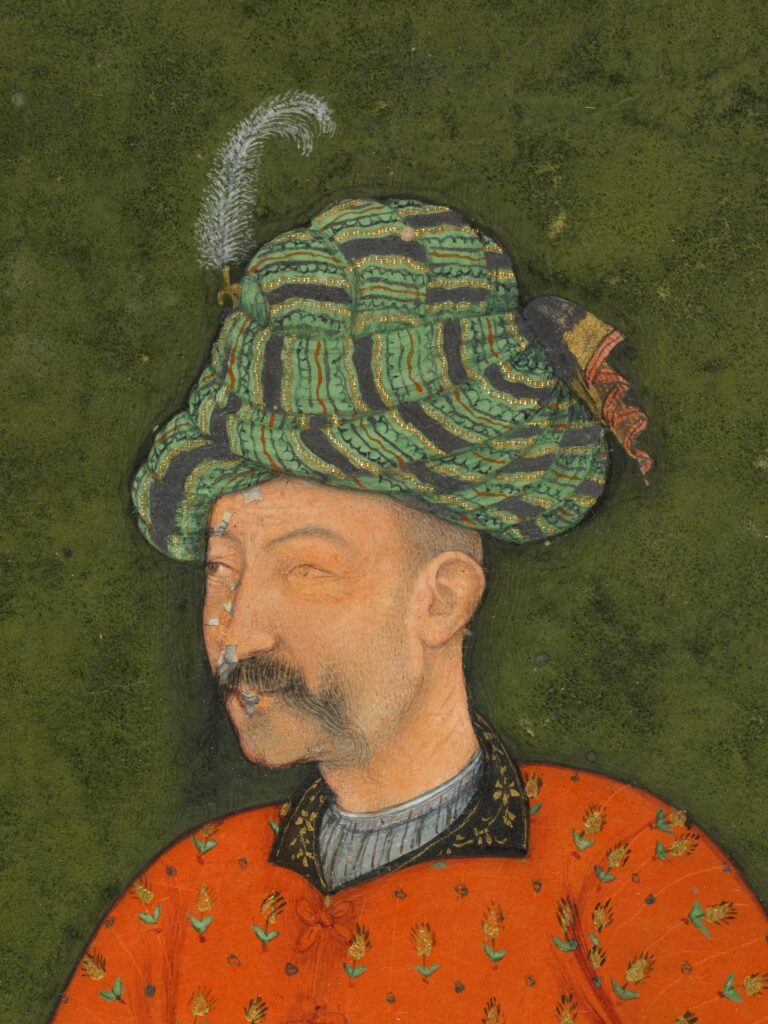
Shah Abbas the Great (1571-1629) was the fifth Safavid Shah of Iran, ruling from 1588 until his death in 1629, a reign widely regarded as the peak of Safavid power and cultural achievement. Known for his military reforms, territorial reconquests, and extensive patronage of architecture and the arts, Abbas I transformed Iran into a major political and cultural power in the early modern world.
Shah Abbas the Great at a Glance
| Full name | Abbas I of Persia |
| Born | January 27, 1571, Herat |
| Died | January 19, 1629, Mazandaran, Iran |
| Known for | Shah of Safavid Iran 1588-1629; military reforms; patronage of Isfahan’s architecture |
| Occupation | Monarch |
| Major events | Accession in 1588; Ottoman-Safavid War 1603-1618; relocation of capital to Isfahan |
| Nationality | Persian (Safavid Iran) |
Early Life and Accession
Abbas was born in the city of Herat, part of the Safavid realm, during a turbulent period marked by internal power struggles and external threats from the neighboring Ottoman and Uzbek empires. He came to the throne in 1588 at the age of sixteen following a palace revolt against his father, Shah Mohammad Khodabanda, inheriting a kingdom weakened by decades of factional conflict and territorial losses.
Military and Administrative Reforms
Recognizing the need to modernize Safavid military capability, Abbas restructured the army by reducing dependence on tribal cavalry forces and establishing a standing army loyal directly to the shah, modeled in part on contemporary European military organization. These reforms, which included the introduction of artillery units and a corps of soldiers recruited from Caucasian slave populations known as ghulams, significantly strengthened central royal authority and reduced the political power of rival tribal factions.
Reconquest of Lost Territories
Abbas launched a series of successful military campaigns to recover territories lost to the Ottoman Empire and the Uzbeks during the preceding decades of Safavid weakness, including the recapture of key cities such as Herat, Mashhad, and Tabriz. His victories in the prolonged Ottoman-Safavid War, which concluded with favorable terms in 1618, restored much of the territorial extent that Iran had possessed earlier in the Safavid era.
Relocation of the Capital to Isfahan
In 1598, Abbas moved the Safavid capital from Qazvin to Isfahan, a city he transformed into one of the most magnificent urban centers of the early modern world through an ambitious program of architectural development. The new capital featured the vast Naqsh-e Jahan Square, surrounded by the Shah Mosque, the Ali Qapu Palace, and the Sheikh Lotfollah Mosque, structures that remain among the most celebrated examples of Persian Islamic architecture.
Economic Development
Abbas actively promoted trade and economic development throughout his reign, encouraging the silk trade and establishing commercial relationships with European powers, including England and the Netherlands, through their respective East India companies. He also resettled Armenian merchants in a new district of Isfahan called New Julfa, leveraging their extensive trading networks to expand Iran’s commercial reach into Europe and Asia.
Diplomatic Relations
Abbas pursued active diplomatic engagement with European powers, sending numerous embassies abroad and receiving foreign envoys at his court, motivated in part by a shared interest in containing Ottoman power. These diplomatic initiatives, which included correspondence with rulers such as Queen Elizabeth I of England and various European monarchs, reflected Abbas’s sophisticated understanding of international politics and his desire to position Safavid Iran within a broader diplomatic and commercial network.
Religious Policy
Abbas continued the Safavid tradition of promoting Shia Islam as the state religion while generally maintaining a degree of pragmatic tolerance toward religious minorities, including Armenian Christians and other groups whose economic contributions he valued. This pragmatic approach to religious minorities, particularly evident in his treatment of the Armenian merchant community in New Julfa, supported his broader goals of economic development and international trade.
Patronage of the Arts
Abbas was a significant patron of Persian art, architecture, and literature, overseeing a flourishing of miniature painting, carpet weaving, and calligraphy that became known as part of the broader cultural achievement of his reign. The artistic and architectural output of this period, centered in Isfahan, established aesthetic standards that influenced Persian art for generations and remain celebrated as a high point of Safavid cultural production.
Relations with Succession
Abbas’s later years were marked by concerns over succession, and his relationship with his sons became strained as he grew increasingly wary of potential threats to his throne, leading him to restrict the movement and political roles of his heirs. This cautious approach to succession, while preserving Abbas’s own authority throughout his reign, contributed to challenges that affected the stability of Safavid rule in the years following his death.
Later Reign and Death
In his final years, Abbas continued to oversee the administration of an empire that had been thoroughly transformed by his military, economic, and architectural initiatives, even as questions of succession remained unresolved. He died in 1629 and was succeeded by his grandson Safi, who inherited a strengthened and culturally flourishing Safavid state but faced the challenge of governing without the direct mentorship his grandfather had withheld from potential heirs.
Infrastructure and Public Works
Beyond the monumental architecture of Isfahan, Abbas sponsored an extensive program of infrastructure development throughout his realm, including the construction of caravanserais, bridges, and roads designed to facilitate trade and troop movement across his territories. The famous Allahverdi Khan Bridge, also known as Si-o-se-pol, which spans the Zayandeh River in Isfahan with its distinctive double-tiered arcade of arches, exemplifies the engineering ambition that characterized public works throughout his reign.
Relations with Shia Religious Institutions
Abbas cultivated close relationships with Shia religious institutions and personally undertook pilgrimages to important shrine cities, including a notable journey on foot to the shrine of Imam Reza in Mashhad as an act of religious devotion. These demonstrations of piety reinforced his legitimacy as a Safavid ruler whose dynasty had originally risen to power through religious and military leadership, helping to secure the loyalty of the clergy and religious establishment throughout his reign.
Legacy
Shah Abbas the Great remains one of the most celebrated rulers in Iranian history, remembered for reversing decades of Safavid decline and establishing Isfahan as one of the great cities of the early modern world. His military reforms, economic policies, and architectural patronage left an enduring legacy that historians consistently identify as the high point of Safavid civilization, and the monuments he commissioned in Isfahan remain among Iran’s most treasured cultural landmarks today.
References
- New World Encyclopedia – Abbas the Great
- History.com – Shah Abbas
- History.com – Abbas the Great (Iran)
Frequently Asked Questions
What is Shah Abbas the Great best known for? He is best known for reversing Safavid decline through military reforms and territorial reconquests, and for transforming Isfahan into a magnificent architectural and cultural capital.
Why did Shah Abbas move the Safavid capital to Isfahan? He relocated the capital from Qazvin to Isfahan in 1598 and developed it into a major center of Persian architecture, commerce, and culture.
What military reforms did Shah Abbas introduce? He restructured the Safavid army by reducing reliance on tribal cavalry and creating a standing army, including artillery units and soldiers loyal directly to the shah.
How did Shah Abbas promote trade in Safavid Iran? He encouraged the silk trade, established commercial ties with European powers, and resettled Armenian merchants in Isfahan to expand Iran’s trading networks.
Editorially reviewed by Specialty Digest Editorial TeamLast reviewed November 29, 2026Researched and drafted with AI assistanceReport an issue