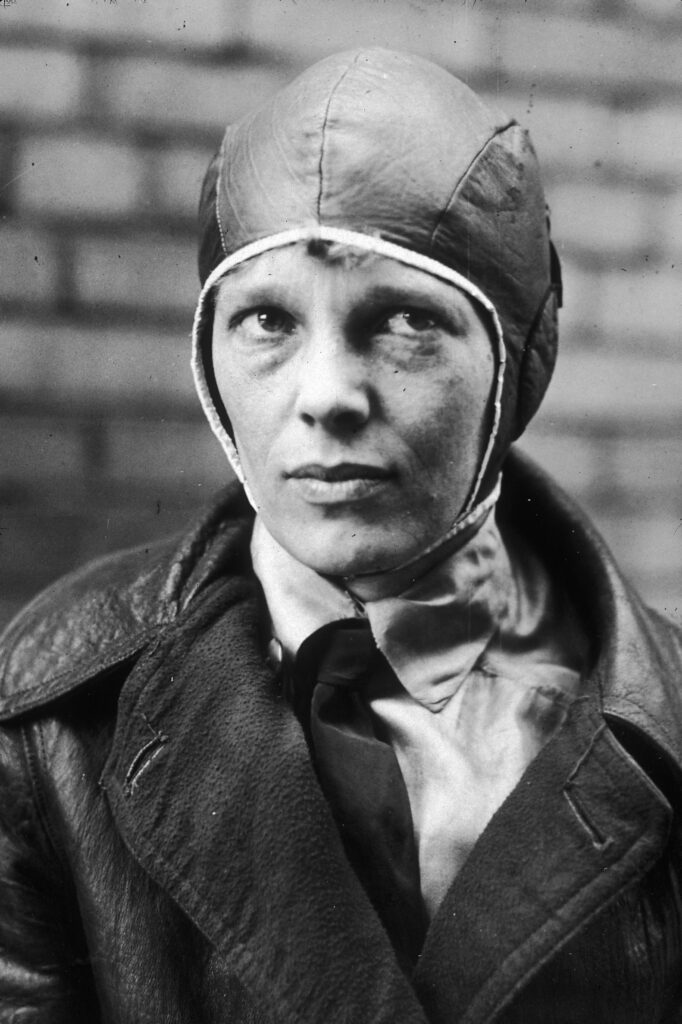
Amelia Earhart (1897-1937) was an American aviator and author who became one of the most celebrated figures in the history of flight, best known as the first woman to fly solo across the Atlantic Ocean. A trailblazer for women in aviation, Earhart set numerous flying records during her career and became a cultural icon whose disappearance during a 1937 attempt to circumnavigate the globe remains one of the most enduring mysteries of the twentieth century.
Amelia Earhart at a Glance
| Full name | Amelia Mary Earhart |
| Born | July 24, 1897, Atchison, Kansas, United States |
| Died | Declared dead January 5, 1939; disappeared July 2, 1937, over the Pacific Ocean |
| Known for | First woman to fly solo across the Atlantic Ocean, 1932 |
| Occupation | Aviator, author |
| Major events | First transatlantic flight as a passenger 1928; solo transatlantic flight 1932; disappearance during round-the-world flight attempt 1937 |
| Nationality | American |
Early Life and Introduction to Flying
Amelia Earhart was born in Atchison, Kansas, and spent much of her childhood moving between relatives’ homes as her family faced financial instability. Her interest in aviation was sparked in 1920 when she took her first airplane ride in California, an experience she later described as transformative, prompting her to begin flying lessons and purchase her own aircraft within a year.
Early Aviation Career
Earhart quickly distinguished herself in the small community of early aviators, setting a women’s altitude record in 1922 and becoming one of the relatively few licensed female pilots in the United States during the 1920s. Her growing reputation as a skilled and dedicated flyer led to her recruitment for a historic 1928 transatlantic flight, during which she traveled as a passenger and became the first woman to cross the Atlantic by air, instantly bringing her national fame.
Rise to Public Prominence
Following her 1928 transatlantic flight, Earhart became a prominent public figure, writing books about her flying experiences, promoting commercial aviation, and working as an editor for a popular magazine. She used her platform to advocate for women’s expanded participation in aviation and helped found the Ninety-Nines, an organization dedicated to supporting female pilots that continues to operate today.
The Solo Transatlantic Flight
In May 1932, Earhart achieved her most celebrated accomplishment by becoming the first woman to fly solo across the Atlantic Ocean, piloting a Lockheed Vega from Newfoundland to Northern Ireland despite facing severe weather, mechanical problems, and ice accumulation on her aircraft. This flight, completed in under fifteen hours, earned her the Distinguished Flying Cross from the United States Congress and cemented her status as one of the most accomplished aviators of her era.
Subsequent Record-Setting Flights
Earhart continued to set aviation records throughout the early 1930s, including becoming the first person to fly solo from Hawaii to the United States mainland in 1935 and the first person to fly solo between Mexico City and Newark the same year. These achievements further established her reputation as one of the most skilled long-distance pilots of her generation, male or female.
Advocacy for Women in Aviation
Throughout her career, Earhart actively promoted opportunities for women in aviation and broader society, lecturing widely about her flying experiences and working to challenge prevailing assumptions about women’s capabilities. She also served as a visiting faculty member at Purdue University, where she counseled women on career matters and helped fund aeronautical research, further extending her influence beyond the cockpit.
The Round-the-World Flight Attempt
In 1937, Earhart undertook her most ambitious project, an attempt to become the first person to fly around the world along its longest route, a roughly twenty-nine-thousand-mile equatorial circumnavigation. Accompanied by navigator Fred Noonan, she departed on this journey aboard a specially modified Lockheed Electra, successfully completing most of the route before the flight’s final and most perilous Pacific Ocean legs.
Disappearance Over the Pacific
On July 2, 1937, while attempting to locate the tiny Pacific atoll of Howland Island during one of the flight’s final legs, Earhart and Noonan’s aircraft disappeared, and despite an extensive search and rescue operation conducted by the United States Navy and Coast Guard, no definitive trace of the plane or its occupants was ever found. The circumstances of her disappearance have remained a subject of extensive investigation and public fascination for more than eight decades.
Literary Contributions
Earhart was also an accomplished writer, authoring several books about her flying experiences, including accounts of her transatlantic crossings that helped bring the excitement and challenges of aviation to a broad popular audience. Her writing combined technical detail about flight with personal reflection, contributing significantly to public understanding and enthusiasm for the emerging field of commercial and recreational aviation.
Scientific and Historical Investigations
In the decades following her disappearance, numerous expeditions and research efforts have sought to locate wreckage or other physical evidence related to her final flight, employing increasingly sophisticated technology including sonar mapping and underwater search equipment. These ongoing investigations, conducted by various historical and scientific organizations, reflect the lasting historical significance attached to solving the mystery of her disappearance.
Cultural Legacy
Earhart’s achievements and the enduring mystery of her disappearance have made her one of the most recognizable figures in twentieth-century American history, inspiring numerous books, films, and documentaries exploring both her flying career and her final flight. Her name has become synonymous with courage, independence, and the pioneering spirit of early twentieth-century aviation.
Honors and Commemoration
Earhart has been honored posthumously with numerous awards, memorials, and namesakes, including schools, airports, and aviation scholarships established in her name to support future generations of pilots, particularly women pursuing careers in flight. The Ninety-Nines organization she helped establish continues to award scholarships in her honor, extending her legacy of supporting women in aviation.
Technical Contributions to Aviation
Beyond setting records, Earhart worked closely with aircraft manufacturers and engineers to help refine airplane design and safety equipment, drawing on her practical flying experience to provide feedback that influenced instrumentation and cockpit layout. She also played an active role in the development of commercial air travel in the United States, serving as a vice president of an early airline and helping to popularize the idea of air travel as a safe and viable option for ordinary passengers.
Legacy
Amelia Earhart remains one of the most significant figures in the history of aviation, remembered both for her groundbreaking achievements as a pilot and for the enduring mystery surrounding her final flight. Her career broke barriers for women in a field long dominated by men, and her courage and determination continue to inspire aviators and adventurers around the world.
References
- New World Encyclopedia – Amelia Earhart
- History.com – Amelia Earhart
- History.com – Amelia Earhart (Women’s History)
Frequently Asked Questions
What is Amelia Earhart best known for? She is best known for becoming the first woman to fly solo across the Atlantic Ocean in 1932.
What happened to Amelia Earhart? She disappeared on July 2, 1937, over the Pacific Ocean while attempting to become the first person to fly around the world along the equator; no definitive trace of her aircraft was ever found.
Who accompanied Amelia Earhart on her final flight? Navigator Fred Noonan accompanied her on the 1937 round-the-world flight attempt during which they both disappeared.
What organization did Amelia Earhart help found? She helped found the Ninety-Nines, an organization dedicated to supporting female pilots that continues to operate today.
Editorially reviewed by Specialty Digest Editorial TeamLast reviewed November 29, 2026Researched and drafted with AI assistanceReport an issue