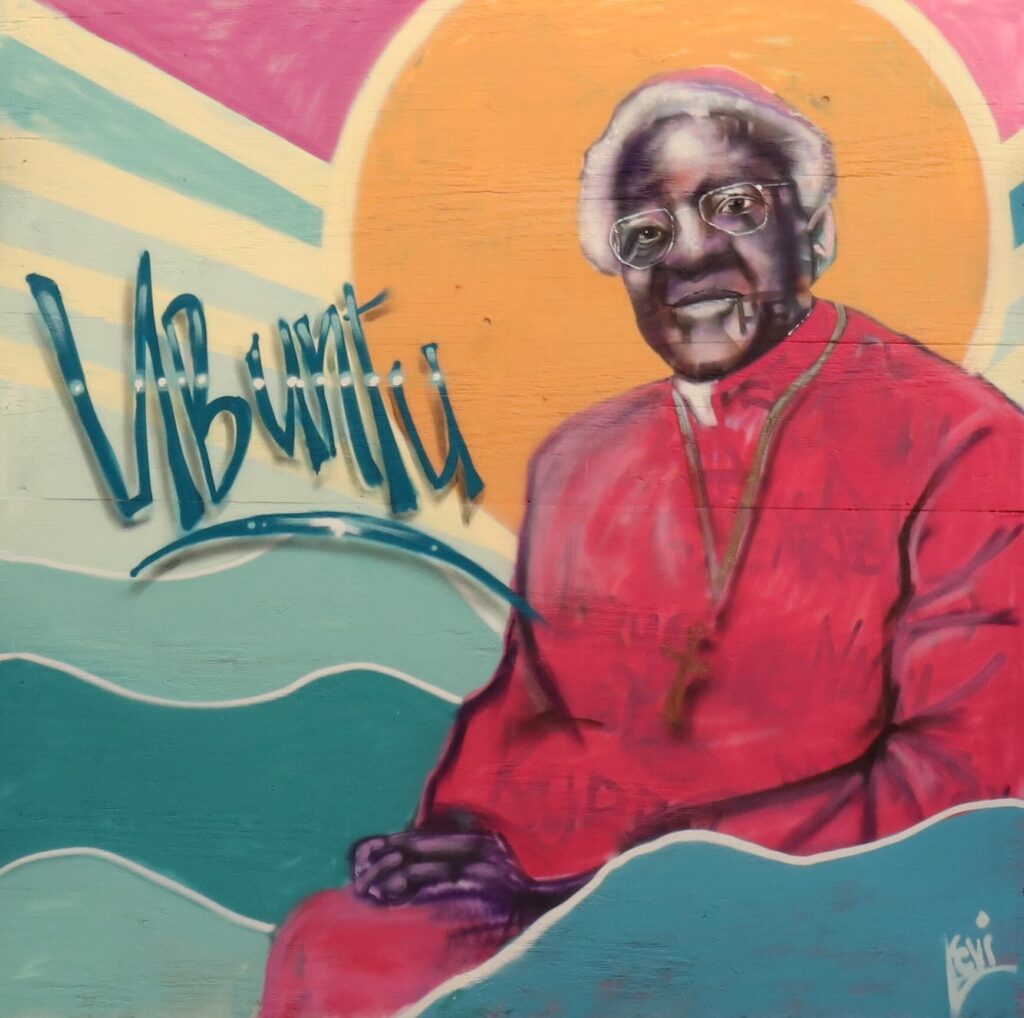
Desmond Tutu (1931-2021) was a South African Anglican archbishop and human rights activist who became one of the most prominent international figures in the struggle against apartheid. A recipient of the Nobel Peace Prize in 1984, Tutu combined religious leadership with social activism throughout his career, later chairing South Africa’s Truth and Reconciliation Commission and remaining a global voice for human rights and reconciliation until his death.
Desmond Tutu at a Glance
| Full name | Desmond Mpilo Tutu |
| Born | October 7, 1931, Klerksdorp, South Africa |
| Died | December 26, 2021, Cape Town, South Africa |
| Known for | Anti-apartheid activism; Nobel Peace Prize 1984; chairing the Truth and Reconciliation Commission |
| Occupation | Anglican archbishop, human rights activist |
| Major events | Ordained bishop 1976; Nobel Peace Prize 1984; Archbishop of Cape Town 1986; Truth and Reconciliation Commission 1996 |
| Nationality | South African |
Early Life and Education
Desmond Tutu was born in Klerksdorp, South Africa, and grew up experiencing firsthand the racial discrimination that would later define his life’s work as an activist. He initially trained as a teacher before turning to theological studies, eventually being ordained as an Anglican priest and pursuing further theological education in England, where he was exposed to a wider world beyond apartheid-era South Africa.
Rise Within the Anglican Church
Tutu’s ecclesiastical career advanced steadily through the 1970s, as he held various teaching and leadership positions within the Anglican Church before being consecrated as a bishop in 1976. His growing stature within the church provided him with an increasingly prominent platform from which to speak out against the injustices of the apartheid system that governed South African society.
Opposition to Apartheid
Throughout the 1970s and 1980s, Tutu became one of the most visible and vocal critics of apartheid, using his position as a religious leader to advocate for nonviolent resistance to the discriminatory system while calling for international economic sanctions against the South African government. His moral authority as a clergyman allowed him to articulate the case against apartheid in terms that resonated with both domestic and international audiences.
The Nobel Peace Prize
In 1984, Tutu was awarded the Nobel Peace Prize in recognition of his role as a unifying leader in the nonviolent campaign to resolve the problem of apartheid in South Africa. The award significantly elevated his international profile, providing him with expanded opportunities to advocate for change both within South Africa and on the global stage.
Archbishop of Cape Town
In 1986, Tutu was elected Archbishop of Cape Town, becoming the first Black South African to hold this senior position within the Anglican Church in South Africa. His appointment carried significant symbolic weight during a period when the apartheid system still governed nearly every aspect of South African public life, and he used the position to continue his advocacy for justice and equality.
Role in the Transition from Apartheid
As South Africa moved toward the dismantling of apartheid in the early 1990s, Tutu played an important role in facilitating the transition to democratic governance, working alongside other prominent leaders to help manage the complex political and social changes taking place. His moral authority and widespread respect across different communities made him an influential voice during this critical period of national transformation.
Truth and Reconciliation Commission
Following the end of apartheid, Tutu was appointed to chair South Africa’s Truth and Reconciliation Commission in 1996, an institution established to investigate human rights violations committed during the apartheid era and promote national healing through a process of public testimony and, in many cases, amnesty. His leadership of the commission became one of his most significant and internationally studied contributions, offering a model for addressing historical injustice that other nations have since examined.
Continued Human Rights Advocacy
After his retirement from formal church leadership, Tutu continued to speak out on human rights issues both within South Africa and internationally, addressing topics ranging from poverty and inequality to various international conflicts. He remained a widely respected moral voice, often described as South Africa’s conscience, continuing to comment on national and global affairs well into his later years.
Coining of “Rainbow Nation”
Tutu is widely credited with popularizing the term “Rainbow Nation” to describe post-apartheid South Africa’s multiracial and multicultural society, a phrase that captured the aspirational vision of unity and diversity that many South Africans hoped to achieve following the end of apartheid. This phrase became closely associated with the broader national project of reconciliation that Tutu championed throughout his later career.
Writing and Public Speaking
Tutu authored numerous books articulating his views on reconciliation, forgiveness, and social justice, drawing on both his theological training and his extensive practical experience in South Africa’s struggle against apartheid. His writing and frequent public speaking engagements extended his influence well beyond South Africa, establishing him as an internationally recognized voice on questions of human rights and restorative justice.
International Honors
In addition to the Nobel Peace Prize, Tutu received numerous other international honors throughout his career, including the Presidential Medal of Freedom from the United States and various honorary degrees from universities around the world. These accolades reflected the broad international recognition of his contributions to human rights advocacy and peaceful conflict resolution.
Later Life and Legacy Institutions
In his later years, Tutu remained engaged with various charitable and advocacy organizations, including foundations established in his name dedicated to continuing his work on human rights, leadership development, and social justice education. These institutions have continued to carry forward his vision after his death, training new generations of leaders in the principles he championed throughout his career.
Advocacy Beyond South Africa
Tutu extended his advocacy well beyond South African borders, speaking out on human rights concerns in numerous other countries and supporting various international peace and reconciliation efforts throughout his career. His willingness to address injustice wherever he observed it, regardless of political consequences, reinforced his reputation as a principled moral voice whose concerns extended far beyond his own nation’s struggles. He frequently used international platforms, including gatherings of global faith leaders and human rights organizations, to call attention to conflicts and inequities that might otherwise have received less global attention.
Legacy
Desmond Tutu remains one of the most significant figures in the history of the anti-apartheid movement and international human rights advocacy, remembered for his moral leadership during South Africa’s transition from apartheid to democracy. His work chairing the Truth and Reconciliation Commission established an influential model for addressing historical injustice, and his broader legacy as a voice for peace, forgiveness, and human dignity continues to resonate globally.
References
Frequently Asked Questions
What is Desmond Tutu best known for? He is best known for his role in the nonviolent struggle against apartheid in South Africa and for chairing the country’s Truth and Reconciliation Commission.
Why did Desmond Tutu win the Nobel Peace Prize? He was awarded the 1984 Nobel Peace Prize for his role as a unifying leader in the nonviolent campaign to resolve the problem of apartheid in South Africa.
What was the Truth and Reconciliation Commission? It was a South African institution chaired by Tutu that investigated human rights violations committed during apartheid and promoted national healing through public testimony.
What term did Desmond Tutu popularize? He is widely credited with popularizing the term “Rainbow Nation” to describe post-apartheid South Africa’s multiracial society.
Editorially reviewed by Specialty Digest Editorial TeamLast reviewed November 29, 2026Researched and drafted with AI assistanceReport an issue