The Arctic fox (Vulpes lagopus, listed in older literature as Alopex lagopus) is a small, stocky fox of Alaska’s treeless coasts, found from the Aleutian Islands north to Point Barrow and east to the Canadian border. Its numbers rise and fall with lemming and vole cycles.[1]
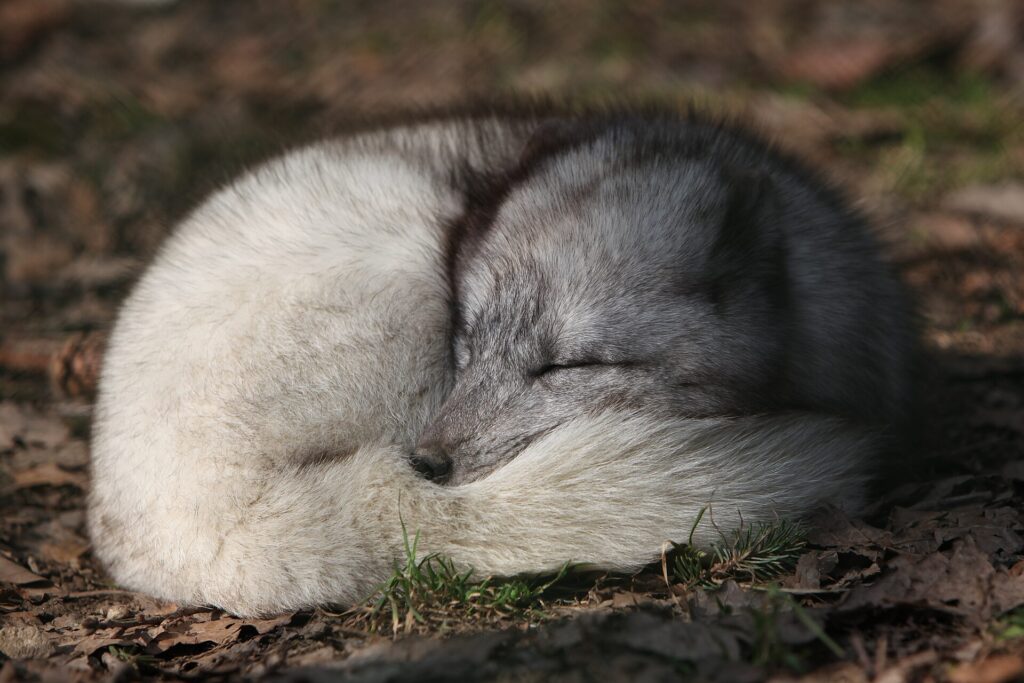
| Weight | 6–10 lb |
|---|---|
| Length | About 43 in, including a 15 in tail |
| Color phases | White and blue |
| Gestation | 52 days |
| Average litter | 7 pups (up to 15) |
| Den depth | 6–12 ft underground |
Description
Adults weigh 6 to 10 pounds and average 43 inches in length including a tail of about 15 inches. The build is stocky, with short legs, short ears and dense winter fur, and the animal looks more compact than a red fox. White and blue colour phases occur, and both can appear in the same litter. Blue foxes are more common in the Aleutian and Pribilof Islands and white foxes in northern populations.[1]
Habitat and range
In Alaska the fox lives in treeless coastal areas from the Aleutian Islands north to Point Barrow and east to the Canadian border. Dens are dug in sandy, well-drained soil on low mounds and river cutbanks, often with a southern exposure, and extend 6 to 12 feet underground.[1]
Diet
The Arctic fox is omnivorous. In summer it eats mainly small mammals such as lemmings and tundra voles, along with seabirds near rocky cliffs, berries, eggs and scavenged carcasses. In winter many feed on seal remains left by polar bears on sea ice.[1]
Reproduction and adaptations
Mating takes place from early March to early April and gestation lasts 52 days. Litters average seven pups, with a maximum of 15, and pups are weaned by about six weeks. Sexual maturity comes at 9 to 10 months, and many foxes die in their first year. The fox molts twice a year, from a white winter coat to a brown summer coat, forms monogamous pairs with both parents rearing pups, caches food among boulders and in dens, and can travel long distances over sea ice. One tagged fox moved from the Russian coast to near Wainwright, Alaska.[1]
FAQs
Where do Arctic foxes live in Alaska? On treeless coasts from the Aleutians to Point Barrow.
What colors do they come in? White and blue phases.
How large are litters? About seven pups on average.
Sources
Key facts
- Litters average 7
- White and blue phases
Quick checkHow long is Arctic fox gestation?Show answer
52 days
Sources
- Alaska Department of Fish and Game. Arctic Fox, Wildlife Notebook Series. 2026 (accessed 2026-11-14)
Editorially reviewed by Specialty Digest Editorial TeamLast reviewed November 14, 2026Researched and drafted with AI assistanceReport an issue