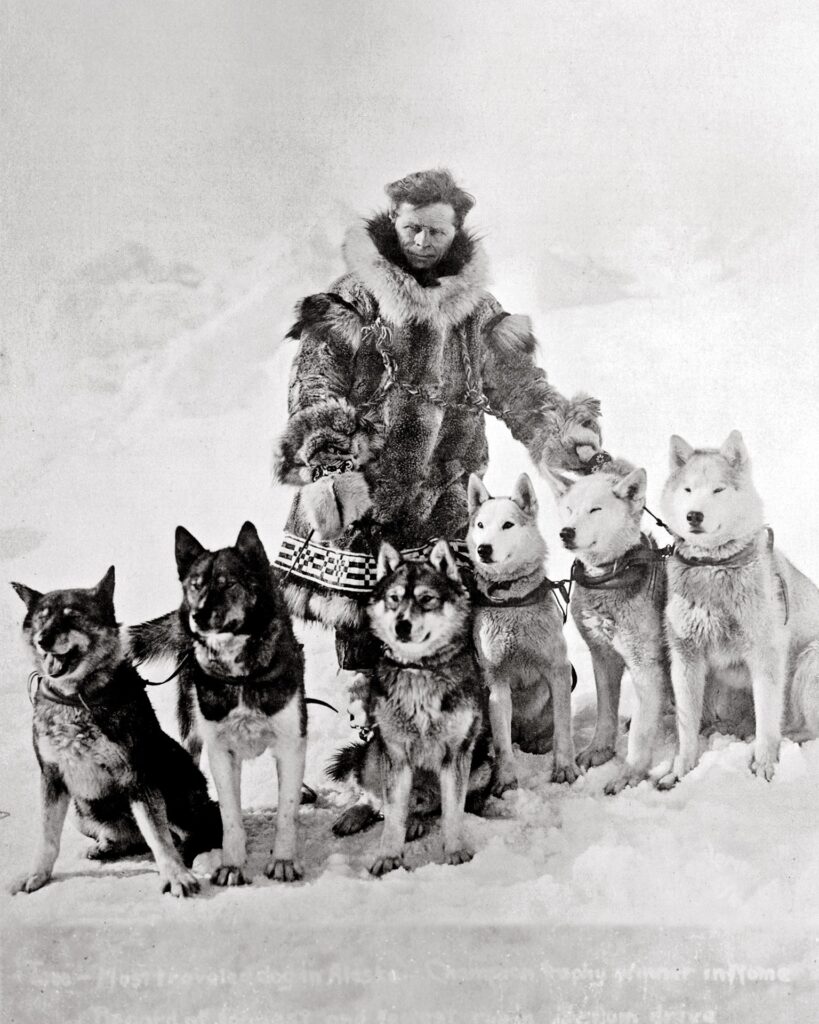
Balto and Togo were sled dogs associated with the 1925 serum run to Nome, Alaska, when teams relayed diphtheria antitoxin along the Iditarod Trail. Togo, led by Leonhard Seppala, ran 261 miles, the longest and most dangerous leg, while Balto ran 55 miles.[1]
| Event | 1925 serum run to Nome |
|---|---|
| Togo’s leg | 261 miles |
| Balto’s leg | 55 miles |
| Togo born | 17 Oct 1913 |
| Togo died | 5 Dec 1929, Maine |
The serum run
Nome, home to 455 Alaska Natives and 975 European settlers, faced a diphtheria outbreak in January 1925. Dr. Curtis Welch was the town’s only doctor, and by the end of the month there were over 20 confirmed cases and at least 50 more at risk. Teams carried the antitoxin along the 938-mile Iditarod Trail from Seward to Nome.[1]
Togo
Togo, born on 17 October 1913, was the lead dog of Norwegian-born breeder and racer Leonhard Seppala. He weighed about 48 pounds and led his team over 261 miles of the run at age 12. Seppala said in 1960, “Togo was the best dog that ever traveled the Alaska trail.” He died on 5 December 1929 in Maine.[1]
Balto
Balto ran 55 miles. The National Park Service notes that he often receives credit for saving Nome, though Togo’s leg was longer and more dangerous.[1]
FAQs
Who ran farthest in the serum run? Togo, over 261 miles.
Who led Togo? Leonhard Seppala.
How far did Balto run? 55 miles.
Sources
Key facts
- Togo 261 miles
- Balto 55 miles
- 938-mile trail
Quick checkWho ran farthest?Show answer
Togo, 261 miles.
Sources
- National Park Service. Togo the sled dog. 2026 (accessed 2026-11-12)
Editorially reviewed by Specialty Digest Editorial TeamLast reviewed November 12, 2026Researched and drafted with AI assistanceReport an issue