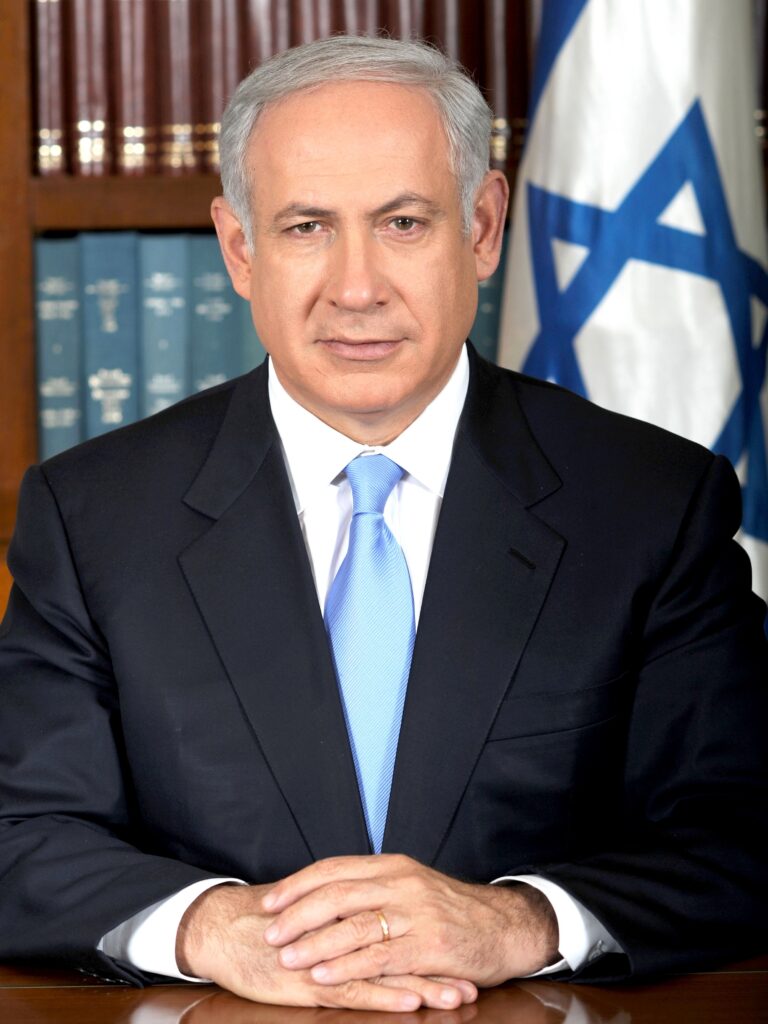
Benjamin Netanyahu (born 1949) is an Israeli politician who has served as Prime Minister of Israel across multiple non-consecutive terms, making him the longest-serving prime minister in Israeli history. His tenure has spanned several decades and has been marked by his government’s security policy, economic liberalization efforts, and a central role in some of the most consequential events in recent Israeli and Middle Eastern history.
Benjamin Netanyahu at a Glance
| Full name | Benjamin Netanyahu |
| Born | October 21, 1949, Tel Aviv, Israel |
| Known for | Longest-serving Prime Minister of Israel; multiple non-consecutive terms beginning in 1996; security and economic policy |
| Occupation | Politician, former military officer |
| Major events | First term as Prime Minister in 1996; return to office in 2009; re-elections through the 2020s; continued leadership during regional conflict |
| Nationality | Israeli |
Early Life and Military Service
Netanyahu was born in Tel Aviv and spent part of his youth in the United States before returning to Israel, where he served in the Israel Defense Forces as a member of an elite special forces unit, participating in several military operations during his service. His time in the military, during which his brother Yonatan Netanyahu was killed leading the 1976 Entebbe hostage rescue operation, significantly shaped his later political outlook on national security.
Education and Early Career
Following his military service, Netanyahu pursued higher education in the United States, earning degrees in architecture and business management from the Massachusetts Institute of Technology. He worked briefly in the private sector before entering public service as a diplomat, serving in a series of positions including Israel’s ambassador to the United Nations during the late 1980s.
Entry into Politics
Netanyahu entered electoral politics as a member of the Likud party, rising quickly through its ranks due in part to his fluent English and media presence, qualities that made him an effective advocate for Israeli positions on the international stage. He was elected to the Knesset, Israel’s parliament, in 1988 and went on to serve in several ministerial positions before becoming party leader.
First Term as Prime Minister
Netanyahu became Prime Minister for the first time in 1996, defeating incumbent Shimon Peres in a closely contested election held in the aftermath of the assassination of Prime Minister Yitzhak Rabin. His first term focused on continuing negotiations within the framework of the Oslo Accords while pursuing a generally more cautious approach to the peace process than his predecessor.
Years Out of Office
Netanyahu lost the 1999 election to Ehud Barak and subsequently served in various ministerial roles, including Finance Minister, where he implemented significant free-market economic reforms intended to reduce government intervention in the Israeli economy. These reforms are widely credited by economists with contributing to Israel’s subsequent economic growth and its emergence as a major technology hub.
Return to the Premiership
Netanyahu returned to the office of Prime Minister in 2009 after his Likud party formed a coalition government, beginning what would become an extended period of political dominance in Israeli politics. His subsequent terms were marked by continued economic growth, expanded diplomatic relations with several Arab nations through the Abraham Accords, and ongoing tensions related to Iran’s nuclear program.
Becoming the Longest-Serving Prime Minister
Netanyahu surpassed Israel’s founding prime minister, David Ben-Gurion, to become the country’s longest-serving prime minister in 2019, a milestone reflecting his sustained ability to maintain coalition governments across a politically fragmented parliamentary system. His extended tenure allowed him to pursue long-term foreign policy and economic initiatives across multiple governments.
Legal Proceedings
Netanyahu has faced a series of criminal corruption charges related to his conduct in office, which he has denied, and the resulting legal proceedings have continued alongside his political career for several years. These proceedings have been a significant and closely followed feature of Israeli political life, with substantial public debate over their implications for the country’s democratic institutions.
The Abraham Accords
Netanyahu’s government played a central role in negotiating the Abraham Accords in 2020, a series of agreements that normalized diplomatic relations between Israel and several Arab nations, including the United Arab Emirates and Bahrain. This diplomatic achievement represented a significant shift in the regional political landscape and was widely regarded as one of the notable accomplishments of his later terms in office.
Regional Conflict and Security Policy
Netanyahu’s government has navigated numerous periods of military conflict and heightened regional tension throughout his tenure, including extended operations in Gaza and ongoing confrontations with Iran-aligned groups across the region. His leadership during these periods of conflict has drawn significant international attention and has been a defining feature of his later terms as prime minister.
Relations with the United States
Netanyahu cultivated close ties with successive United States administrations throughout his career, frequently addressing the United States Congress and maintaining a prominent public profile in American political and media discussions of Israeli affairs. His relationships with individual American presidents varied considerably in warmth across different administrations, reflecting shifting approaches to issues including the Iranian nuclear program and the broader Israeli-Palestinian conflict.
Coalition Politics and Governing Style
Netanyahu’s extended political dominance has depended heavily on his ability to construct and maintain governing coalitions within Israel’s proportional parliamentary system, often bringing together parties with significantly divergent ideological positions. This coalition-building skill, combined with his standing within the Likud party, has been widely cited by political analysts as a central factor in his sustained political longevity across a fragmented electoral landscape.
Legacy
Benjamin Netanyahu remains one of the most significant and closely watched figures in modern Israeli political history, remembered for his record-setting tenure, his role in Israel’s economic liberalization, and his central position in major regional diplomatic and security developments. His extended time in office has left a substantial and still-unfolding imprint on Israeli domestic politics and Middle Eastern diplomacy, and his record continues to be studied and debated by historians and political analysts.
References
- New World Encyclopedia – Benjamin Netanyahu
- History.com – Benjamin Netanyahu
- History.com – Benjamin Netanyahu (Israel)
Frequently Asked Questions
What is Benjamin Netanyahu best known for? He is best known as the longest-serving Prime Minister of Israel, having held the office across multiple non-consecutive terms beginning in 1996.
What economic reforms did Netanyahu implement? As Finance Minister in the early 2000s, he introduced significant free-market reforms that economists credit with helping Israel’s economy grow and emerge as a major technology hub.
What were the Abraham Accords? They were a series of 2020 agreements negotiated under Netanyahu’s government that normalized diplomatic relations between Israel and several Arab nations, including the United Arab Emirates and Bahrain.
When did Netanyahu first become Prime Minister? He first became Prime Minister in 1996, defeating incumbent Shimon Peres in an election held in the aftermath of Prime Minister Yitzhak Rabin’s assassination.
Editorially reviewed by Specialty Digest Editorial TeamLast reviewed November 29, 2026Researched and drafted with AI assistanceReport an issue