Dyea was a Klondike Gold Rush boomtown at the foot of the Chilkoot Trail, beside Skagway at the head of Lynn Canal. Its name, Dayei, means to pack. Booming in 1897 and 1898, it was abandoned within a few years, and its townsite is now a National Historic Landmark in Klondike Gold Rush National Historical Park.[1]
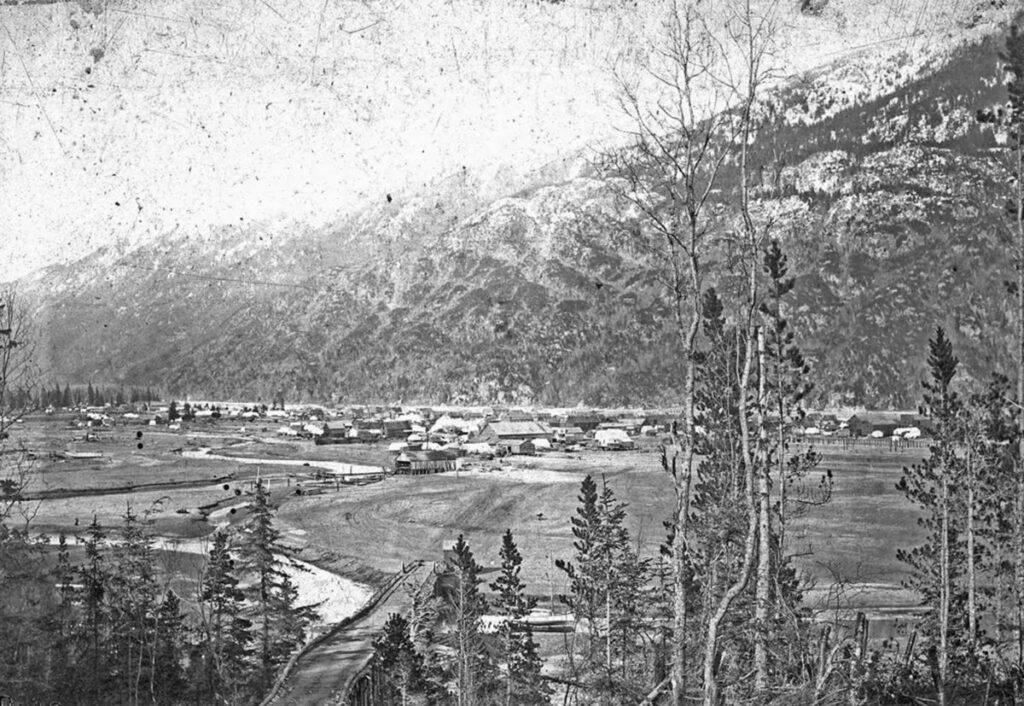
| Name meaning | Dayei, “to pack” |
|---|---|
| Boom | Fall 1897 to 1898 |
| Peak businesses | More than 150 |
| Palm Sunday Avalanche | 3 April 1898, over 70 killed |
| Population | About 250 in March 1900 |
| NPS purchase | February 1978 |
Before the gold rush
Dyea was a seasonal fishing camp and trading staging area. The Chilkat Tlingit of Klukwan controlled the Chilkoot Pass trade route to interior First Nations people. In 1879 an agreement with U.S. Navy Commander L.A. Beardsley let miners cross the passes, Tlingit guides took the first party over in May 1880, and the Healy and Wilson trading post was established in the mid-1880s.[1]
The boom
The boom began in fall 1897, after news of the Klondike strike reached the world in July. At its peak Dyea had more than 150 businesses, mostly restaurants, hotels, supply houses and saloons, as well as two newspapers, two telephone companies, a church and a school. U.S. Army troops arrived around 1 March 1898 and moved to a new site in October.[1]
Decline
On 3 April 1898 the Palm Sunday Avalanche on the Chilkoot Trail killed more than 70 people. The White Pass and Yukon Route railroad, begun at Skagway in May 1898, drew most new stampeders away. Tramway operations stopped in late 1898, the population was about 250 in March 1900, the post office closed in June 1902, and by 1903 fewer than six people lived in the old townsite.[1]
Afterwards
Farmers raised vegetables for the Skagway market, and the Healy and Wilson post burned in 1921. A shift in the Taiya River undermined over half of the downtown in the 1920s and 1930s, and floods in the mid-1940s and early 1950s destroyed most remaining structures. The National Park Service bought much of the townsite in February 1978, and it is now a National Historic Landmark and major archaeological site.[1]
FAQs
What does Dyea mean? To pack, in Tlingit.
Why did Dyea decline? The White Pass railroad from Skagway drew stampeders away.
Who owns the townsite? The National Park Service manages it.
Sources
Key facts
- 150+ businesses at peak
- Avalanche 3 April 1898
Quick checkWhat does Dyea mean?Show answer
To pack
Sources
- National Park Service. Dyea. 2026 (accessed 2026-11-13)
Editorially reviewed by Specialty Digest Editorial TeamLast reviewed November 13, 2026Researched and drafted with AI assistanceReport an issue