Fireweed (Chamaenerion angustifolium) is a tall pink-flowered plant that quickly colonises burned or disturbed ground across the Northern Hemisphere. It grows throughout Alaska and is the floral emblem of Yukon.[1]
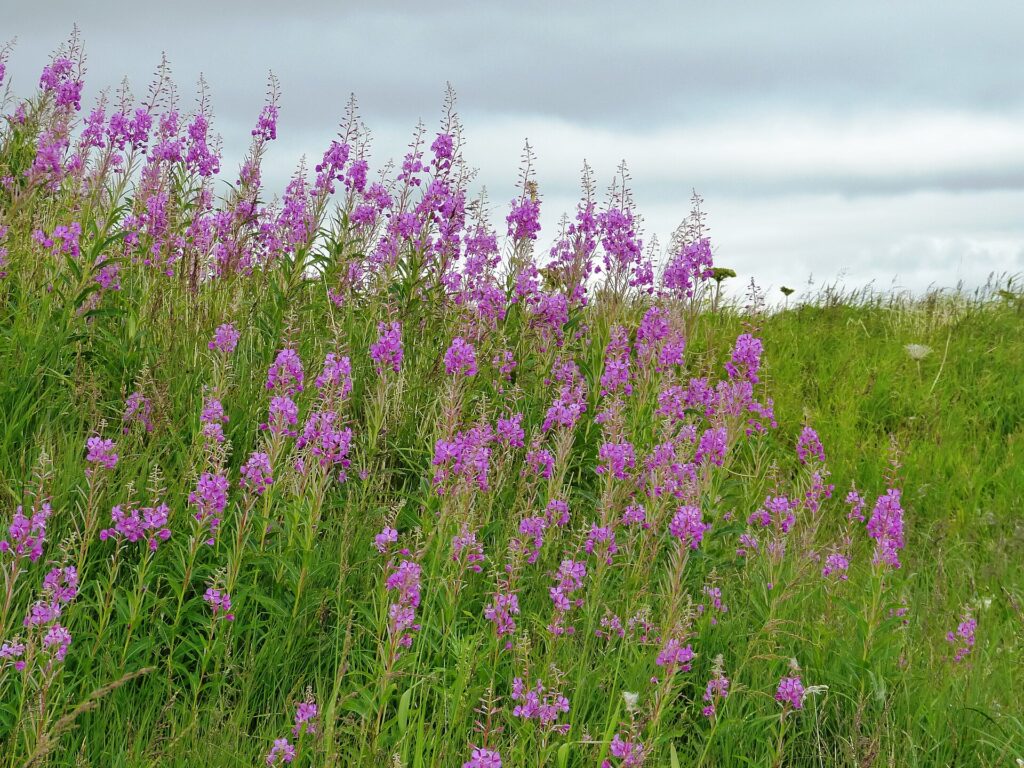
| Height | 0.5–2 m |
|---|---|
| Flowers | Four magenta to pink petals, 2–3 cm across |
| Seeds per plant | About 80,000 |
| Range | 30°–68° N |
Growth
The raceme blooms progressively from bottom to top. Fireweed colonises burned or otherwise open ground quickly, with an average peak colonisation about five years after disturbance, and seeds germinate when a disturbance reopens the ground to light. Each capsule holds about 300 to 400 seeds and a plant produces about 80,000, spread by silky hairs.[1]
Uses
Young shoots and leaves can be cooked and fresh leaves eaten raw. Young flowers are edible and made into jelly in Yukon, the stem pith can be eaten raw and leaves made into tea. Fireweed honey is highly valued for its quality.[1]
FAQs
Why is it called fireweed? It quickly colonises burned ground.
Is fireweed edible? Yes, young shoots, leaves and flowers can be eaten.
How tall does it grow? 0.5 to 2 metres.
Sources
Key facts
- 0.5–2 m tall
- Pioneer after fire
- Edible shoots
Quick checkSeeds per plant?Show answer
About 80,000.
Sources
- Wikipedia. Fireweed. 2026 (accessed 2026-11-12)
Editorially reviewed by Specialty Digest Editorial TeamLast reviewed November 12, 2026Researched and drafted with AI assistanceReport an issue