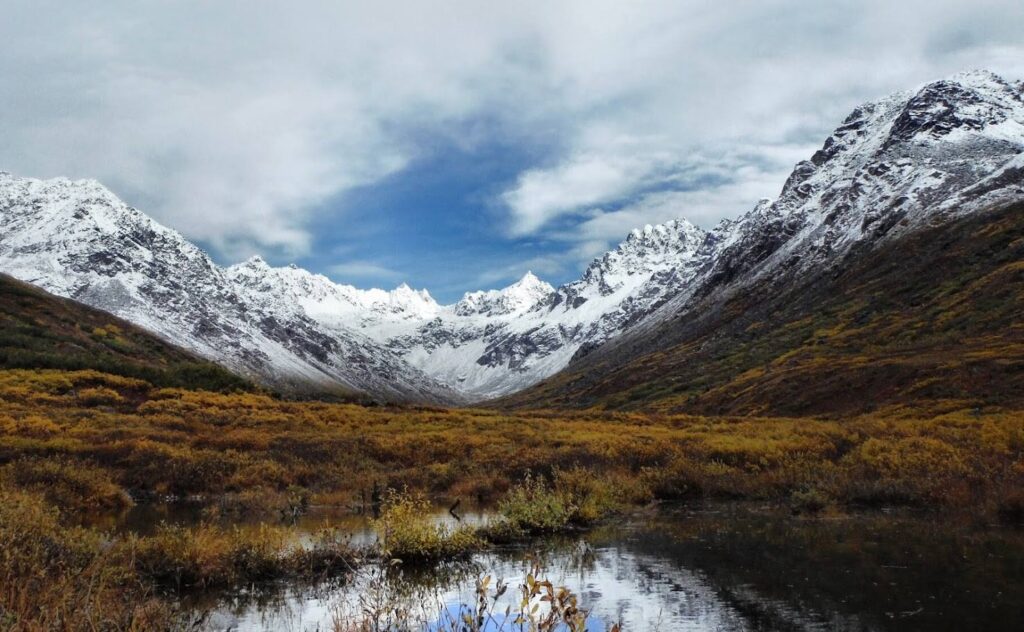
Tundra plants in Alaska are small, low-growing species adapted to a short and harsh growing season. The National Park Service describes both arctic tundra and alpine tundra in the state, with reindeer lichen among the common species [1].
| Tundra types | Arctic tundra and alpine tundra |
|---|---|
| Example lichen | Caribou moss or reindeer lichen (Cladonia rangiferina) |
| Example plants | Blueberry, crowberry, lowbush cranberry, Labrador tea |
Tundra types
The National Park Service describes two kinds of tundra in Alaska. Arctic tundra lies north of the permafrost line, generally north of the Arctic Circle. Alpine tundra occurs at high elevations statewide and is the kind found in Lake Clark National Park and Preserve [1].
Adaptations
Because the growing season is short and harsh, tundra plants are smaller and grow close to the ground. Dense, low-lying mats help plants retain heat and moisture, since strong winds can dry the landscape quickly. Plants have small leaves and tiny flowers, and the ground is under snow for most of the year [1].
Common species at Lake Clark
At Lake Clark the Park Service names caribou moss or reindeer lichen (Cladonia rangiferina) as a common tundra species, along with blueberry (Vaccinium uliginosum), crowberry, lowbush cranberry (Vaccinium vitis-idaea), and Labrador tea (Rhododendron groenlandicum). Many tundra plants turn bright colors as summer shifts into autumn [1].
FAQs
What are the two kinds of tundra in Alaska? Arctic tundra and alpine tundra [1].
Why are tundra plants small? The short, harsh growing season favors small plants that grow close to the ground [1].
Which lichen is common on the tundra? Caribou moss, also called reindeer lichen, is named as common at Lake Clark [1].
Sources
Key facts
- Arctic and alpine tundra
- Plants grow in low mats
Quick checkWhat plants grow on the Alaska tundra?Show answer
Reindeer lichen, blueberry, crowberry, lowbush cranberry and Labrador tea are common at Lake Clark.
Sources
- National Park Service. Tundra, Lake Clark National Park and Preserve (accessed 2026-11-14)
Editorially reviewed by Specialty Digest Editorial TeamLast reviewed November 14, 2026Researched and drafted with AI assistanceReport an issue