The red fox (Vulpes vulpes) is a member of the dog family found throughout Alaska except some Southeast Alaska islands and the western Aleutians. It is adaptable, omnivorous and most abundant south of the Arctic tundra.[1]
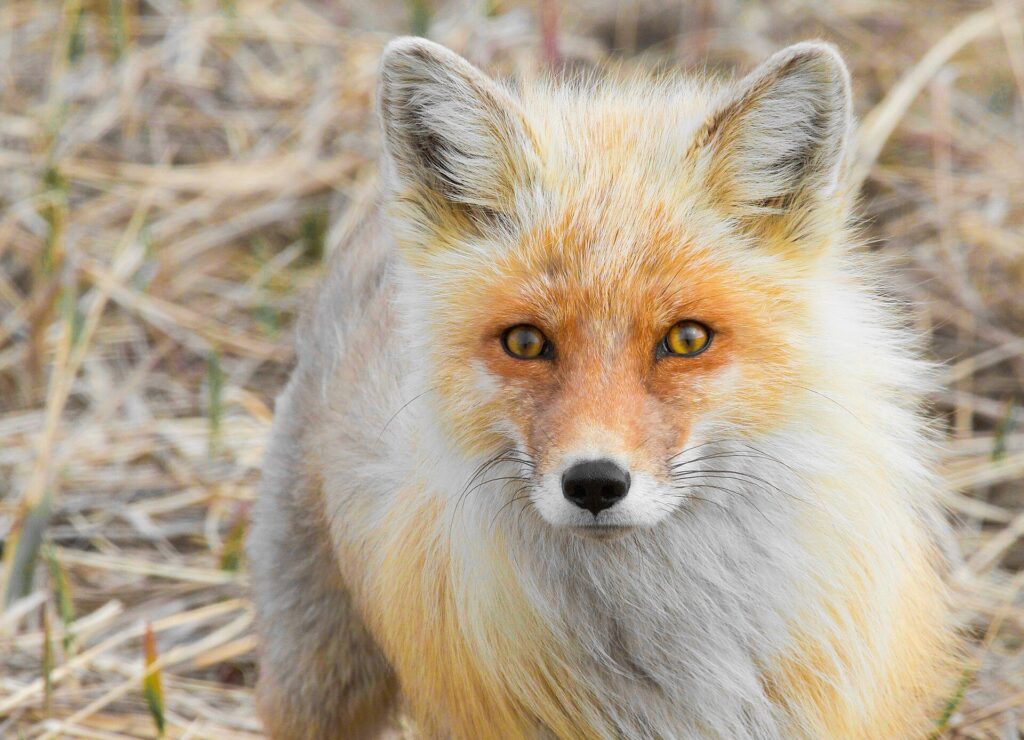
| Scientific name | Vulpes vulpes |
|---|---|
| Weight | 6–15 lb |
| Head and body | 22–32 in |
| Tail | 14–16 in |
| Gestation | 51–54 days |
| Common litter | Four, up to 10 |
Description
The red fox typically has a reddish coat, a white-tipped tail and black stockings, with black-tipped outer ears and usually white inner ears. Head and body measure 22 to 32 inches, the tail 14 to 16 inches, and adults weigh 6 to 15 pounds, with males usually heavier than females.[1]
Colour phases
Red is the most common phase, ranging from light yellowish to deep auburn. Other phases include cross, with a dark cross on the back and shoulders, silver and black. Black-silver foxes make up less than 2 percent of the population and are more common in northern and northwestern Alaska.[1]
Range and habitat
The red fox is found throughout Alaska except some Southeast Alaska islands and the western Aleutians, and is rare in Prince William Sound. It is native to Kodiak Island and was introduced to many other islands through early 20th-century fox farming. It prefers broken country, lowland marshes and hilly terrain, can live near humans but prefers wild settings.[1]
Diet
Voles are the preferred food, and the fox also eats muskrats, squirrels, hares, birds, eggs, insects, vegetation and carrion, caching excess food.[1]
Reproduction
Red foxes breed in February and March, gestation lasts 51 to 54 days and there is one litter a year, commonly of four and up to 10. Kits weigh about four ounces at birth, open their eyes 8 to 10 days later, leave the den at about one month and learn to hunt by about three months.[1]
FAQs
Where are red foxes found in Alaska? Throughout the state except some Southeast islands and the western Aleutians.
What do they eat? Voles are preferred; they also eat birds, eggs, insects and carrion.
How many kits are in a litter? Commonly four, up to 10.
Sources
Key facts
- Gestation 51–54 days
- Litters of 4, up to 10
Quick checkWhat is the preferred food of the Alaska red fox?Show answer
Voles
Sources
- Alaska Department of Fish and Game. Red Fox, Wildlife Notebook Series. 2026 (accessed 2026-11-14)
Editorially reviewed by Specialty Digest Editorial TeamLast reviewed November 14, 2026Researched and drafted with AI assistanceReport an issue