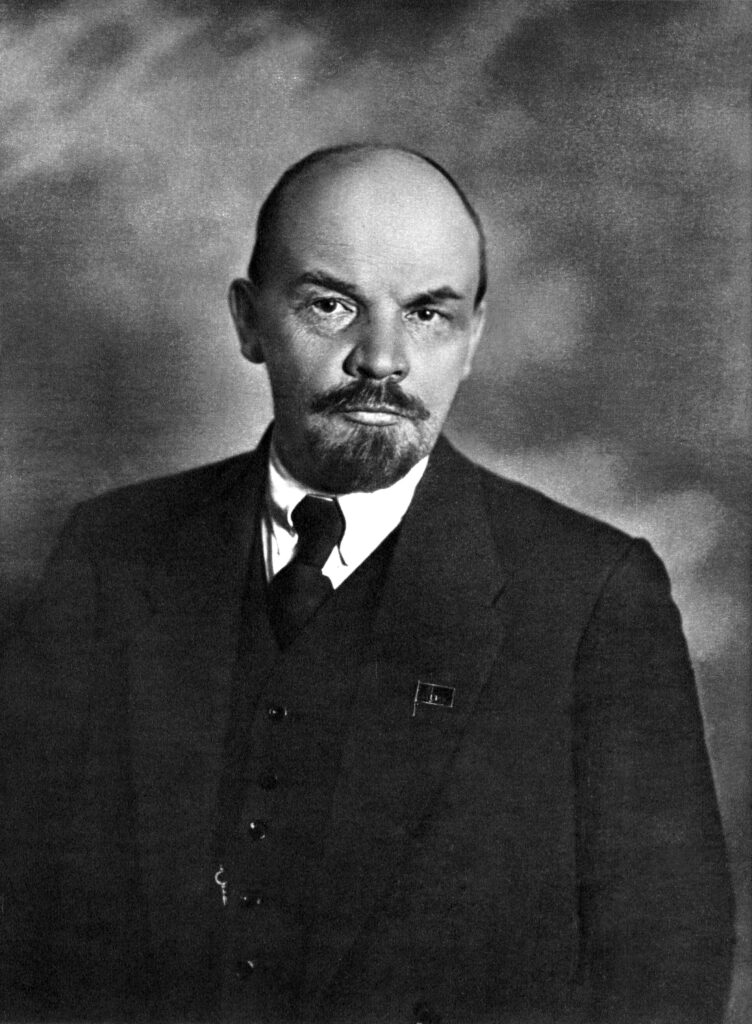
Vladimir Lenin (1870 – 1924) was a Russian revolutionary and political theorist who led the Bolshevik Party to power in the October Revolution of 1917 and became the first head of government of Soviet Russia. His political writings and revolutionary strategy, collectively known as Leninism, fundamentally shaped the course of twentieth-century communism and established the Soviet state that would endure for nearly seven decades.
Vladimir Lenin at a Glance
| Full name | Vladimir Ilyich Ulyanov |
| Born | April 22, 1870, Simbirsk, Russian Empire |
| Died | January 21, 1924, Gorki, Soviet Russia |
| Known for | Leader of the October Revolution; founder of the Soviet state; Leninism |
| Occupation | Revolutionary, political theorist, statesman |
| Major events | October Revolution of 1917; Russian Civil War; founding of the Soviet Union |
| Nationality | Russian |
Early Life and Education
Lenin was born Vladimir Ilyich Ulyanov in Simbirsk, a provincial city on the Volga River, into a family of the educated Russian middle class, his father serving as a schools inspector. He studied law at Kazan University before being expelled for participating in student political protests, later completing his legal studies as an external student at the University of Saint Petersburg.
Early Revolutionary Activity
Lenin became involved in revolutionary Marxist politics during the 1890s, organizing workers’ study circles in Saint Petersburg and developing the theoretical foundations of his political philosophy. His early activism led to his arrest in 1895 and subsequent exile to Siberia, during which he continued his political writing and deepened his engagement with Marxist theory.
Exile and the Split in Russian Social Democracy
Lenin spent much of the period between 1900 and 1917 in exile across Western Europe, where he edited revolutionary publications and developed his theory of a vanguard party of professional revolutionaries. This period included the pivotal 1903 split of the Russian Social Democratic Labor Party into Bolshevik and Menshevik factions, with Lenin leading the more disciplined and centralized Bolshevik wing.
Return to Russia in 1917
Lenin returned to Russia in April 1917 following the February Revolution that had overthrown the Tsarist government, traveling from Switzerland through Germany in a sealed train arranged by German authorities eager to destabilize Russia’s war effort. Upon arrival, he issued his April Theses, calling for an end to cooperation with the provisional government and a transfer of power to workers’ and soldiers’ councils known as soviets.
The October Revolution
Lenin led the Bolshevik seizure of power in Petrograd in October 1917, overthrowing the provisional government led by Alexander Kerensky and establishing a new government based on soviet councils with Lenin as its head. This revolution marked the first successful communist seizure of state power in history and set the stage for the formation of the Soviet Union.
Peace and Withdrawal from World War I
Lenin prioritized ending Russia’s participation in World War I, negotiating the Treaty of Brest-Litovsk with Germany in March 1918, which required Russia to cede substantial territory in exchange for peace. This controversial decision, which he defended as necessary to consolidate Bolshevik power domestically, allowed the new Soviet government to focus on the internal conflicts that soon erupted.
The Russian Civil War
Lenin led the Bolshevik government through the Russian Civil War from 1918 to 1922, a brutal conflict between the Red Army and various anti-Bolshevik White forces, as well as foreign interventionist armies. The Bolshevik victory in this war secured the survival of the Soviet state and allowed Lenin’s government to consolidate control over most of the former Russian Empire.
War Communism and the New Economic Policy
Lenin implemented War Communism during the civil war period, a system of state control over the economy including forced grain requisition from peasants, which contributed to severe economic hardship and famine. In 1921, he introduced the New Economic Policy, a strategic retreat that reintroduced limited market mechanisms and small-scale private enterprise to stabilize the struggling Soviet economy.
Founding of the Soviet Union
Lenin oversaw the formal establishment of the Union of Soviet Socialist Republics in December 1922, uniting Russia with several other Soviet republics under a single federal state structure. This institutional framework, developed in Lenin’s final years of active leadership, would govern the Soviet Union until its dissolution nearly seven decades later.
Political Theory and Leninism
Lenin developed a distinctive body of political theory, known as Leninism, that adapted Marxist thought to the conditions of early twentieth-century Russia, emphasizing the role of a disciplined vanguard party in leading the working class toward revolution. His theoretical writings, including works on imperialism and the state, became foundational texts for communist movements around the world throughout the twentieth century.
Final Years and Death
Lenin’s health declined sharply after a series of strokes beginning in 1922, which gradually removed him from active governance and intensified a power struggle among senior Bolshevik leaders over his eventual succession. He died in January 1924 at his estate in Gorki outside Moscow, after which his body was embalmed and placed on permanent public display in a mausoleum in Red Square.
The Red Terror and State Security
Lenin’s government established the Cheka, a secret police organization tasked with suppressing political opposition and counter-revolutionary activity during the civil war period, which carried out a campaign of repression against perceived enemies of the Bolshevik state. This security apparatus, created in December 1917, set an institutional precedent for state security organizations that would continue in various forms throughout Soviet history.
Relationship with the Comintern
Lenin founded the Communist International, or Comintern, in 1919 as an organization intended to coordinate and support communist revolutionary movements around the world, reflecting his belief that the Russian Revolution was the opening phase of a broader global transformation. The organization provided funding, training, and ideological guidance to communist parties in numerous countries, extending Soviet influence over the international communist movement for decades.
Suppression of Political Opposition
Lenin’s government moved quickly to eliminate rival political parties and factions following the October Revolution, banning the Constituent Assembly after a single session in January 1918 when it failed to produce a Bolshevik majority. This consolidation of single-party rule established the one-party political structure that would characterize the Soviet state throughout its existence.
Legacy
Vladimir Lenin remains one of the most consequential political figures of the twentieth century, remembered as the architect of the first successful communist revolution and the founder of the Soviet state that would shape global politics for decades. His political theories and revolutionary methods influenced communist movements across the world, while the state he founded became a central actor in the ideological and geopolitical conflicts of the twentieth century.
References
- New World Encyclopedia – Vladimir Lenin
- History.com – Vladimir Lenin
- History.com – Vladimir Lenin (Russia)
Frequently Asked Questions
What is Vladimir Lenin best known for? He is best known for leading the Bolshevik Party to power in the October Revolution of 1917 and founding the Soviet state.
What is Leninism? Leninism refers to Lenin’s body of political theory, which adapted Marxist thought to call for a disciplined vanguard party leading the working class toward revolution.
How did Lenin end Russia’s involvement in World War I? He negotiated the Treaty of Brest-Litovsk with Germany in 1918, ceding significant territory in exchange for peace.
When did Lenin die? He died in January 1924 after a series of strokes, and his body remains on display in a mausoleum in Red Square.
Editorially reviewed by Specialty Digest Editorial TeamLast reviewed November 29, 2026Researched and drafted with AI assistanceReport an issue