The Prudhoe Bay oil discovery was the 1967–1968 strike of the largest oil field in North America, on Alaska’s North Slope. The discovery well, Prudhoe Bay State No. 1, was drilled by Humble Oil and ARCO, and the field originally held about 25 billion barrels of oil. Production began on June 20, 1977, when the Trans-Alaska Pipeline was completed [1][2].
| Discovery well | Prudhoe Bay State No. 1 |
|---|---|
| Confirmed | March 12, 1968 |
| Original oil | About 25 billion barrels |
| Field area | 213,543 acres |
| First production | June 20, 1977 |
| Operator since 2019 | Hilcorp |
Exploration Before the Discovery
Seep claims in the Cape Simpson area date to 1915, and Naval Petroleum Reserve No. 4 was established in 1923. Navy drilling from 1943 to 1953 produced 80 wells, none flowing more than 250 barrels per day [1]. President Warren G. Harding had created the reserve, now the National Petroleum Reserve–Alaska, as an oil supply for the Navy, and it held most of Alaska’s known petroleum until Prudhoe Bay [3]. Local peoples had long known of surface oil seepage; pilot Noel Wien described people in the 1920s using it for warmth and cooking [3].
State Land and the Lease Sale
Early-1960s state land selection under the Alaska Statehood Act included the area, which geologist Tom Marshall said resembled Wyoming basins. In 1965, Richfield partnered with Humble to acquire leases over the gas cap, while BP won leases over the oil ring during the state lease sale [1].
Prudhoe Bay State No. 1
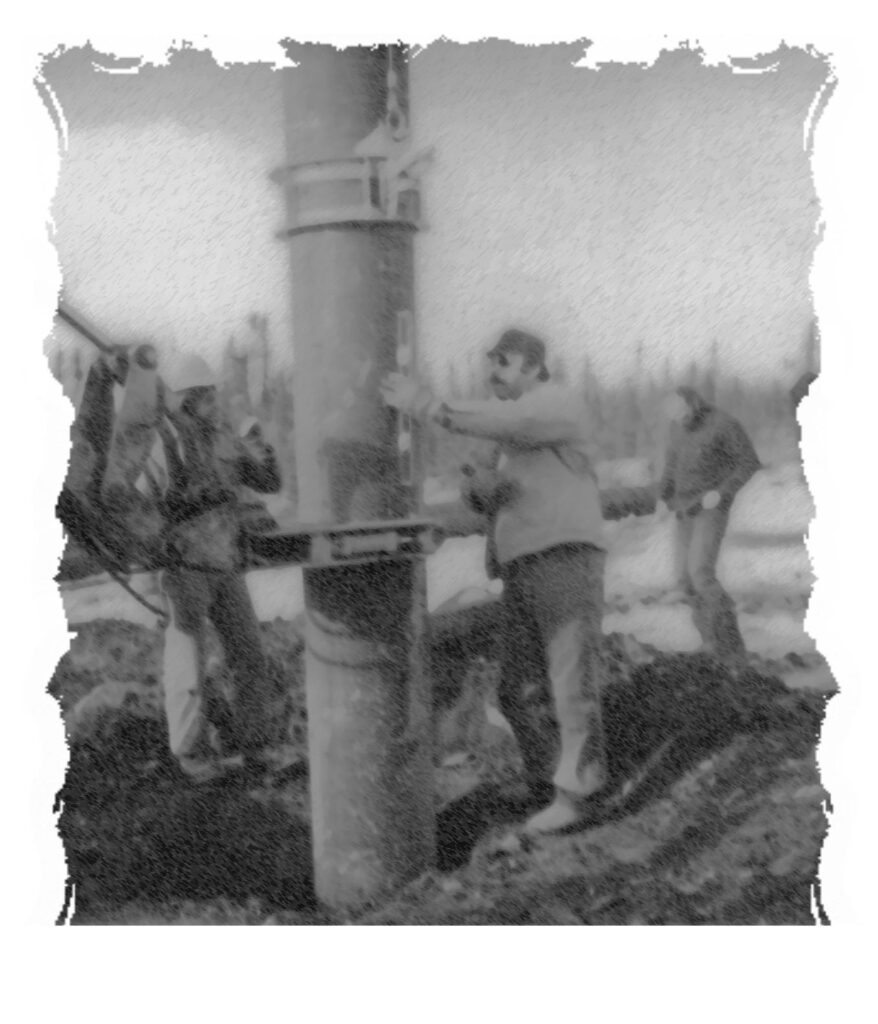
The discovery well was drilled by Humble Oil, later part of Exxon, and ARCO, with ARCO as operator. It confirmed the field on March 12, 1968, although the source also dates the discovery well to December 26, 1967, when a rig produced a gas flare. The target was the Mississippian Lisburne limestone at about 8,800 feet, which flowed about 1,152 barrels of oil per day plus 1.3 million cubic feet of gas. The initial oil was burned because there was not enough storage [1].
Size of the Field
The field originally held about 25 billion barrels of oil, covers 213,543 acres and is the largest oil field in North America. Natural gas in place is estimated at about 46 trillion cubic feet, with about 26 trillion recoverable. As of March 28, 2013, about 12 billion barrels had been produced, with roughly 16 billion barrels recoverable in total [1].
Location and Access
The field lies on the North Slope, about 400 miles north of Fairbanks, 650 miles north of Anchorage and 250 miles north of the Arctic Circle, between the National Petroleum Reserve–Alaska to the west and the Arctic National Wildlife Refuge to the east. The state owns the land and leases it as the Prudhoe Bay Unit. Road access runs from Fairbanks via the Elliott and Dalton Highways [1][3].
Production History
Production began June 20, 1977, when the Trans-Alaska Pipeline was completed. Output peaked in 1988, at a figure that sources give variously from 1.5 to 1.97 million barrels per day, and Greater Prudhoe Bay fell to about 943,000 barrels per day in 2005. Total production from 1977 through 2005 was about 11 billion barrels [1]. Oil travels south through the Trans-Alaska Pipeline System to Valdez [3]. See the entry on the Trans-Alaska Pipeline System.
Operators
BP became the sole operator after consolidating ARCO’s assets, following its acquisition of ARCO and the 2000 sale of ARCO Alaska assets to Phillips Petroleum. ExxonMobil and ConocoPhillips held stakes until August 2019, when BP announced it would sell its Alaska assets to Hilcorp for $5.6 billion [1].
Legacy
The discovery site was listed on the National Register of Historic Places in 2000, and a well operated there until 1985 [1]. The discovery transformed the state’s finances; see the entries on the Alaska Permanent Fund origins, the Economy of Alaska and the North Slope.
FAQs
When was oil discovered at Prudhoe Bay? The field was confirmed on March 12, 1968, after drilling that began in late 1967.
How big is the Prudhoe Bay field? It originally held about 25 billion barrels of oil and covers 213,543 acres.
When did production start? June 20, 1977, when the Trans-Alaska Pipeline was completed.
Who owns the land? The State of Alaska, which leases it as the Prudhoe Bay Unit.
Who operates the field now? Hilcorp, since 2019.
Sources
More in Energy
Key facts
Quick checkWhich well confirmed the Prudhoe Bay oil field?Show answer
Prudhoe Bay State No. 1
Sources
- Wikipedia. Prudhoe Bay Oil Field. 2026 (accessed 2026-11-12)
- Wikipedia. Alaska Permanent Fund. 2026 (accessed 2026-11-12)
- Wikipedia. Alaska North Slope. 2026 (accessed 2026-11-12)
Editorially reviewed by Specialty Digest Editorial TeamLast reviewed November 12, 2026Researched and drafted with AI assistanceReport an issue