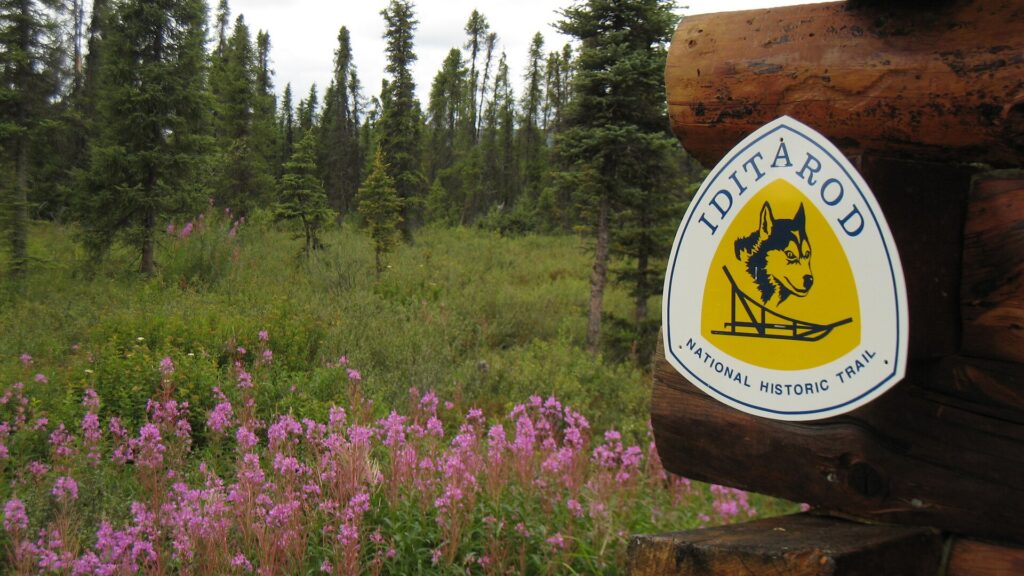
The Iditarod National Historic Trail is a system of winter trails in Alaska used for mail, freight and travel in the gold rush era. The trail system totals about 1,600 miles, and the historic Seward-to-Nome route was about 1,150 miles; it was designated a National Historic Trail in 1978.[1]
| Trail system | About 1,600 mi |
|---|---|
| Historic Seward–Nome route | About 1,150 mi |
| National Historic Trail | 1978 |
| Race founded | 1973 |
| 1925 serum run | 674 mi, Nenana to Nome |
Gold rush route
The trail ran from a point 50 miles north of Seward through Iditarod and Ophir to Nome, crossing the Alaska Range at Rainy Pass and following the 90-mile Kaltag Portage. Gold discovered near Nome brought thousands of travellers from 1908, and a Christmas Day Strike in the Iditarod district followed; 10,000 gold seekers arrived between 1910 and 1912 and extracted about $30 million in gold.[1]
Mail and decline
Dog teams hauled freight sleds carrying up to 1,100 pounds, with roadhouses spaced about 20 miles apart. Air transport replaced dog teams for mail within a decade, and by 1918 World War I and waning gold fever had reduced travel sharply; the trail fell into disuse for roughly half a century.[1]
Designation and race
The trail was designated a National Historic Trail in 1978 after years of effort by Joe Redington Sr. and Alaska’s congressional delegation. Redington established the Iditarod Trail Sled Dog Race in 1973 to promote designation and revive dog sledding; it follows much of the historic route and alternates its northern or southern segment by year.[1]
1925 serum run
Twenty mushers carried diphtheria serum 674 miles from Nenana to Nome in just over 127 hours. That relay used a different route, and the idea that the Iditarod race commemorates it is a common myth.[1]
FAQs
When did it become a National Historic Trail? 1978.
Who founded the Iditarod race? Joe Redington Sr., in 1973.
Did the race commemorate the serum run? No, that is a common myth.
Sources
Key facts
- 1,600-mile system
- Race since 1973
- Serum run 674 miles
Quick checkDesignated?Show answer
1978.
Sources
- Wikipedia. Iditarod Trail. 2026 (accessed 2026-11-12)
Editorially reviewed by Specialty Digest Editorial TeamLast reviewed November 12, 2026Researched and drafted with AI assistanceReport an issue