Nunivak Island in the Bering Sea covers 1,632 square miles and has one permanent settlement, Mekoryuk, where nearly all residents are Cup’it Eskimo. Muskox and reindeer introduced in the 1930s and 1940s are maintained by the village corporation.[1]
| Area | 1,631.97 sq mi |
|---|---|
| Population | 191 (2010) |
| Settlement | Mekoryuk |
| Wilderness | Southern half, 600,000 acres |
People
Nearly all permanent residents live in Mekoryuk on the north shore and are Cup’it Eskimo. They speak Cup’ig, a dialect of Central Alaskan Yup’ik, and many rely on subsistence hunting, commercial fishing and mainland work.[1]
Muskox and reindeer
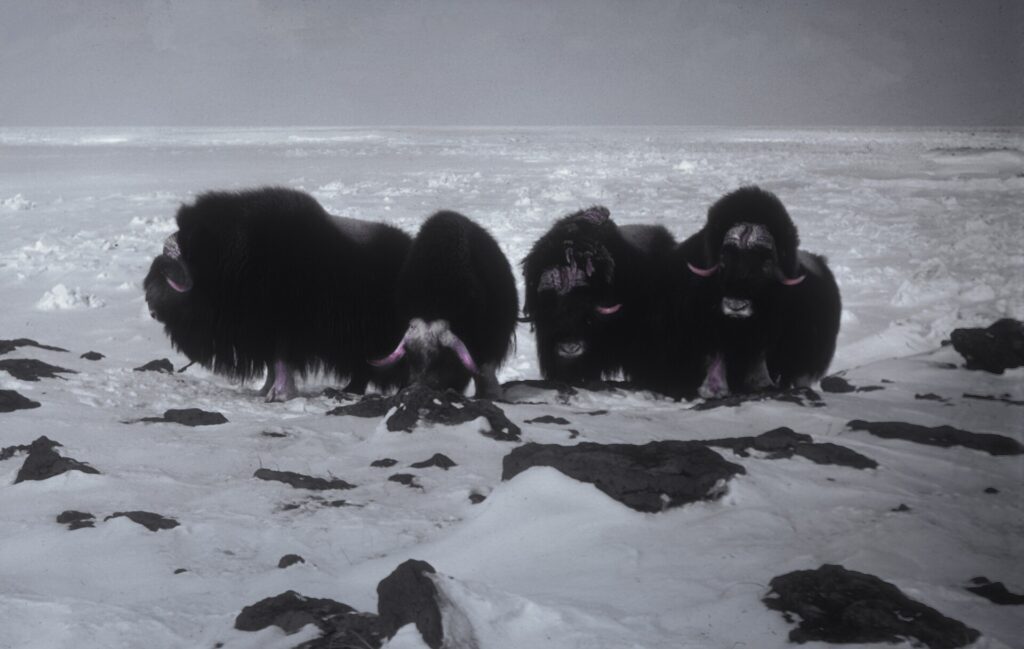
The U.S. Fish and Wildlife Service introduced muskox and reindeer in the 1930s and 1940s. Mekoryuk’s Native corporation maintains the herds, and muskox wool, called qiviut, is collected in spring and spun into yarn.[1]
Refuge
Most of the island is part of the Yukon Delta National Wildlife Refuge, and its southern half is the 600,000-acre Nunivak Wilderness.[1]
FAQs
What is the only village? Mekoryuk.
What language is spoken? Cup’ig, with English.
What animals were introduced? Muskox and reindeer.
Sources
Key facts
- 191 residents (2010)
- Muskox qiviut
- Nunivak Wilderness
Quick checkVillage?Show answer
Mekoryuk.
Sources
- Wikipedia. Nunivak Island. 2026 (accessed 2026-11-12)
Editorially reviewed by Specialty Digest Editorial TeamLast reviewed November 12, 2026Researched and drafted with AI assistanceReport an issue