The Steller sea lion (Eumetopias jubatus) is the largest of the eared seals. It breeds and hauls out at more than 300 sites around the North Pacific rim, and its western stock in Alaska declined sharply in the late 20th century and is listed as endangered.[1]
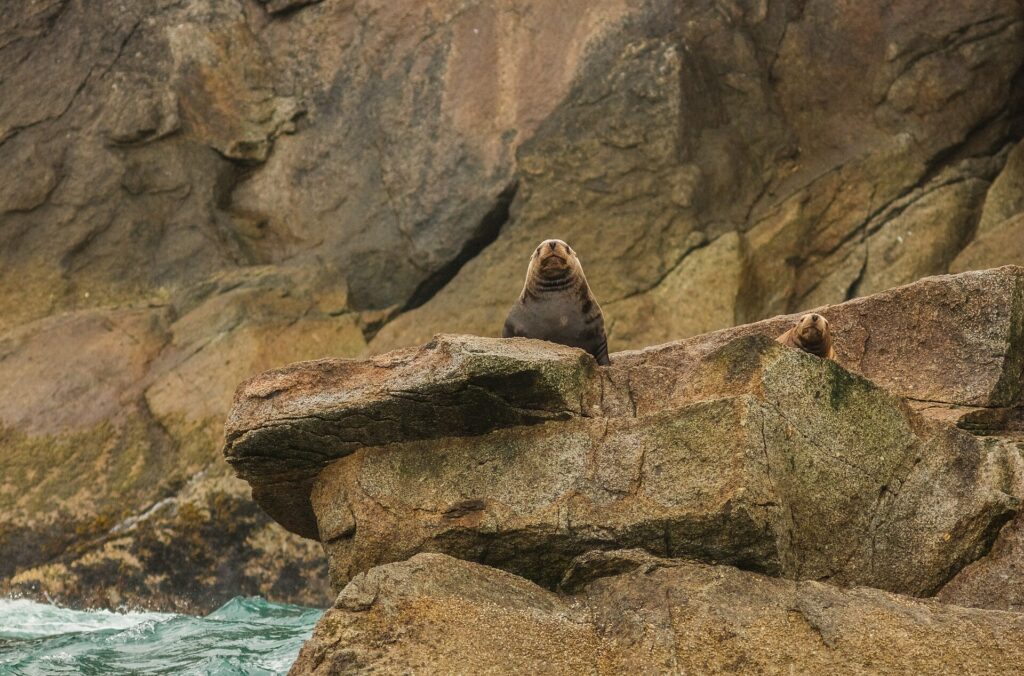
| Scientific name | Eumetopias jubatus |
|---|---|
| Adult male | About 1,245 lb; 10⅔ ft |
| Adult female | About 579 lb; 8⅔ ft |
| Newborn pup | About 51 lb |
| Western stock status | Endangered (1997 split) |
| Eastern stock status | Threatened (1997 split) |
Description
The Steller sea lion is the largest member of the eared seal family. Adult males average about 1,245 pounds and 10⅔ feet and weigh more than twice as much as females, which average about 579 pounds and 8⅔ feet. Pups are nearly black at birth, about 51 pounds, and lighten after the first molt, and adult males have broad foreheads and muscular necks.[1]
Range and rookeries
The species uses more than 300 haulouts and rookeries around the North Pacific rim, from Hokkaido and the Kuril Islands to Kamchatka, the Aleutians, the Gulf of Alaska and the Channel Islands off California. It breeds on exposed offshore rookeries in summer, and new breeding rookeries formed in Southeast Alaska in the early 21st century.[1]
Diet
Steller sea lions are generalist predators of fish and cephalopods. Western Alaska diets are dominated by Atka mackerel and walleye pollock, while eastern diets feature pollock, Pacific cod, flatfish, rockfish and forage fish.[1]
Population and status
The western stock numbered at least 140,000 in 1956 to 1960 and 30,525 by 1990, declining about 5.4 percent a year through the 1990s, and surveys from 2000 to 2004 showed stable or increasing numbers. The eastern stock has increased by more than 3 percent a year since the 1970s and was likely above 50,000 in 2007. The species was listed as threatened under the Endangered Species Act in 1990 and split in 1997 into an endangered western stock and a threatened eastern stock, divided east of Cape Suckling. These figures are from the source and may have changed.[1]
Reproduction
Females first breed at three to seven years and usually bear a single pup each year. Mating occurs in June and births the following June, and pups nurse for one to three years. Males mature at three to seven years but hold rookery territories only at 9 to 13 years, and the animals live up to about 20 years for males and 30 for females.[1]
FAQs
How big is a Steller sea lion? Males average about 1,245 pounds.
Why was the western stock listed? It declined sharply in the late 20th century.
What do they eat? Fish such as pollock and Atka mackerel, and cephalopods.
Sources
Key facts
- 300+ haulouts and rookeries
- Stocks split 1997
Quick checkWhat is the largest eared seal?Show answer
The Steller sea lion
Sources
- Alaska Department of Fish and Game. Steller Sea Lion, Wildlife Notebook Series. 2026 (accessed 2026-11-14)
Editorially reviewed by Specialty Digest Editorial TeamLast reviewed November 14, 2026Researched and drafted with AI assistanceReport an issue