The Russo-American Treaty of 1824, also called the Convention of 1824, was signed on April 17, 1824, in St. Petersburg. It transferred Russian claims on the Pacific Northwest coast south of 54°40′ north to the United States, the region Americans called the Oregon Country.[1]
| Signed | April 17, 1824, St. Petersburg |
|---|---|
| Ratified | January 11, 1825 |
| In force | January 12, 1825 |
| Articles | Six |
| Russian signatories | Karl Nesselrode, Pyotr Poletika |
| US signatory | Henry Middleton |
Background
The treaty came as the Oregon dispute between the United States and Britain was under way, after the Adams–Onis Treaty between the United States and Spain addressed Spanish claims north of the 42nd parallel.[1]
Terms
The convention has six articles. Its central effect was to transfer Russian claims on the Pacific Northwest coast south of 54°40′ north to the United States. Karl Nesselrode and Pyotr Poletika signed for Russia and Henry Middleton for the United States. Both nations ratified it on January 11, 1825, and it took effect the next day.[1]
Connection to Alaska’s boundary
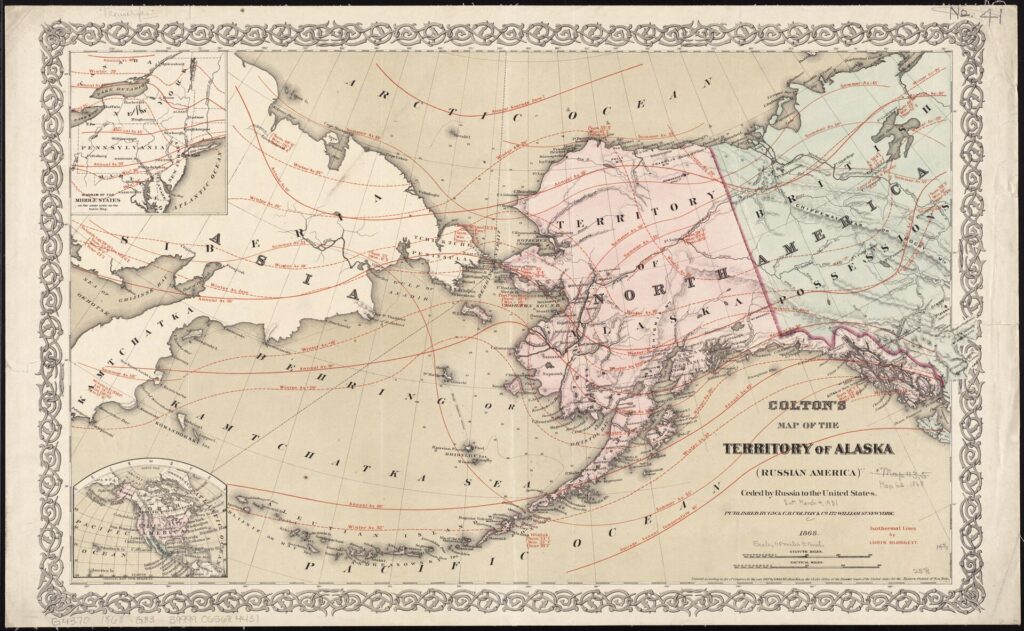
The Anglo-Russian Treaty of 1825 later set the southern boundary of Russian Alaska at 54°40′ north, the southern tip of the Alaska Panhandle, while Russia kept trading rights south of that latitude.[1]
FAQs
When was the treaty signed? April 17, 1824.
What latitude does it mention? 54°40′ north.
Who signed for the United States? Henry Middleton.
Sources
Key facts
- Signed April 17, 1824
- Six articles
Quick checkWhen did the 1824 treaty take effect?Show answer
January 12, 1825
Sources
- Wikipedia. Russo-American Treaty of 1824. 2026 (accessed 2026-11-14)
Editorially reviewed by Specialty Digest Editorial TeamLast reviewed November 14, 2026Researched and drafted with AI assistanceReport an issue