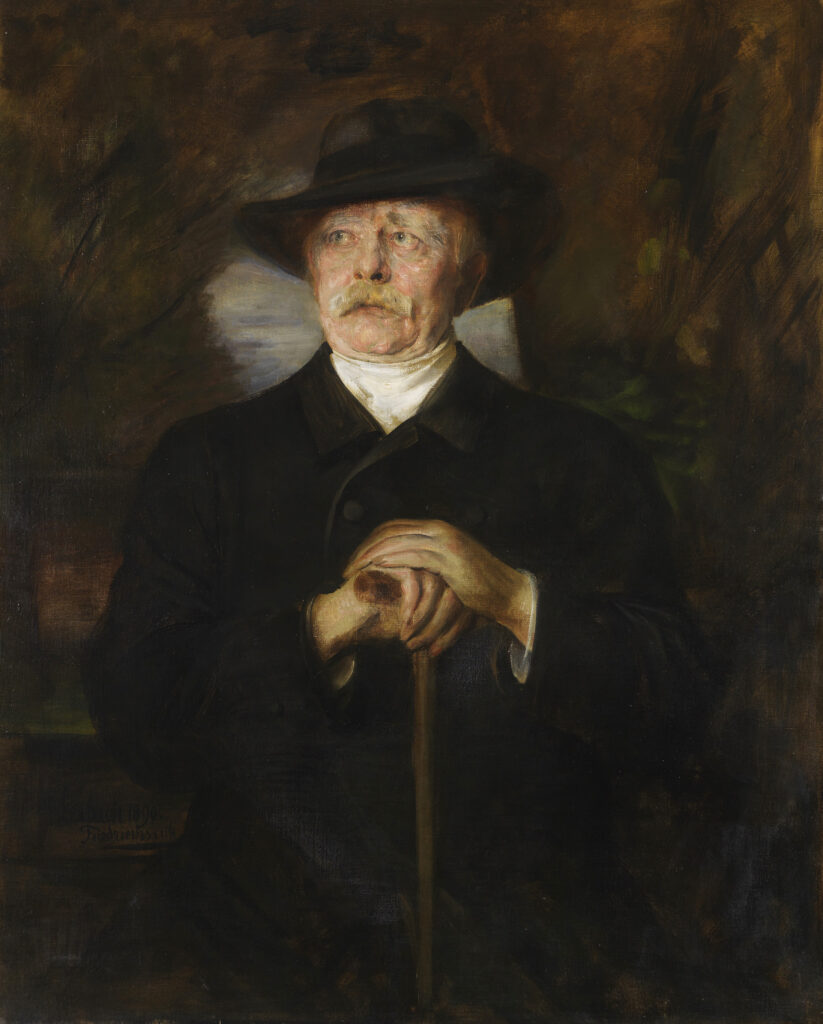
Otto von Bismarck (1815 – 1898) was a Prussian and German statesman who served as the first Chancellor of the German Empire, engineering the unification of Germany in 1871 through a combination of diplomatic maneuvering and military conflict. Known as the “Iron Chancellor,” he dominated European diplomacy for nearly three decades and created a system of alliances that preserved peace among the major European powers for much of his tenure.
Otto von Bismarck at a Glance
| Full name | Otto Eduard Leopold von Bismarck |
| Born | April 1, 1815, Schonhausen, Kingdom of Prussia |
| Died | July 30, 1898, Friedrichsruh, German Empire |
| Known for | Unification of Germany; first Chancellor of the German Empire; the Iron Chancellor |
| Occupation | Statesman, diplomat |
| Major events | Austro-Prussian War of 1866; Franco-Prussian War of 1870-1871; German unification in 1871 |
| Nationality | Prussian/German |
Early Life and Education
Bismarck was born into a Junker family of Prussian landed nobility at Schonhausen in Brandenburg, receiving an education that combined legal training with exposure to the aristocratic traditions of rural Prussia. He studied law at the University of Gottingen and the University of Berlin before entering the Prussian civil service, though he found administrative work unsatisfying and eventually returned to manage his family’s estates.
Entry into Prussian Politics
Bismarck entered Prussian politics in 1847 as a delegate to the United Diet, quickly establishing himself as a staunch conservative and defender of monarchical authority during the revolutionary upheavals of 1848. His uncompromising royalist positions during this turbulent period brought him to the attention of the Prussian court and set the stage for his later diplomatic appointments.
Diplomatic Career
Bismarck served as Prussian ambassador to Russia and later to France during the 1850s and early 1860s, gaining extensive experience in European diplomacy and developing the strategic insight that would later guide his chancellorship. These postings allowed him to study the balance of power among Europe’s major states and to cultivate relationships that would prove valuable once he assumed the chancellorship.
Appointment as Minister President
Bismarck was appointed Minister President of Prussia in 1862 by King Wilhelm I, tasked with resolving a constitutional crisis over military funding between the king and the Prussian parliament. He famously declared that the great questions of the age would be decided not by speeches and majority votes but by iron and blood, signaling his willingness to pursue Prussian power through military means when necessary.
The Wars of German Unification
Bismarck orchestrated a series of wars that progressively isolated and defeated rival powers while expanding Prussian influence, beginning with the Second Schleswig War against Denmark in 1864, followed by the Austro-Prussian War of 1866, which excluded Austria from German affairs. The culminating conflict was the Franco-Prussian War of 1870-1871, which Bismarck skillfully provoked and won, rallying the southern German states to join a unified German Empire under Prussian leadership.
Proclamation of the German Empire
Bismarck presided over the proclamation of the German Empire at the Palace of Versailles in January 1871, with King Wilhelm I of Prussia crowned as German Emperor and Bismarck himself appointed as the Empire’s first Chancellor. This moment marked the culmination of decades of German nationalist aspiration and established a new major power at the center of Europe.
Domestic Policy as Chancellor
Bismarck pursued an ambitious domestic agenda as Chancellor, including the Kulturkampf campaign against the political influence of the Catholic Church and later a pioneering system of social insurance programs covering health, accident, and old-age pensions for German workers. These social welfare measures, introduced in the 1880s, are widely regarded as among the earliest modern social insurance systems in the world.
The System of Alliances
Bismarck constructed an intricate web of diplomatic alliances designed to isolate France and prevent a coalition of hostile powers from forming against Germany, including the Three Emperors’ League with Austria-Hungary and Russia and later the Triple Alliance with Austria-Hungary and Italy. His diplomatic system aimed to preserve the European balance of power and maintain peace through careful management of competing national interests.
Relations with Wilhelm II
Bismarck’s influence declined following the accession of the young and assertive Kaiser Wilhelm II in 1888, whose more aggressive foreign policy ambitions clashed with Bismarck’s cautious diplomatic approach. Tensions between the two culminated in Bismarck’s dismissal from the chancellorship in 1890, ending nearly three decades of dominance over German and European politics.
Later Years and Retirement
Bismarck spent his retirement years at his estate in Friedrichsruh, writing his memoirs and occasionally offering public commentary on German politics, though he remained largely excluded from direct influence over state affairs. He continued to be regarded as a revered elder statesman by much of the German public even as his formal political power had ended.
Economic Policy
Bismarck pursued protectionist trade policies during the latter part of his chancellorship, shifting away from earlier free trade arrangements to shield German agriculture and industry from foreign competition through tariffs introduced in 1879. This economic approach reflected his broader strategy of balancing the interests of Prussian landowners with the growing industrial base of the unified German state.
The Kulturkampf
Bismarck launched the Kulturkampf, or “culture struggle,” in the 1870s as a campaign to reduce the political influence of the Roman Catholic Church within the newly unified German Empire, particularly in regions such as Prussia’s Polish-speaking territories where Catholic loyalty was seen as a challenge to state authority. The campaign included laws restricting clerical appointments and church oversight of education, though Bismarck eventually moderated these policies in the 1880s as he sought Catholic political support against the rising socialist movement.
Response to Socialism
Bismarck viewed the growing socialist movement in Germany as a significant threat to the stability of the empire and responded with a combination of repression and social reform, enacting anti-socialist laws in 1878 that restricted socialist organizing and publications. At the same time, he introduced his landmark social insurance programs partly as a strategy to undercut the appeal of socialism by demonstrating that the state itself could address workers’ economic concerns.
Legacy
Otto von Bismarck remains one of the most consequential statesmen of the nineteenth century, remembered as the architect of German unification and as a master of realpolitik whose diplomatic system helped maintain relative peace in Europe for much of his tenure. His pioneering social insurance programs influenced the development of the modern welfare state, while his complex alliance system and the power vacuum left after his dismissal are often cited by historians as factors in the tensions that eventually led to the First World War.
References
- New World Encyclopedia – Otto von Bismarck
- History.com – Otto von Bismarck
- History.com – Otto von Bismarck (European History)
Frequently Asked Questions
What is Otto von Bismarck best known for? He is best known for engineering the unification of Germany in 1871 and serving as the first Chancellor of the German Empire.
Why was Bismarck called the Iron Chancellor? The nickname reflected his famous declaration that major political questions would be settled by “iron and blood,” referring to military strength rather than negotiation alone.
What wars did Bismarck orchestrate? He led Prussia through the Second Schleswig War, the Austro-Prussian War of 1866, and the Franco-Prussian War of 1870-1871, each advancing German unification.
Why did Bismarck leave office? He was dismissed as Chancellor in 1890 by Kaiser Wilhelm II after policy disagreements, ending his nearly three-decade political career.
Editorially reviewed by Specialty Digest Editorial TeamLast reviewed November 29, 2026Researched and drafted with AI assistanceReport an issue