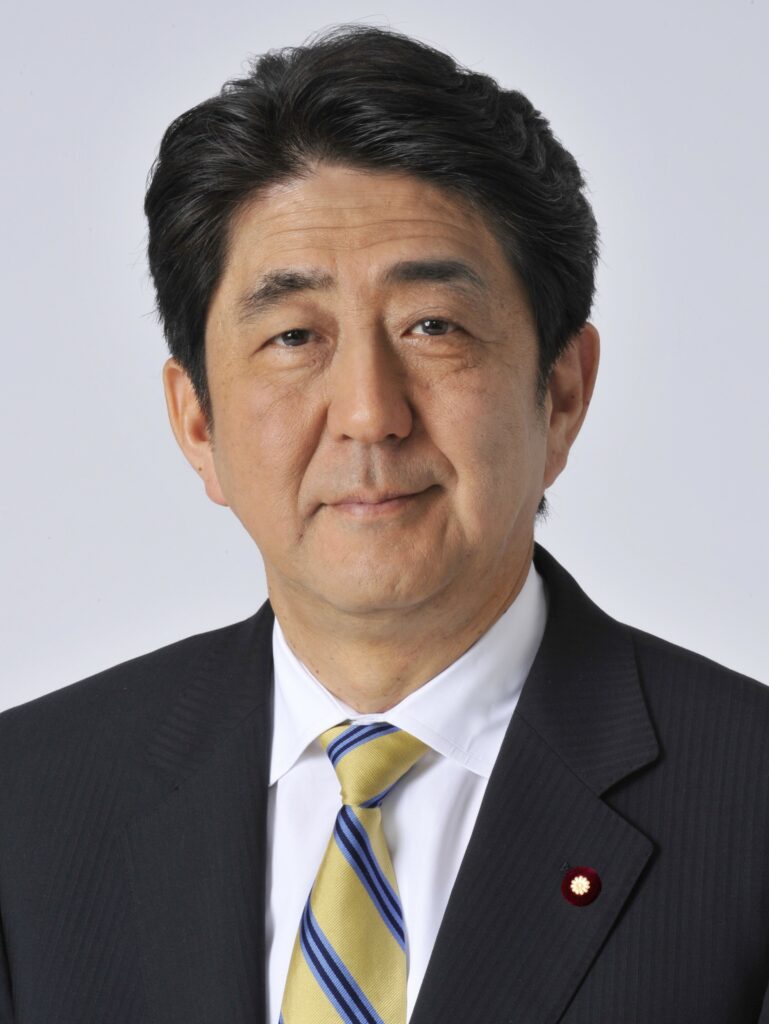
Shinzo Abe (1954-2022) was a Japanese politician who served as Prime Minister of Japan from 2006 to 2007 and again from 2012 to 2020, becoming the longest-serving prime minister in Japanese history during his second tenure. His government pursued an ambitious economic program known as “Abenomics” alongside efforts to strengthen Japan’s security posture and international alliances, and his political career ended tragically with his assassination in 2022.
Shinzo Abe at a Glance
| Full name | Shinzo Abe |
| Born | September 21, 1954, Tokyo, Japan |
| Died | July 8, 2022, Nara, Japan |
| Known for | Prime Minister of Japan 2006-2007 and 2012-2020; longest-serving prime minister in Japanese history; “Abenomics” economic policy |
| Occupation | Politician |
| Major events | First term as Prime Minister in 2006; return to power in 2012; resignation in 2020; assassination in 2022 |
| Nationality | Japanese |
Early Life and Political Family
Abe was born in Tokyo into a prominent Japanese political family, the grandson of former Prime Minister Nobusuke Kishi and the son of former Foreign Minister Shintaro Abe, giving him an early and direct connection to national politics. He studied political science at Seikei University before pursuing graduate studies in the United States, and he worked briefly in the private sector before entering politics as a secretary to his father.
Entry into Politics
Abe was first elected to the Japanese House of Representatives in 1993, representing a Yamaguchi Prefecture constituency long associated with his family’s political legacy, and he gradually rose through the ranks of the Liberal Democratic Party over the following decade. He gained national prominence for his hardline position on North Korea’s abduction of Japanese citizens, an issue that significantly raised his public profile within Japanese politics.
First Term as Prime Minister
Abe became Prime Minister for the first time in 2006, at 52 years old one of the youngest individuals to hold the position in postwar Japan, succeeding Junichiro Koizumi as Liberal Democratic Party leader. His first term was marked by efforts to reform Japan’s education system and strengthen national defense policy, but it ended after approximately one year amid health difficulties and declining public support.
Resignation and Years Out of Power
Abe resigned as Prime Minister in September 2007, citing a chronic digestive illness that had affected his ability to govern effectively, and the Liberal Democratic Party subsequently lost power in the 2009 general election. He spent several years as an opposition lawmaker before being re-elected as party leader in 2012, positioning himself for a return to the premiership.
Return to Power and Abenomics
Abe returned as Prime Minister in December 2012 following a decisive Liberal Democratic Party election victory, and he launched an ambitious economic program that became widely known as “Abenomics,” built around monetary easing, fiscal stimulus, and structural economic reforms. This three-pronged approach aimed to end decades of economic stagnation and deflation that had affected Japan since the 1990s.
Security and Defense Policy
Abe’s government pursued significant changes to Japan’s security posture, including a reinterpretation of the country’s pacifist constitution to allow for collective self-defense alongside allied nations, a policy shift that generated substantial domestic political debate. His administration also worked to strengthen Japan’s alliance with the United States and expand defense cooperation with other regional partners amid growing concerns about China’s military expansion.
Longest-Serving Prime Minister
Abe became Japan’s longest-serving prime minister in November 2019, surpassing the previous record held by his own great-uncle, Eisaku Sato, a milestone that reflected the unusual political stability of his second tenure in an era of frequent Japanese leadership turnover. His extended time in office allowed him to pursue long-term policy initiatives that had often eluded his shorter-serving predecessors.
International Diplomacy
Abe cultivated an active international profile, maintaining close relationships with successive United States presidents and playing a central role in regional diplomatic initiatives including the Trans-Pacific Partnership trade negotiations. He also worked to manage Japan’s complex relationships with China and South Korea, nations with which historical and territorial disputes have periodically strained diplomatic relations.
Second Resignation
Abe announced his resignation as Prime Minister in August 2020, again citing a recurrence of his chronic ulcerative colitis, stepping down after what had become the longest continuous tenure in Japanese prime ministerial history. His departure was widely covered internationally given his prominent role in global diplomacy and Japan’s economic policy during his nearly eight years in office.
Post-Premiership Activities
Following his resignation, Abe remained an influential figure within the Liberal Democratic Party, leading its largest internal faction and continuing to shape party policy debates from outside the prime ministership. He remained active in public life, delivering speeches and maintaining engagement with both domestic and international political developments during his time as a backbench legislator.
Assassination
Abe was assassinated on July 8, 2022, while delivering a campaign speech in the city of Nara, an attack that shocked Japan and the international community given the country’s historically low rates of political violence and strict gun control laws. His death prompted an extensive national reckoning over political security arrangements and drew tributes from world leaders reflecting his prominent international standing.
Domestic Social Policy
Abe’s government pursued initiatives intended to address Japan’s demographic challenges, including policies aimed at increasing female workforce participation under a program sometimes referred to as “womenomics” and measures intended to encourage higher birth rates amid the country’s declining and aging population. His administration also implemented a controversial increase to the national consumption tax, a politically sensitive measure intended to address Japan’s substantial public debt burden.
Legacy
Shinzo Abe remains one of the most significant figures in modern Japanese political history, remembered for his record-setting tenure as prime minister, his Abenomics economic program, and his efforts to reshape Japan’s security and defense policy. His assassination brought a tragic end to a political career that had substantially shaped Japan’s domestic and foreign policy for more than a decade, and his legacy continues to be examined by historians, economists, and political analysts.
References
Frequently Asked Questions
What is Shinzo Abe best known for? He is best known as the longest-serving Prime Minister of Japan in history, serving from 2006 to 2007 and again from 2012 to 2020, and for his economic program known as Abenomics.
What was Abenomics? It was an economic policy program Abe launched in 2012 built around monetary easing, fiscal stimulus, and structural reforms intended to end decades of economic stagnation in Japan.
Why did Abe resign as Prime Minister? He resigned on two occasions, both times citing a recurring chronic digestive illness called ulcerative colitis that affected his ability to govern effectively.
How did Shinzo Abe die? He was assassinated on July 8, 2022, while delivering a campaign speech in Nara, Japan, an event that shocked the nation given Japan’s historically low rates of political violence.
Editorially reviewed by Specialty Digest Editorial TeamLast reviewed November 29, 2026Researched and drafted with AI assistanceReport an issue