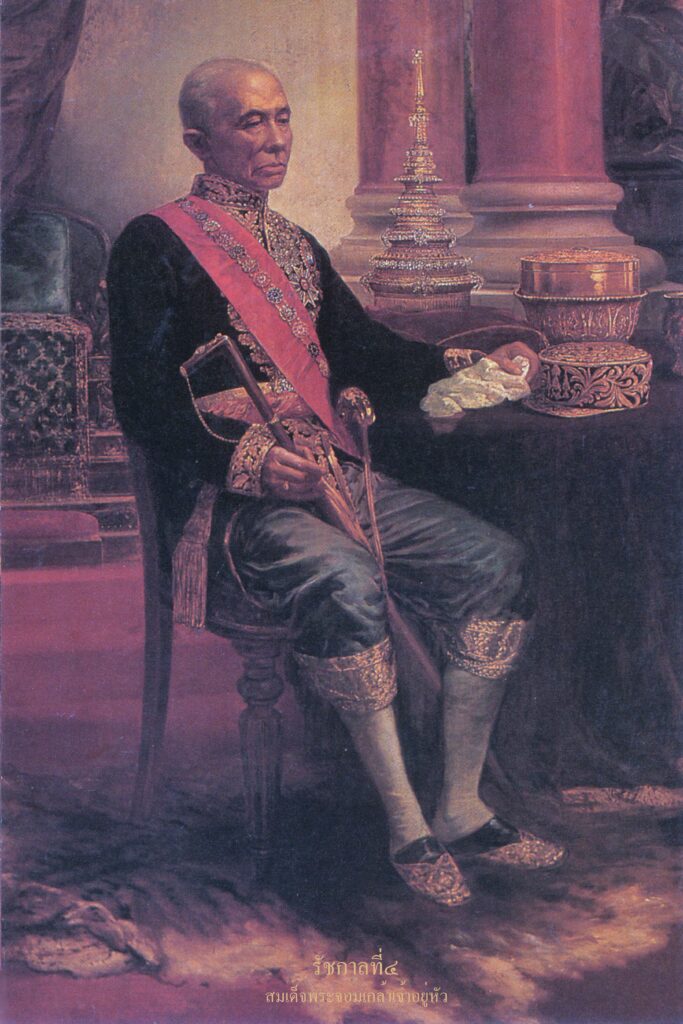
Rama IV of Siam (1804-1868), also known as King Mongkut, was the fourth monarch of the Chakri Dynasty, ruling the Kingdom of Siam from 1851 until his death in 1868. Known for modernizing Siamese institutions, promoting Western scientific knowledge, and skillfully navigating relations with European colonial powers, Mongkut is widely credited with preserving Siam’s independence during an era when most of Southeast Asia fell under colonial rule.
Rama IV of Siam at a Glance
| Full name | Mongkut (King Rama IV) |
| Born | October 18, 1804, Bangkok, Siam |
| Died | October 1, 1868, Bangkok, Siam |
| Known for | King of Siam 1851-1868; modernization reforms; the Bowring Treaty of 1855 |
| Occupation | Monarch |
| Major events | Ordination as a Buddhist monk 1824-1851; accession in 1851; signing of the Bowring Treaty in 1855 |
| Nationality | Siamese (Thai) |
Early Life and Monastic Years
Mongkut was born into the Siamese royal family as the son of King Rama II, but upon his father’s death in 1824, the throne passed to his older half-brother rather than to him, prompting Mongkut to enter the Buddhist monkhood. He spent twenty-seven years as a monk, during which he became a serious scholar of Pali Buddhist texts, founded a reformist movement within Thai Buddhism known as the Thammayut order, and developed a deep interest in Western science, languages, and literature.
Accession to the Throne
Following the death of his half-brother King Rama III in 1851, Mongkut was selected by the Siamese nobility to become king, ascending to the throne at the age of forty-seven with an unusually broad education in both traditional Siamese scholarship and Western subjects. His decades of monastic study had given him fluency in English and a sophisticated understanding of Western diplomacy and science that would prove invaluable in navigating the challenges facing Siam during his reign.
The Bowring Treaty and Foreign Relations
In 1855, Mongkut negotiated the Bowring Treaty with Great Britain, an agreement that opened Siam to greater international trade and reduced import duties, establishing a model that Siam subsequently extended to other Western powers including France and the United States. These treaties, while granting significant trade concessions, helped Mongkut position Siam as a cooperative trading partner rather than a target for colonial conquest, a strategy that distinguished Siam from most of its Southeast Asian neighbors.
Modernization of Siamese Institutions
Mongkut initiated a broad program of modernization that introduced Western technologies, including the printing press, modern shipbuilding techniques, and infrastructure improvements such as roads and canals, while reforming aspects of the Siamese legal and administrative systems. These reforms, though more limited in scope than those his son and successor would later implement, established a foundation for the more extensive modernization program that characterized the following reign.
Promotion of Scientific Knowledge
Mongkut maintained a lifelong passion for astronomy and science, famously using his astronomical calculations to accurately predict a solar eclipse in 1868, an event he invited foreign diplomats and scientists to observe alongside the Siamese court. His personal engagement with Western scientific methods reflected his broader belief that Siam needed to understand and adopt useful foreign knowledge while preserving its own cultural and religious traditions.
Religious Reform
As a former monk who had founded the Thammayut reform movement, Mongkut continued to take a close personal interest in Buddhist religious practice throughout his reign, promoting stricter adherence to monastic discipline and more rigorous scriptural study. His religious reforms emphasized a more rationalist interpretation of Buddhist teachings, influenced in part by his exposure to Western intellectual methods during his years of study before becoming king.
Relations with Western Diplomats and Missionaries
Mongkut maintained cordial relationships with Western missionaries and diplomats stationed in Siam, employing several Western tutors and advisors at his court, including the English governess Anna Leonowens, who later wrote memoirs about her experiences there. These relationships, while sometimes complex, provided Mongkut with valuable channels of information about Western affairs and helped facilitate the diplomatic relationships that proved essential to Siam’s continued independence.
Administrative and Legal Reforms
Mongkut undertook efforts to modernize aspects of Siamese governance, including adjustments to court protocol, taxation, and the administration of justice, aimed at bringing Siamese institutions into closer alignment with practices that Western powers would recognize and respect. These incremental reforms helped demonstrate to foreign powers that Siam was capable of self-governance according to internationally recognized standards, further supporting the kingdom’s diplomatic position.
Family and Succession
Mongkut fathered numerous children during his reign, and his son Chulalongkorn, who would become King Rama V, succeeded him upon his death and continued and expanded upon his father’s modernization efforts. The transition between these two reigns is often viewed by historians as a continuous period of Siamese reform that successfully preserved the kingdom’s sovereignty through a combination of diplomatic skill and institutional adaptation.
Death
Mongkut died in 1868 shortly after observing the solar eclipse he had accurately predicted, an event that became a celebrated part of his historical legacy as a scholar-king who successfully bridged traditional Siamese learning and Western scientific knowledge. His death marked the end of a reign that had fundamentally reoriented Siam’s relationship with the Western world while preserving the kingdom’s independence and cultural identity.
Approach to Regional Diplomacy
Beyond his dealings with Western powers, Mongkut maintained careful diplomatic relationships with neighboring Southeast Asian states and tributary territories, balancing Siamese regional influence against the growing pressure of European colonial expansion in Burma, Vietnam, and the Malay Peninsula. His pragmatic approach to these regional relationships, which combined traditional tributary arrangements with an awareness of shifting geopolitical realities, helped Siam maintain a buffer of influence even as colonial powers expanded their holdings on the kingdom’s borders.
Educational and Linguistic Contributions
Mongkut’s command of English and his broad scholarly interests led him to personally correspond with foreign heads of state, including an exchange of letters with President Abraham Lincoln of the United States, demonstrating a level of direct royal engagement with Western leaders uncommon among Asian monarchs of the period. His interest in language and education also extended to supporting the study of English and Western subjects among Siamese elites, laying groundwork for the educational reforms that would expand considerably under his successor.
Legacy
Rama IV remains one of the most celebrated monarchs in Thai history, remembered for his scholarly achievements, his skillful diplomacy with Western powers, and his foundational role in beginning the modernization process that his son would later complete. His reign is widely regarded by historians as a pivotal period that helped Siam avoid the colonial fate experienced by nearly every other Southeast Asian kingdom during the nineteenth century.
References
Frequently Asked Questions
What is Rama IV of Siam best known for? He is best known for modernizing Siamese institutions, promoting Western scientific knowledge, and negotiating treaties that helped Siam avoid colonization.
What was the Bowring Treaty? It was an 1855 agreement with Great Britain that opened Siam to greater international trade, a model Mongkut extended to other Western powers to help preserve Siamese independence.
How long was Mongkut a Buddhist monk before becoming king? He spent twenty-seven years as a monk, studying Pali Buddhist texts and founding the Thammayut reform movement before ascending the throne at age forty-seven.
Who succeeded Rama IV as King of Siam? His son Chulalongkorn succeeded him as King Rama V and continued and expanded upon his father’s modernization efforts.
Editorially reviewed by Specialty Digest Editorial TeamLast reviewed November 29, 2026Researched and drafted with AI assistanceReport an issue