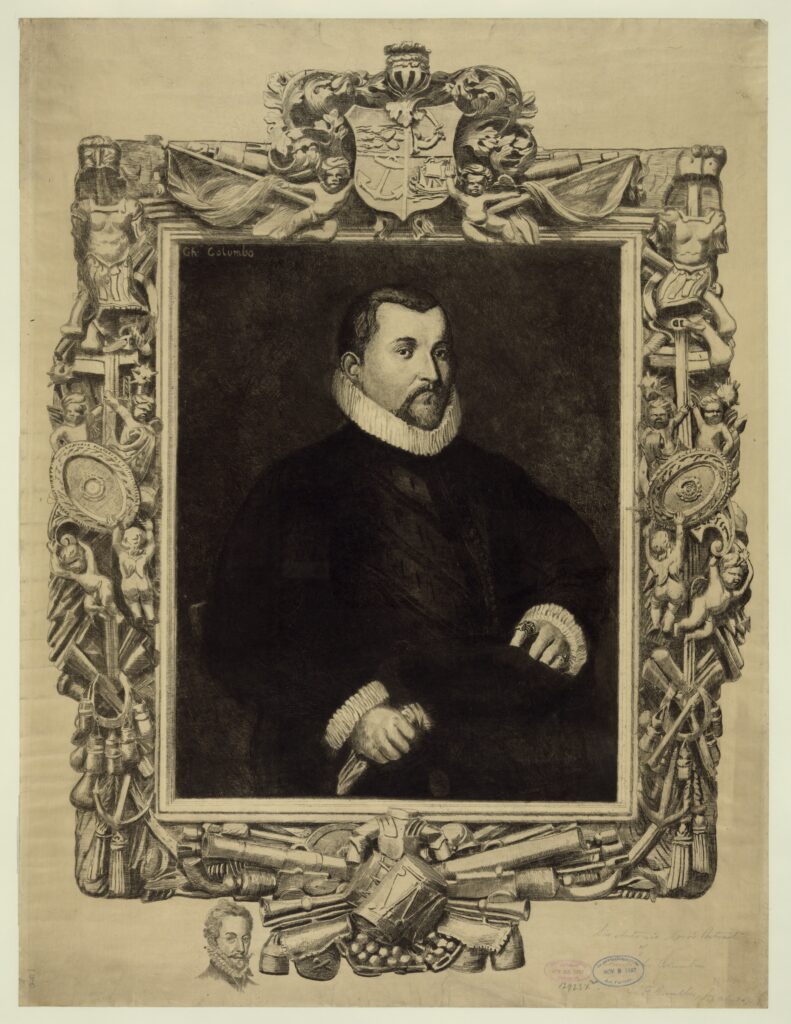
Christopher Columbus (1451-1506) was an Italian explorer whose four transatlantic voyages between 1492 and 1504, undertaken under the sponsorship of the Spanish crown, initiated sustained European contact with the Americas. Known for his navigational ambition and his conviction that a westward route to Asia was achievable, Columbus’s expeditions opened an era of transatlantic exploration and exchange that permanently reshaped the modern world.
Christopher Columbus at a Glance
| Full name | Cristoforo Colombo (Christopher Columbus) |
| Born | Between August and October 1451, Genoa, Italy |
| Died | May 20, 1506, Valladolid, Spain |
| Known for | Four transatlantic voyages 1492-1504; initiating sustained European contact with the Americas |
| Occupation | Explorer, navigator |
| Major events | First voyage and landfall in the Americas in 1492; three subsequent voyages through 1504 |
| Nationality | Genoese (Republic of Genoa) |
Early Life and Maritime Training
Columbus was born in the Republic of Genoa, a major maritime trading power, where he began working at sea from a young age and gradually developed the navigational expertise that would define his later career. His early voyages took him throughout the Mediterranean and along the Atlantic coasts of Europe and Africa, experiences that exposed him to contemporary navigational techniques and theories about world geography.
Developing the Westward Plan
Columbus became convinced that a westward sea route across the Atlantic Ocean could reach Asia more directly than the established routes around Africa, basing his calculations on an underestimate of the Earth’s circumference that led him to believe Asia was much closer than it actually was. He spent years seeking sponsorship for this plan, approaching the courts of Portugal and various other European powers before eventually securing the support of the Spanish monarchs Ferdinand and Isabella in 1492.
The First Voyage and Landfall
Departing from Spain in August 1492 with three ships, the Nina, the Pinta, and the Santa Maria, Columbus and his crew made landfall in the Bahamas in October of that year, believing they had reached islands near Asia. This first voyage, though it did not achieve Columbus’s intended goal of reaching the Indies, marked the beginning of sustained contact between Europe and the Americas, a continent previously unknown to most Europeans.
Subsequent Voyages
Columbus undertook three additional voyages across the Atlantic between 1493 and 1504, during which he explored various Caribbean islands and sections of the Central and South American coastline, continuing to believe he had reached the outskirts of Asia. These later expeditions established Spanish settlements in the Caribbean and provided much of the early European geographic and ethnographic information about the region that would inform subsequent exploration.
Governance of Spanish Territories
Columbus served as governor of the Spanish territories he had claimed in the Caribbean, a role in which he faced significant challenges managing the colonial settlements and the complex relationships between Spanish colonists and the indigenous populations of the islands. His administration ultimately proved contentious enough that Spanish authorities removed him from his governing position and briefly placed him under arrest in 1500, though he was later released and permitted to undertake his fourth voyage.
Navigational Achievements
Columbus’s voyages demonstrated significant navigational skill, as he successfully crossed and recrossed the Atlantic Ocean multiple times using the navigational tools and techniques available in the late fifteenth century, including dead reckoning and careful observation of wind patterns. His identification of the trade winds and the general sailing routes that facilitated reliable Atlantic crossings proved essential to the subsequent development of regular transatlantic travel.
Geographic Legacy
Although Columbus never acknowledged during his lifetime that he had encountered a previously unknown continent rather than reaching Asia, his voyages provided the foundational geographic knowledge that allowed later explorers and cartographers to gradually map the true extent and nature of the Americas. The continent would eventually be named after the Italian explorer Amerigo Vespucci, whose published accounts helped establish that the lands Columbus encountered were indeed a separate landmass from Asia.
The Columbian Exchange
Columbus’s voyages initiated what historians call the Columbian Exchange, the extensive transfer of plants, animals, diseases, technology, and people between the Eastern and Western Hemispheres that followed sustained contact between Europe and the Americas. This exchange introduced crops such as maize, potatoes, and tomatoes to Europe while bringing wheat, horses, and cattle to the Americas, fundamentally transforming agriculture and daily life on both sides of the Atlantic.
Later Life and Death
Columbus’s fourth and final voyage, undertaken between 1502 and 1504, explored portions of the Central American coastline in a continued search for a passage to Asia, though the expedition faced significant hardships including shipwreck and prolonged stranding in Jamaica. He returned to Spain in 1504 in declining health and died in Valladolid in 1506, having never fully achieved the recognition or financial reward he believed his discoveries warranted.
Historical Significance
Columbus’s voyages are widely regarded by historians as a pivotal turning point in world history, marking the beginning of sustained European exploration, colonization, and transformation of the Americas that would unfold over subsequent centuries. The era of transatlantic contact his expeditions initiated reshaped global trade networks, demographic patterns, and the political map of the world in ways that continue to influence the modern era.
Commemoration and Ongoing Historical Assessment
Columbus has been commemorated in numerous ways throughout history, including the naming of countries, cities, and holidays after him, reflecting his long-standing symbolic association with the European age of exploration and discovery. Contemporary historians continue to study and contextualize the full scope and consequences of his voyages as part of the broader history of transatlantic contact and exchange between Europe and the Americas.
Relations with Indigenous Populations
Columbus’s voyages brought the first sustained contact between European explorers and the indigenous peoples of the Caribbean, including the Taino people, whose societies, agricultural practices, and knowledge of local geography shaped the earliest European accounts of the Americas. These initial encounters, documented in Columbus’s own journals and later correspondence, provided Europeans with their first detailed descriptions of the peoples and cultures of the Caribbean islands.
Documentation and Written Accounts
Columbus kept detailed journals and wrote extensive letters describing his voyages, the lands he encountered, and his observations of the peoples and natural resources of the Caribbean, documents that became primary sources for European understanding of the Americas in the years following his expeditions. These written accounts, widely circulated and translated across Europe, helped generate significant interest in further exploration and ultimately contributed to the wave of Spanish and other European expeditions that followed in the decades after his voyages.
Legacy
Christopher Columbus remains one of the most historically significant figures of the early modern period, remembered for his navigational ambition and the four transatlantic voyages that initiated sustained contact between Europe and the Americas. His expeditions fundamentally altered the course of world history, setting in motion centuries of exploration, exchange, and transformation that connected previously separate hemispheres of the globe.
References
- New World Encyclopedia – Christopher Columbus
- History.com – Christopher Columbus
- History.com – Christopher Columbus (Exploration)
Frequently Asked Questions
What is Christopher Columbus best known for? He is best known for his four transatlantic voyages between 1492 and 1504, which initiated sustained European contact with the Americas.
Why did Christopher Columbus sail west across the Atlantic? He believed a westward route across the Atlantic Ocean could reach Asia more directly, based on an underestimate of the Earth’s circumference.
Who sponsored Christopher Columbus’s voyages? The Spanish monarchs Ferdinand and Isabella sponsored his expeditions after he secured their support in 1492.
What was the Columbian Exchange? It was the extensive transfer of plants, animals, diseases, and people between the Eastern and Western Hemispheres that followed Columbus’s voyages.
Editorially reviewed by Specialty Digest Editorial TeamLast reviewed November 29, 2026Researched and drafted with AI assistanceReport an issue