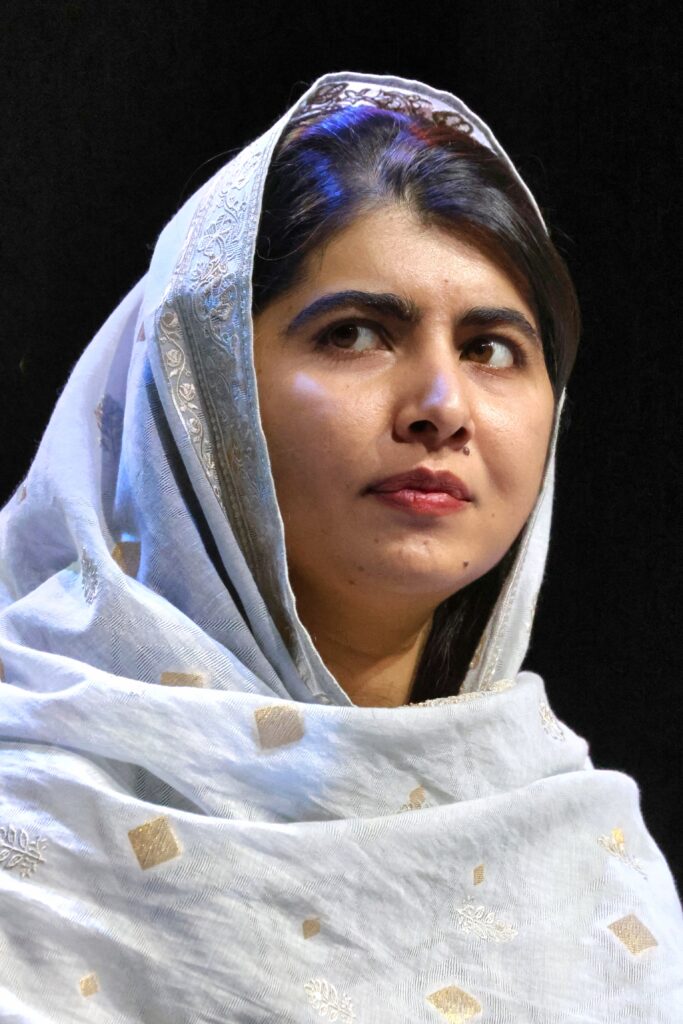
Malala Yousafzai (born 1997) is a Pakistani activist for girls’ education who became the youngest-ever Nobel Prize laureate after surviving an assassination attempt by the Taliban in 2012. Her advocacy for girls’ right to education, which began in her early teenage years in Pakistan’s Swat Valley, has made her one of the most prominent international voices for educational access and women’s rights.
Malala Yousafzai at a Glance
| Full name | Malala Yousafzai |
| Born | July 12, 1997, Mingora, Swat Valley, Pakistan |
| Known for | Advocacy for girls’ education; youngest Nobel Prize laureate, 2014 |
| Occupation | Activist, author |
| Major events | Assassination attempt 2012; Nobel Peace Prize 2014; founding of the Malala Fund |
| Nationality | Pakistani |
Early Life in Swat Valley
Malala Yousafzai was born in Mingora, in Pakistan’s Swat Valley, to a family that placed a strong emphasis on education, with her father operating a girls’ school in the region. Growing up in this educational environment shaped her early passion for learning and gave her a direct understanding of the importance of educational opportunity, particularly for girls in a region where such access was not always guaranteed.
Early Activism Under Taliban Control
When the Taliban took control of the Swat Valley and began restricting girls’ access to education, Yousafzai, then just eleven years old, began writing an anonymous blog for the BBC describing life under Taliban rule and advocating for girls’ continued right to attend school. Her willingness to speak out, even as the Taliban enforced increasingly severe restrictions on education for girls, brought her early recognition as a youth advocate for educational access.
Growing Public Profile
As her advocacy continued, Yousafzai’s public profile grew substantially, and she began appearing in documentary films and giving interviews about her experiences and her views on girls’ education under Taliban rule. This increasing visibility brought international attention to the situation facing girls and women in Taliban-controlled areas of Pakistan, while also making her a known figure whose continued advocacy drew growing hostility from the Taliban.
The 2012 Assassination Attempt
In October 2012, Yousafzai was shot by a Taliban gunman while riding home on a school bus, an attack that left her critically injured and sparked international outrage and attention to her cause. She was transported for emergency medical treatment, eventually being transferred to a hospital in the United Kingdom, where she underwent extensive treatment and gradually recovered from her injuries.
Recovery and Renewed Advocacy
Following her recovery, Yousafzai resumed and significantly expanded her advocacy for girls’ education, using her heightened international profile to call attention to the educational barriers facing girls not only in Pakistan but around the world. Her survival and continued commitment to her cause transformed her into a global symbol of resilience and the fight for universal access to education.
Address to the United Nations
In July 2013, on her sixteenth birthday, Yousafzai delivered a widely covered speech to the United Nations General Assembly calling for universal access to education, an address that further cemented her status as an internationally recognized advocate. Her remarks, delivered less than a year after the attempt on her life, emphasized education as a fundamental right and called on world leaders to prioritize access to schooling for all children.
The Nobel Peace Prize
In 2014, at the age of seventeen, Yousafzai was awarded the Nobel Peace Prize jointly with Indian children’s rights activist Kailash Satyarthi, making her the youngest Nobel laureate in the prize’s history. The award recognized their shared struggle against the suppression of children and for all children’s right to education, bringing further international attention to the global movement for educational access.
Founding of the Malala Fund
Yousafzai co-founded the Malala Fund, a nonprofit organization dedicated to supporting girls’ education initiatives around the world, working to break down the social, economic, and political barriers that prevent girls from accessing quality education. The organization has supported educational programs and advocacy efforts in numerous countries, extending Yousafzai’s personal advocacy into an institutional framework for broader impact.
Higher Education and Continued Studies
Yousafzai pursued higher education at Oxford University, where she studied philosophy, politics, and economics while continuing her advocacy work and public engagements. Her commitment to completing her own education alongside her activism reinforced the message at the center of her advocacy, that access to quality education at every level remains essential for individual and societal progress.
Writing and Public Communication
Yousafzai has authored several books, including a widely read memoir detailing her childhood in Pakistan, her activism, and the attack she survived, which has been translated into numerous languages and read by audiences around the world. Her writing has played a significant role in bringing her story and her advocacy for educational access to a broad international audience beyond those who might otherwise encounter her work through news coverage alone.
Global Advocacy Efforts
Beyond her work with the Malala Fund, Yousafzai has continued to engage in broader global advocacy on issues related to education, frequently meeting with world leaders, speaking at international conferences, and using various media platforms to advance her cause. Her sustained engagement with these issues has established her as one of the most recognized youth voices in international human rights and educational advocacy.
International Honors
In addition to the Nobel Peace Prize, Yousafzai has received numerous other honors and recognitions throughout her career, including honorary Canadian citizenship and various humanitarian awards from organizations around the world. These accolades reflect the broad international recognition of her contributions to the cause of girls’ education and children’s rights.
Advocacy for Refugee and Marginalized Girls
Yousafzai has placed particular emphasis on expanding educational access for girls living in conflict zones, refugee camps, and other settings where schooling is especially difficult to obtain, traveling to visit displaced communities and highlighting their circumstances through her advocacy platform. This focus reflects her broader view that educational barriers are often most severe for the world’s most vulnerable populations, and that sustained international attention is necessary to address them. Through the Malala Fund’s Gulmakai Network, the organization has supported local educators and advocates in various countries who work directly within their own communities to expand girls’ access to schooling, an approach intended to ensure that advocacy efforts remain grounded in local knowledge and circumstances rather than directed entirely from abroad.
Media and Film Work
Yousafzai has also extended her advocacy into film and media production, co-founding a production company that has developed documentary and narrative projects addressing issues related to girls’ education, representation, and empowerment. This work has allowed her to reach audiences through additional creative channels beyond traditional speeches, interviews, and written publications, broadening the overall reach of her educational advocacy.
Legacy
Malala Yousafzai remains one of the most prominent advocates for girls’ education in the contemporary world, remembered both for surviving an assassination attempt and for her sustained international advocacy work in its aftermath. Her story and continued activism have inspired a global movement for educational access, establishing her as a defining figure in contemporary human rights advocacy at a remarkably young age.
References
- New World Encyclopedia – Malala Yousafzai
- History.com – Malala Yousafzai
- The Nobel Prize – Malala Yousafzai Facts
Frequently Asked Questions
What is Malala Yousafzai best known for? She is best known for her advocacy for girls’ education in Pakistan and for becoming the youngest Nobel Prize laureate in history after surviving an assassination attempt.
Why was Malala Yousafzai shot? She was shot by a Taliban gunman in October 2012 in retaliation for her outspoken advocacy for girls’ continued right to education under Taliban rule.
Why did Malala Yousafzai win the Nobel Peace Prize? She was awarded the 2014 Nobel Peace Prize jointly with Kailash Satyarthi for their shared struggle against the suppression of children and for all children’s right to education.
What is the Malala Fund? It is a nonprofit organization Yousafzai co-founded to support girls’ education initiatives and break down barriers preventing girls from accessing quality education worldwide.
Editorially reviewed by Specialty Digest Editorial TeamLast reviewed November 29, 2026Researched and drafted with AI assistanceReport an issue