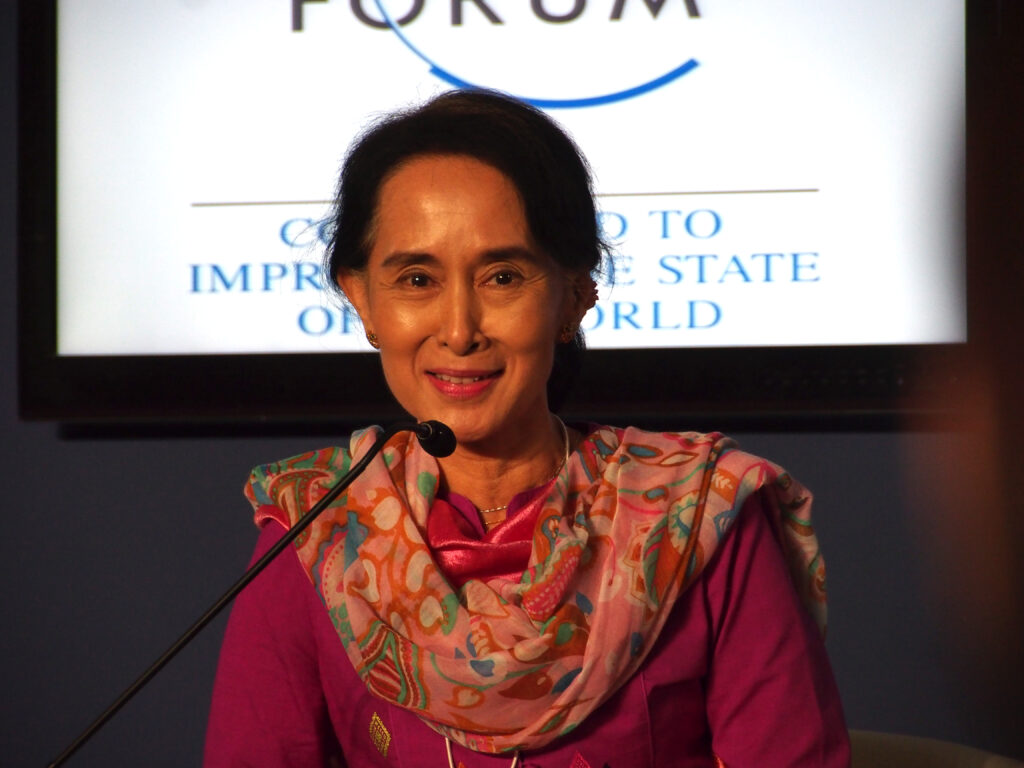
Aung San Suu Kyi (born 1945) is a Burmese politician and pro-democracy advocate who became one of the most internationally recognized symbols of nonviolent resistance to military rule in Myanmar, formerly known as Burma. Her decades-long campaign for democratic governance, conducted largely under house arrest, earned her the Nobel Peace Prize in 1991 and established her as one of the most significant political figures in modern Southeast Asian history.
Aung San Suu Kyi at a Glance
| Full name | Aung San Suu Kyi |
| Born | June 19, 1945, Rangoon, British Burma (now Yangon, Myanmar) |
| Known for | Leading Myanmar’s pro-democracy movement; Nobel Peace Prize laureate 1991 |
| Occupation | Politician, pro-democracy activist |
| Major events | Co-founded the National League for Democracy 1988; awarded Nobel Peace Prize 1991; released from house arrest 2010 |
| Nationality | Burmese |
Early Life and Family Background
Aung San Suu Kyi was born in Rangoon, the daughter of Aung San, a revered independence leader who played a central role in securing Burma’s independence from British colonial rule before his assassination in 1947, when she was only two years old. Her family background placed her at the heart of Burmese national identity from an early age, a connection that would later prove significant when she entered political life decades afterward.
Education Abroad
Suu Kyi pursued higher education outside Burma, studying at the University of Delhi in India before continuing her studies at the University of Oxford in England, where she earned a degree in philosophy, politics, and economics. During the years that followed, she lived and worked internationally, including periods in the United Kingdom, spending significant time raising a family before the political developments in Burma drew her back to her home country in the late 1980s.
Return to Burma and the 1988 Uprising
In 1988, Suu Kyi returned to Burma to care for her ailing mother, arriving at a moment of significant political upheaval as mass pro-democracy demonstrations swept the country against the ruling military government. Drawing on her father’s legacy and her own convictions about democratic governance, she quickly became involved in the movement and emerged as one of its most prominent and recognizable leaders.
Founding of the National League for Democracy
Later in 1988, Suu Kyi helped found the National League for Democracy, a political party that would become the primary vehicle for Burma’s pro-democracy opposition movement over the following decades. Her leadership of the party established her as the central figure in Burmese opposition politics, a position she would maintain despite facing sustained efforts by the military government to suppress the movement and remove her from public life.
House Arrest and Political Suppression
Beginning in 1989, Suu Kyi was placed under house arrest by Burma’s military government, the first of several extended periods of detention that would span a total of approximately fifteen years over the following two decades. Despite these restrictions on her freedom, she continued to serve as a symbol of resistance to military rule, and her party won an overwhelming victory in the 1990 general election, a result the military government refused to honor.
The Nobel Peace Prize
In 1991, Suu Kyi was awarded the Nobel Peace Prize in recognition of her nonviolent struggle for democracy and human rights in Burma, an honor that significantly raised international awareness of the political situation in her country. Unable to travel to Norway to accept the award in person due to her detention, she was represented by family members, and the prize helped sustain international attention on the pro-democracy movement during the years that followed.
Continued Activism During Detention
Throughout her periods of house arrest, Suu Kyi remained a powerful symbol of peaceful resistance, with her residence on University Avenue in Yangon becoming a well-known site of political significance both within Burma and internationally. Her steadfast commitment to nonviolent methods of political change, even under prolonged confinement, earned her comparisons to other prominent global figures associated with nonviolent resistance movements.
Release and Return to Politics
In 2010, following a gradual process of political reform in Myanmar, Suu Kyi was released from house arrest, allowing her to resume active participation in the country’s political life after years of restricted communication with the outside world. Her release was widely regarded as a significant milestone in Myanmar’s broader political transition, drawing considerable international attention and renewed hope for democratic progress in the country.
Election to Parliament
In 2012, Suu Kyi was elected to a seat in Myanmar’s parliament, marking her formal entry into the country’s legislative process after decades spent primarily as an extra-parliamentary opposition leader. This transition into formal politics represented a significant evolution in her role, as she moved from symbolic resistance leadership toward direct participation in the governmental structures she had long sought to reform.
Leadership Role in Government
Following the National League for Democracy’s decisive victory in the 2015 general election, Suu Kyi assumed a leading role in Myanmar’s civilian government, serving in the specially created position of State Counsellor due to constitutional provisions that barred her from the presidency. Her assumption of this leadership role marked the culmination of decades of political struggle and represented a significant, though ultimately incomplete, transition toward civilian democratic governance in Myanmar.
International Recognition and Honors
Beyond the Nobel Peace Prize, Suu Kyi received numerous international honors throughout her career recognizing her advocacy for democracy and human rights, including the Sakharov Prize from the European Parliament and honorary citizenship from several countries. These accolades reflected the broad international admiration her decades-long commitment to nonviolent political change had generated among governments, human rights organizations, and the global public.
Influence on Global Pro-Democracy Movements
Suu Kyi’s decades-long campaign became a reference point for pro-democracy and human rights movements around the world, with her image and her commitment to nonviolent resistance invoked by activists facing authoritarian governments in numerous other countries. Her example demonstrated how sustained, principled political advocacy could maintain international visibility and moral authority even under conditions of prolonged governmental suppression and restricted communication.
Legacy
Aung San Suu Kyi remains one of the most significant figures in the history of Southeast Asian politics, remembered for her sustained, nonviolent campaign for democratic governance in Myanmar across more than two decades of political struggle. Her Nobel Peace Prize and her eventual transition from detained opposition leader to government official established a legacy as one of the defining pro-democracy figures of the late twentieth and early twenty-first centuries.
References
- New World Encyclopedia – Aung San Suu Kyi
- History.com – Aung San Suu Kyi
- The Nobel Prize – Aung San Suu Kyi Facts
Frequently Asked Questions
What is Aung San Suu Kyi best known for? She is best known for leading Myanmar’s pro-democracy movement and for being awarded the Nobel Peace Prize in 1991 for her nonviolent advocacy for democratic reform.
How long was Aung San Suu Kyi under house arrest? She spent approximately fifteen years under house arrest across several periods between 1989 and her release in 2010.
What is the National League for Democracy? It is the political party Suu Kyi helped found in 1988 that became the primary vehicle for Myanmar’s pro-democracy opposition movement.
What role did Suu Kyi hold in Myanmar’s government? She served as State Counsellor, a specially created leadership position, following her party’s victory in the 2015 general election.
Editorially reviewed by Specialty Digest Editorial TeamLast reviewed November 29, 2026Researched and drafted with AI assistanceReport an issue