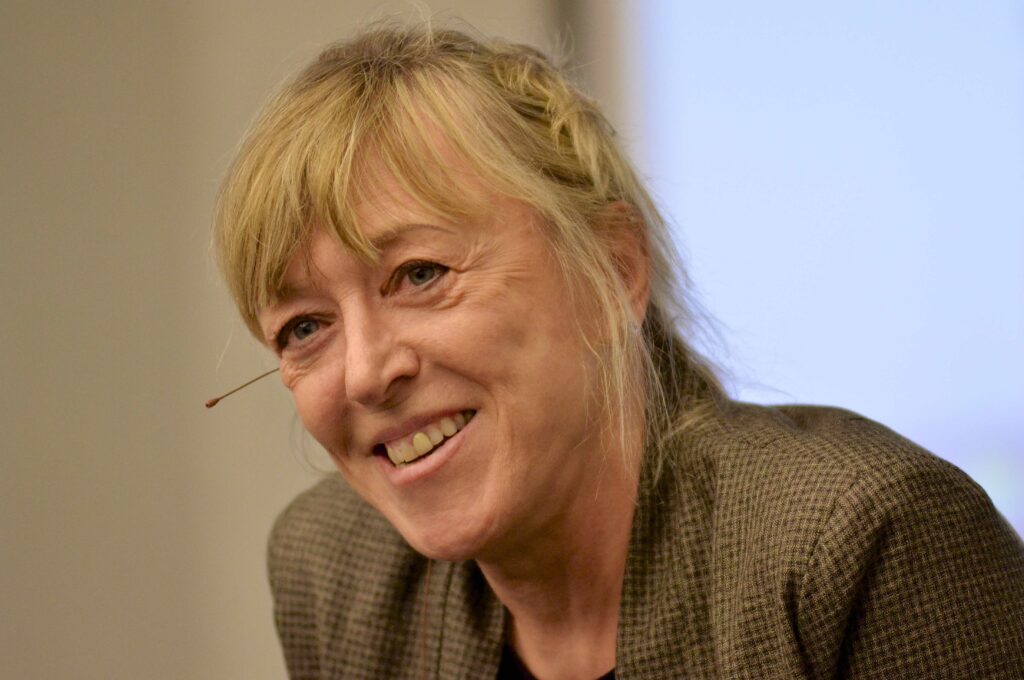
Jody Williams (born 1950) is an American political activist who played a leading role in founding and coordinating the International Campaign to Ban Landmines, work that earned her the Nobel Peace Prize in 1997. Her efforts helped produce a landmark international treaty banning the production, use, and stockpiling of anti-personnel landmines, establishing her as one of the most influential grassroots human rights campaigners of the late twentieth century.
Jody Williams at a Glance
| Full name | Jody Williams |
| Born | October 9, 1950, Brattleboro, Vermont |
| Known for | Founding the International Campaign to Ban Landmines; Nobel Peace Prize laureate 1997 |
| Occupation | Political activist, human rights advocate |
| Major events | Founded the International Campaign to Ban Landmines 1992; awarded Nobel Peace Prize 1997; Mine Ban Treaty signed 1997 |
| Nationality | American |
Early Life and Education
Jody Williams was born in Brattleboro, Vermont, and pursued her early education in the state before continuing her studies at the University of Vermont, where she earned a degree in education. She later pursued graduate studies at the School for International Training in Vermont and at Johns Hopkins University, developing an academic background in international relations that would later inform her approach to global human rights advocacy.
Early Career in Human Rights Work
Before her involvement in the landmine campaign, Williams worked extensively on human rights and humanitarian issues related to Central America, coordinating education and medical aid projects focused on the region during a period of significant political conflict there. This early career provided her with substantial experience in grassroots organizing and international humanitarian work that would prove directly applicable to her later efforts on landmine policy.
Founding of the International Campaign to Ban Landmines
In 1992, Williams became the founding coordinator of the International Campaign to Ban Landmines, an international coalition of nongovernmental organizations formed to advocate for a comprehensive global ban on anti-personnel landmines. Under her leadership, the coalition grew rapidly to include organizations from dozens of countries, unified by the shared goal of eliminating weapons that continued to cause civilian casualties long after armed conflicts had ended.
Coordinating a Global Advocacy Coalition
Williams’s role in coordinating the campaign involved building consensus among a diverse array of organizations with varying priorities and approaches, a significant diplomatic and organizational challenge given the coalition’s rapid international growth. Her ability to unite these groups around a common legislative objective was widely credited as instrumental to the campaign’s eventual success in influencing international policy on landmines.
The Ottawa Process and the Mine Ban Treaty
The campaign’s advocacy efforts contributed significantly to what became known as the Ottawa Process, a diplomatic initiative that led to the negotiation and signing of the Mine Ban Treaty in 1997, a landmark international agreement prohibiting the production, use, stockpiling, and transfer of anti-personnel landmines. This treaty represented one of the most significant achievements in international humanitarian law negotiated primarily through civil society pressure rather than traditional state-led diplomacy.
The Nobel Peace Prize
In 1997, Williams and the International Campaign to Ban Landmines were jointly awarded the Nobel Peace Prize in recognition of their work toward banning and clearing anti-personnel landmines, an honor that highlighted the campaign’s success in achieving meaningful policy change through coordinated international grassroots advocacy. The award brought significant global attention to the ongoing humanitarian impact of landmines and to the broader potential of civil society coalitions to influence international treaty negotiations.
Continued Advocacy After the Nobel Prize
Following the Nobel Peace Prize, Williams remained deeply engaged in international human rights advocacy, continuing to campaign for the universal adoption and enforcement of the Mine Ban Treaty while expanding her work into other areas of human rights and disarmament policy. Her sustained involvement in these issues reflected her broader commitment to addressing the humanitarian consequences of armed conflict well beyond the specific issue of landmines.
The Nobel Women’s Initiative
In 2006, Williams helped establish the Nobel Women’s Initiative alongside several other female Nobel Peace Prize laureates, an organization dedicated to using the collective influence and visibility of its members to advance women’s rights, peace, and justice around the world. Through this initiative, she continued to collaborate with fellow laureates on issues ranging from violence against women to broader international peace and security concerns.
Academic and Public Engagement
Beyond her direct advocacy work, Williams has engaged extensively in academic and public discourse on topics including disarmament, human rights, and nonviolent social change, holding academic appointments and speaking widely on these subjects. Her writing and public speaking have extended her influence into educational settings, helping to inform new generations of activists and policymakers about the practical mechanics of successful international advocacy campaigns.
Approach to Grassroots Organizing
Williams has been particularly recognized for her pragmatic, results-oriented approach to grassroots organizing, emphasizing the importance of building broad coalitions and maintaining sustained pressure on governments to achieve concrete policy outcomes. This methodology, demonstrated through the success of the landmine ban campaign, has been studied extensively as a model for how civil society organizations can effectively influence international law and diplomacy, with scholars of international relations and nongovernmental advocacy frequently citing the campaign as a case study in successful coalition-based policy reform.
International Influence on Disarmament Policy
The success of the landmine ban campaign had significant ripple effects on subsequent international disarmament efforts, as the coalition-building strategies Williams helped pioneer were later adapted by advocacy campaigns addressing other categories of weapons, including cluster munitions and nuclear arms. Her demonstrated approach, combining grassroots organizing with coordinated diplomatic engagement, became a widely referenced model for civil society efforts seeking to influence international humanitarian law in the decades that followed.
Views on Nonviolent Social Change
Throughout her career, Williams has articulated a consistent philosophy emphasizing that meaningful social and political change requires sustained, organized pressure from ordinary citizens rather than reliance solely on government initiative. This perspective, rooted in her early organizing work and refined through the landmine campaign, has informed her continued public commentary on the practical requirements for successful nonviolent advocacy movements addressing complex international issues.
Legacy
Jody Williams remains one of the most significant figures in the history of international humanitarian advocacy, remembered for her leadership of the coalition that achieved the global ban on anti-personnel landmines through the Mine Ban Treaty. Her Nobel Peace Prize and her ongoing work through organizations including the Nobel Women’s Initiative established a legacy as one of the most effective grassroots coalition builders in the modern human rights movement.
References
- New World Encyclopedia – Jody Williams
- History.com – Jody Williams
- The Nobel Prize – Jody Williams Facts
Frequently Asked Questions
What is Jody Williams best known for? She is best known for founding and coordinating the International Campaign to Ban Landmines and for being awarded the Nobel Peace Prize in 1997.
What is the Mine Ban Treaty? It is a landmark 1997 international agreement prohibiting the production, use, stockpiling, and transfer of anti-personnel landmines, achieved in significant part through Williams’s advocacy coalition.
Why did Jody Williams win the Nobel Peace Prize? She and the International Campaign to Ban Landmines jointly received the prize in 1997 for their work toward banning and clearing anti-personnel landmines worldwide.
What is the Nobel Women’s Initiative? It is an organization Williams helped establish in 2006 with other female Nobel Peace Prize laureates to advance women’s rights, peace, and justice globally.
Editorially reviewed by Specialty Digest Editorial TeamLast reviewed November 29, 2026Researched and drafted with AI assistanceReport an issue