Alabama is a state in the southeastern United States, bordered by Tennessee to the north, Georgia to the east, Florida and the Gulf of Mexico to the south, and Mississippi to the west. Admitted to the Union in 1819, it is known for its rocket and space industry, its Gulf Coast port at Mobile, and the Appalachian foothills in the north. Montgomery is the capital, and the 2020 census counted 5,024,279 residents [1][2].
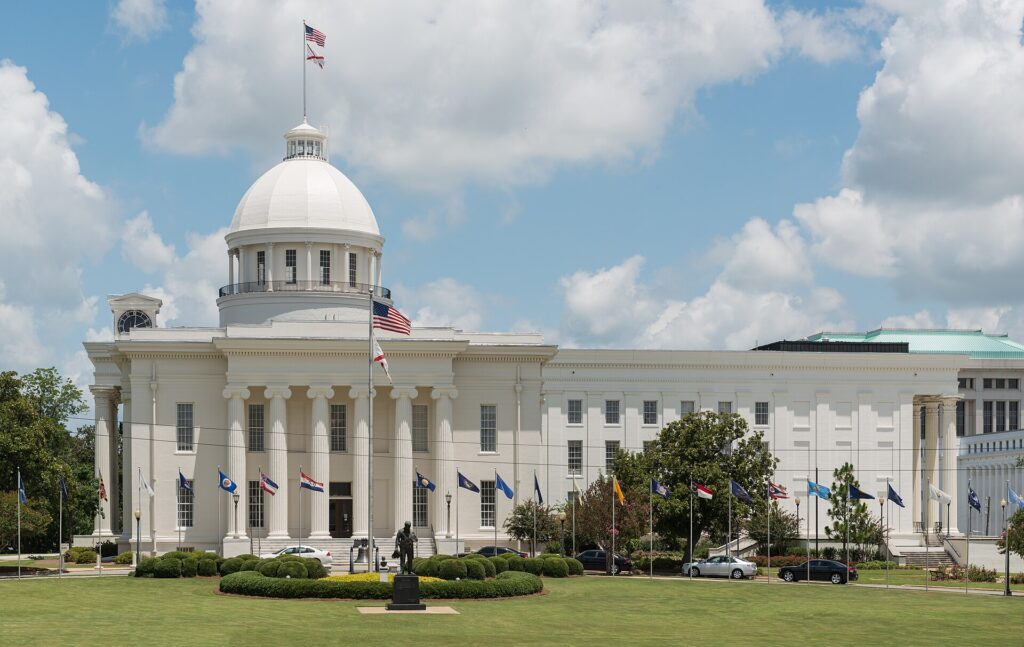
| Capital | Montgomery |
|---|---|
| Statehood | December 14, 1819 (22nd state) |
| Population (2020 census) | 5,024,279 |
| Land area | 50,647 square miles |
| Population density | 99.2 people per square mile (2020) |
| Highest point | Cheaha Mountain, about 2,400 feet |
| Nickname | Yellowhammer State |
| Oldest city | Mobile (founded 1702) |
History of Alabama
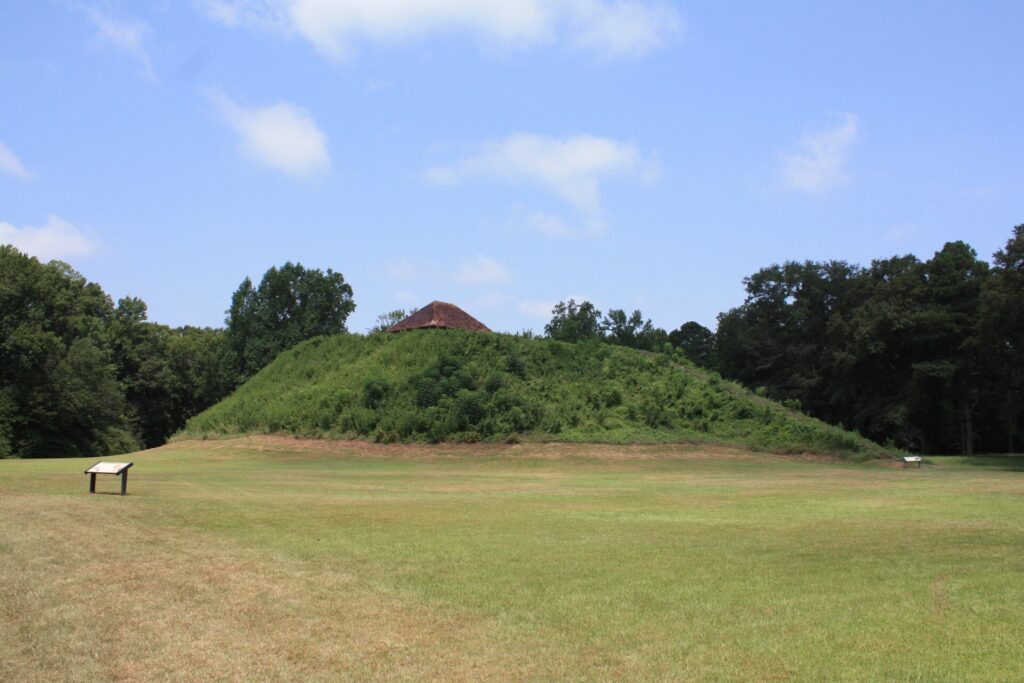
People have lived in the region for thousands of years. The Mississippian-era town at Moundville, on the Black Warrior River, was among the largest settlements in North America north of Mexico in its day, and its earthen mounds survive today as a state archaeological park. Later, the Creek (Muscogee), Cherokee, Choctaw and Chickasaw peoples lived across the territory [1].
European contact began in the 1500s with Spanish expeditions. The French founded Mobile in 1702, and it remains the state’s oldest city [3]. Control of the region passed among France, Britain and Spain before the United States organized the Alabama Territory in 1817. Alabama became the 22nd state on December 14, 1819 [1].
In the twentieth century, the state added federal research and advanced manufacturing to its older agricultural and iron and steel economy. A key date came on July 1, 1960, when NASA established the Marshall Space Flight Center in Huntsville, which developed the Saturn V rocket for the Apollo program [4].
Geography of Alabama
Alabama covers about 52,400 square miles, including inland water. The Appalachian Plateau and the Tennessee Valley lie in the north, where Cheaha Mountain, the highest point, rises about 2,400 feet. The central Piedmont gives way to the Black Belt, a crescent of dark prairie soil named for its color. The Coastal Plain slopes south to Mobile Bay and a short Gulf Coast shoreline [1].

The state has a humid subtropical climate, meaning long, warm summers, mild winters and plentiful rain. Spring brings severe thunderstorms, and Alabama is part of the southeastern tornado region [5]. The Mobile, Tombigbee and Alabama river systems drain to the Gulf, and the state is notable for the diversity of its freshwater fish and mussels.
Government and politics of Alabama
Alabama operates under a state constitution that divides power among three branches: an elected governor, a two-chamber legislature (a Senate and a House of Representatives) and a state court system. The state is divided into 67 counties, each with its own local government. Montgomery was chosen as the permanent capital in 1846 [1].
Economy of Alabama
Alabama’s economy combines manufacturing, aerospace, agriculture and services. Automakers and their suppliers operate large plants, and the state’s aerospace sector stretches from rocket engineering in Huntsville to aircraft assembly in Mobile, where Airbus builds jets [6]. Marshall Space Flight Center continues to support the Space Launch System and the Artemis program [4].
Agriculture remains important, with poultry, cattle, cotton and timber among the long-standing products. The Port of Mobile handles bulk and container cargo through the Gulf of Mexico. Birmingham, once centered on iron and steel, now has a strong health care, banking and research profile.
Culture and people of Alabama
Alabama has a deep tradition in music, food and literature. Muscle Shoals is internationally known for its recording studios, and the state has produced celebrated writers, musicians and athletes. Regional foods such as barbecue, fried catfish, pecan pie and Gulf seafood anchor local menus.
Mobile is recognized as the first American locale to celebrate Mardi Gras, a tradition that continues each year with parades and festivals [3]. College American football is a major part of community life, with game days drawing large crowds across the state.
What is Alabama known for?
- Space and rocketry: Huntsville is nicknamed the Rocket City, and the U.S. Space & Rocket Center displays Saturn V hardware.
- The Gulf Coast: Mobile Bay, beaches, seafood and a historic port.
- Natural beauty: Little River Canyon, Cheaha State Park and the Black Warrior River forests.
- Music: The Muscle Shoals sound and a long tradition of gospel, blues and country.
- The yellowhammer: The state bird, which gives Alabama its nickname.
FAQs
What is the capital of Alabama? Montgomery is the capital, and it was chosen as the permanent capital in 1846.
When did Alabama become a state? Alabama joined the Union on December 14, 1819, as the 22nd state.
What is the largest city in Alabama? In the 2020 census, Huntsville edged ahead of Birmingham as the state’s most populous city, with Mobile and Montgomery following.
What is Alabama’s highest point? Cheaha Mountain, at about 2,400 feet, in the Talladega National Forest.
Why is Huntsville called the Rocket City? NASA’s Marshall Space Flight Center, established there in 1960, developed the Saturn V rocket.
Sources
- Encyclopedia of Alabama: State of Alabama
- U.S. Census Bureau: QuickFacts Alabama
- Encyclopedia of Alabama: Mobile
- NASA: 60 Years of Marshall Space Flight Center
- Encyclopedia of Alabama: Alabama’s Climate
- Made in Alabama: From rockets to EVs
More in Human Geography
Key facts
In the news
Quick checkWhich city is the capital of Alabama?Show answer
Montgomery.
Sources
- Encyclopedia of Alabama. State of Alabama. n.d. (accessed 2026-11-10)
- U.S. Census Bureau. QuickFacts Alabama. 2020 (accessed 2026-11-10)
- Encyclopedia of Alabama. Mobile. n.d. (accessed 2026-11-10)
- NASA. 60 Years of Marshall Space Flight Center. 2020 (accessed 2026-11-10)
- Encyclopedia of Alabama. Alabama's Climate. n.d. (accessed 2026-11-10)
- Made in Alabama. From rockets to EVs. 2025 (accessed 2026-11-10)
Editorially reviewed by Specialty Digest Editorial TeamLast reviewed November 10, 2026Researched and drafted with AI assistanceReport an issue