The Alaska Department of Fish and Game (ADF&G) is the state agency responsible for protecting, maintaining and improving the fish, game and aquatic plant resources of Alaska. Created by the first state legislature in 1959, it took full authority on 1 January 1960.[1]
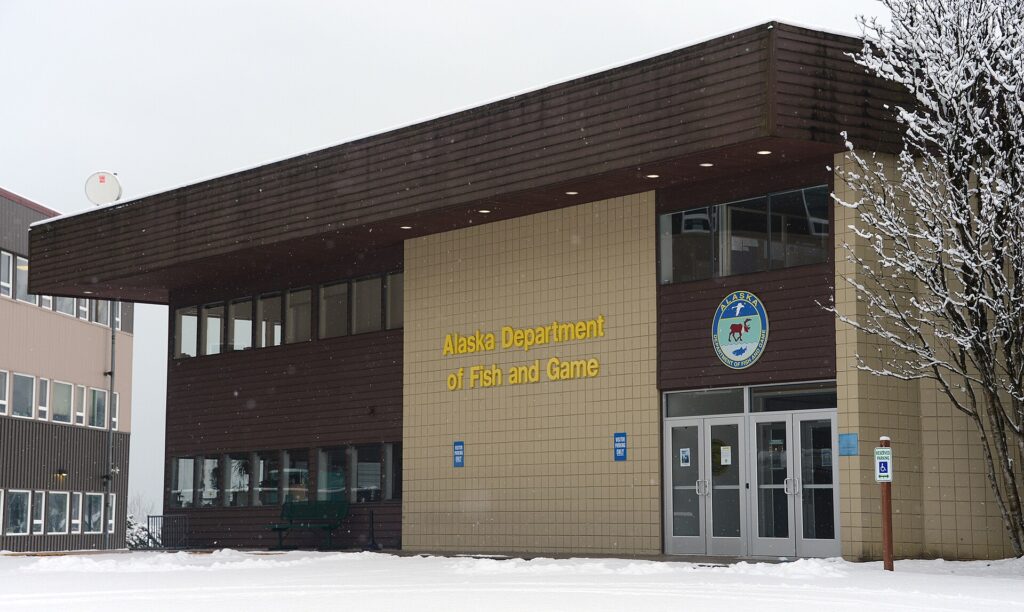
| Established | 1959 |
|---|---|
| Headquarters | Juneau |
| Employees | About 1,700 |
| Budget | About $200 million |
| Active fisheries managed | About 750 |
Mission
The department’s mission is to protect, maintain and improve the fish, game and aquatic plant resources of the state and manage their use in the best interest of the economy and public well-being, consistent with the sustained yield principle.[1]
Structure
Commercial Fisheries is the largest division, alongside Sport Fish and Wildlife Conservation. The Alaska Board of Fisheries and Board of Game, each with seven members appointed by the governor and confirmed by the legislature, set seasons, bag limits and methods and allocate resources among commercial, recreational, subsistence and personal uses. Eighty-four local advisory committees advise the boards.[1]
Scope
The department manages about 750 active fisheries, 26 game management units and 32 special areas. Marine mammals, fish in federally managed waters and subsistence on federal public lands are outside its management, and enforcement rests mainly with the Alaska Wildlife Troopers.[1]
FAQs
When was ADF&G created? In 1959, with full authority from 1 January 1960.
Who sets hunting and fishing rules? The Board of Fisheries and the Board of Game.
Who enforces the regulations? Mainly the Alaska Wildlife Troopers.
Sources
Key facts
- About 1,700 employees
- 750 fisheries
- 26 game units
Quick checkWhen established?Show answer
1959.
Sources
- Wikipedia. Alaska Department of Fish and Game. 2026 (accessed 2026-11-12)
Editorially reviewed by Specialty Digest Editorial TeamLast reviewed November 12, 2026Researched and drafted with AI assistanceReport an issue