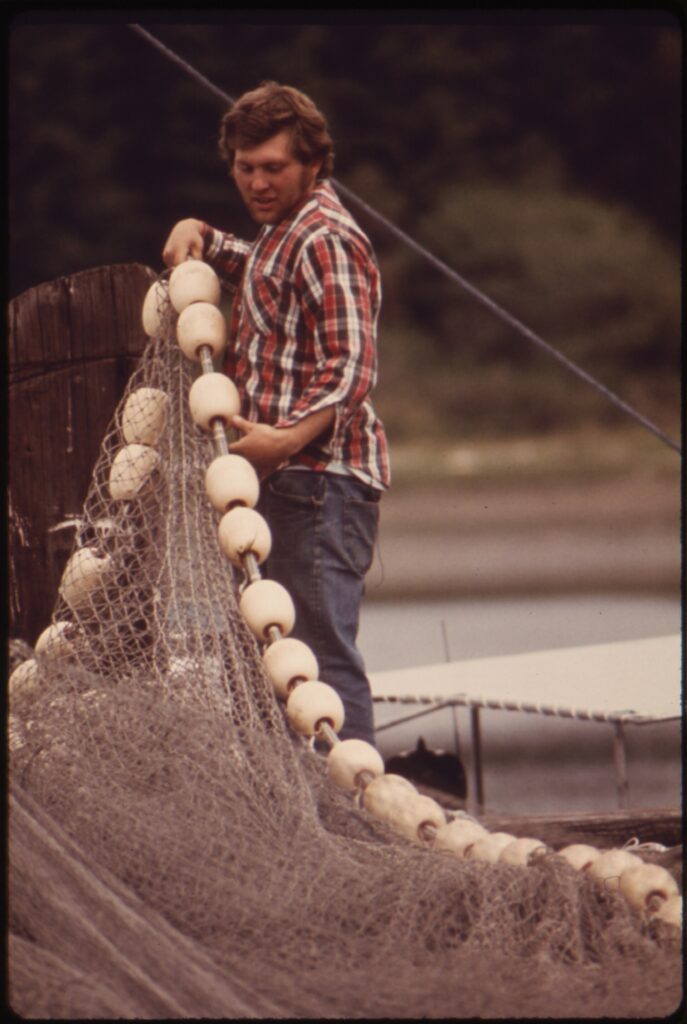
Alaska salmon fisheries are among the largest wild salmon fisheries in the world, harvesting pink, sockeye, chum, coho and Chinook salmon from waters across the state. Annual commercial catches vary widely, from more than 280 million fish in the record year of 2013 to about 101 million in 2024, and the harvest is managed by the Alaska Department of Fish and Game. Bristol Bay, Prince William Sound and Kodiak are among the most productive regions, and salmon also support subsistence, sport and cultural uses [1][2].
| Species | Pink, sockeye, chum, coho and Chinook |
|---|---|
| 2025 harvest (preliminary) | About 94.8 million fish, about $541 million |
| 2024 harvest | 101.2 million fish, $304 million |
| 2023 harvest | About 232 million fish, about $398 million |
| Record harvest | About 280 million fish (2013) |
| Top regions by volume (2025) | Prince William Sound, Bristol Bay, Kodiak |
| Most valuable region (2025) | Bristol Bay, about $215 million |
The Five Species
Alaska’s commercial salmon harvest includes five Pacific species. Pink salmon, the most numerous, accounted for over half of the 2025 statewide catch. Sockeye is primarily harvested in Bristol Bay, where it commands higher base prices. Chum salmon had a large run in Southeast Alaska in 2025, which drove up that region’s value, while coho and Chinook make smaller but valuable contributions [1].
Harvest Cycles
Salmon harvests swing sharply from year to year. Pink salmon runs tend to be stronger in odd-numbered years, which helps explain why 2023 produced about 230 million fish worth nearly $400 million, while 2024 produced about 101.2 million fish worth $304 million [1][2]. Ten years have exceeded 200 million fish, six of them since the record of 280 million in 2013 [2].
The 2024 Season
Preliminary figures from the Alaska Department of Fish and Game show that the 2024 harvest was 101.2 million fish, less than half of 2023’s 232.2 million. It was the third-smallest since all-species records began in 1985, and the value of $304 million was, after adjusting for inflation, the lowest since 1975. The harvest weighed 450 million pounds, the lowest on record, and came in 25 percent below the preseason forecast of 135.7 million fish [2]. The weak pink salmon return was the main cause, while sockeye made up about 42 percent of the harvest and about two-thirds of the value [2].
The 2025 Season
The preliminary harvest for 2025 was about 94.8 million fish with a value of roughly $541 million, the 12th largest harvest and the 13th lowest value (adjusted for inflation) in the last 40 years. Over 90 million fewer fish were harvested than in 2024, according to the article, in part because pink runs are stronger in odd years [1].
Regions
By volume in 2025, Prince William Sound ranked first, followed by Bristol Bay and Kodiak, which together accounted for over half of the statewide total. Southeast, the Alaska Peninsula and Aleutians, Cook Inlet, Chignik, Norton Sound and Kotzebue followed. Bristol Bay was the most valuable region at about $215 million, and Southeast was second at about $104 million [1].
Bristol Bay Sockeye
Bristol Bay hosts the world’s largest sockeye runs. The 2024 sockeye return was well above projections and 7 percent above the 20-year average, although the commercial harvest was slightly below average and the average fish size was the smallest on record, part of a long-term trend. The 2025 sockeye run was forecast to be more than a third above the long-term average [2].
Prices
Prices differ by species and region. In 2025, Chinook averaged $6.67 per pound in Southeast and $17.63 per pound in Prince William Sound, the highest [1]. Pink salmon are the lowest-priced species, so large pink harvests do not always translate into high total value.
Yukon and Subsistence Fisheries
Salmon are also central to subsistence in Alaska. On the Yukon River, Chinook and chum runs have declined sharply, and Alaska banned fishing for them in 2021, including subsistence fishing, as covered in the entry on the Yukon River.
How Salmon Management Works
The Alaska Department of Fish and Game estimates harvests through preliminary season summaries published each fall, then revises them as final data arrive. Preseason forecasts, such as the 135.7 million fish forecast for 2024, guide planning for fishers and processors, but actual returns can differ widely, as the 25 percent shortfall in 2024 showed [2].
Odd-Year and Even-Year Pinks
Pink salmon dominate the statewide numbers and tend to have stronger runs in odd-numbered years, which makes the statewide harvest alternate between high and low years. The article on 2024 notes that 2016 (111 million) and 2018 (114 million) were also low even-numbered years with weak pink runs [2]. This pattern explains why 2025 produced far more fish than 2024 [1].
Value Versus Volume
Total value does not follow total volume. Pink salmon are the lowest-priced species, so a large pink harvest raises the fish count more than the dollar value, while sockeye, which made up about 42 percent of the 2024 harvest, accounted for about two-thirds of its value [2]. Bristol Bay was the most valuable region in 2025 at about 5 million, even though Prince William Sound had the highest harvest volume [1].
A Trend in Fish Size
The average size of Bristol Bay sockeye in 2024 was the smallest on record, part of a long-term trend [2]. Smaller fish mean less weight for the same number of fish, which is one reason the 2024 harvest, at 450 million pounds, was the lowest on record by weight [2].
FAQs
Which salmon species are caught in Alaska? Pink, sockeye, chum, coho and Chinook salmon.
How many salmon were harvested in Alaska in 2025? A preliminary total of about 94.8 million fish, worth about $541 million.
What was Alaska’s record salmon harvest? About 280 million fish in 2013.
Why do harvests vary so much? Natural cycles, especially stronger pink salmon returns in odd years, and ocean conditions affect run size.
Where is the world’s largest sockeye run? In Bristol Bay, Alaska.
Sources
- KMXT: Fish and Game releases preliminary salmon harvest numbers for 2025
- Alaska Beacon: Alaska’s total commercial salmon harvest this year was ultra-low in both quantity and value
More in Agriculture & Food
Key facts
Quick checkWhich Alaska region has the world’s largest sockeye runs?Show answer
Bristol Bay
Sources
- KMXT. Fish and Game releases preliminary salmon harvest numbers for 2025. 2025 (accessed 2026-11-12)
- Alaska Beacon. Alaska’s total commercial salmon harvest this year was ultra-low in both quantity and value. 2024 (accessed 2026-11-12)
Editorially reviewed by Specialty Digest Editorial TeamLast reviewed November 12, 2026Researched and drafted with AI assistanceReport an issue