Tundra is a treeless biome where cold temperatures and a short growing season limit plant growth. In Alaska it covers much of the North Slope, the western coast and the high mountains, and it rests on frozen ground called permafrost.[1]
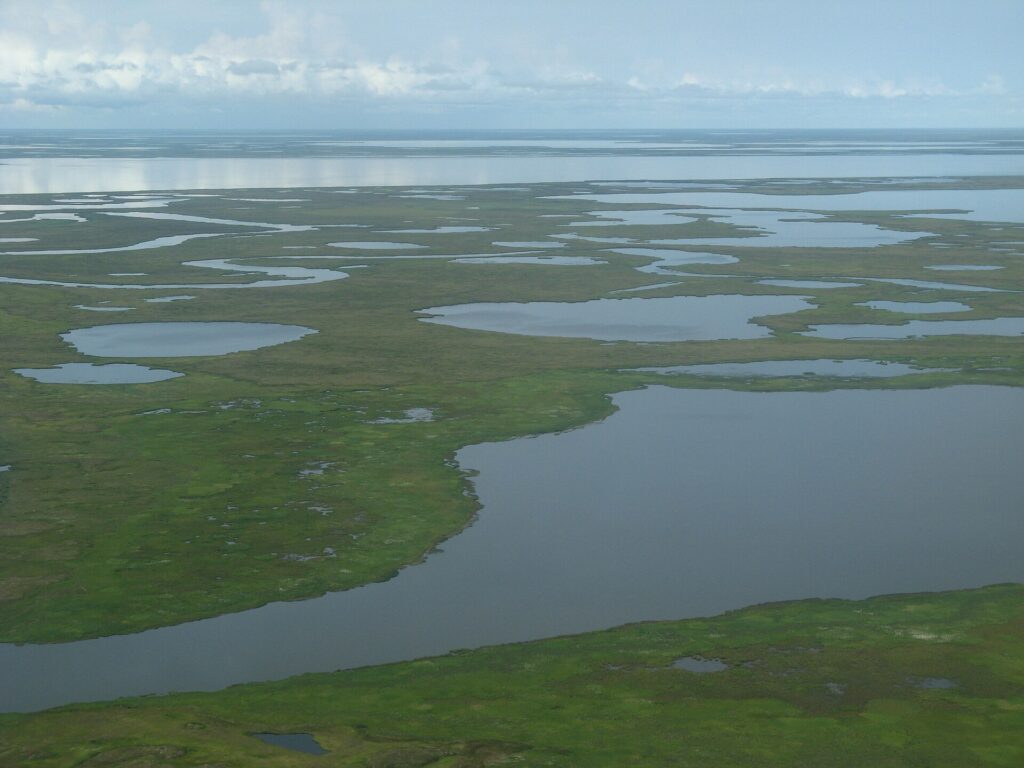
| Biome | Arctic and alpine tundra |
|---|---|
| Precipitation | About 150–250 mm per year (Arctic) |
| Ground | Permafrost beneath a thin active layer |
| Vascular plants | About 1,700 species (Arctic) |
| Land mammals | About 48 species (Arctic) |
Climate and soils
Arctic tundra receives only about 150 to 250 millimetres of precipitation a year, and the ground is frozen from roughly 25 to 90 centimetres below the surface. Only a shallow active layer thaws in summer.[1]
Life on the tundra
The circumpolar Arctic holds about 1,700 vascular plant species and 48 land mammal species. Dwarf shrubs, sedges, mosses and lichens dominate the vegetation, and herds of caribou use it seasonally.[1]
Fire
Tundra fires are rare but occur: a 2007 fire in the Brooks Range burned about 1,039 square kilometres. Typical fire return intervals in Alaska’s tundra are long, on the order of 150 to 200 years.[1]
FAQs
What is tundra? A treeless biome with cold temperatures, a short growing season and permafrost.
How much precipitation does Arctic tundra get? About 150 to 250 millimetres a year.
Are there fires on the tundra? Yes, though rarely; a 2007 Brooks Range fire burned about 1,039 square kilometres.
Sources
Key facts
- 150–250 mm precipitation
- Permafrost
- 2007 Brooks Range fire 1,039 km2
Quick checkWhat lies beneath tundra?Show answer
Permafrost.
Sources
- Wikipedia. Tundra. 2026 (accessed 2026-11-12)
Editorially reviewed by Specialty Digest Editorial TeamLast reviewed November 12, 2026Researched and drafted with AI assistanceReport an issue