Overview
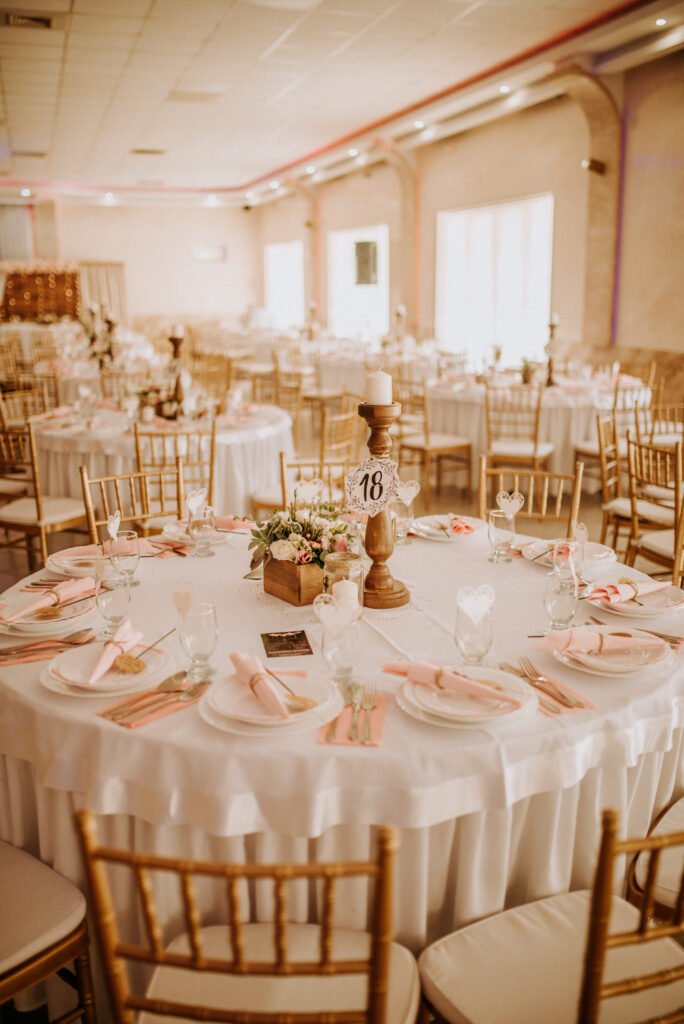
Banquet and catering operations coordinate food and beverage service for scheduled group events, ranging from weddings and conferences to corporate functions and private parties.
Contract and Guarantee Structures
Banquet contracts typically specify a guaranteed minimum attendance figure, protecting the caterer from financial loss if actual attendance falls meaningfully below projections while allowing some flexibility for final headcount adjustments closer to the event date.
Menu Planning for Group Events
Event menus are typically planned around standardized, batch-friendly dishes that can be prepared and plated consistently for large groups, differing significantly from the individualized, made-to-order approach common in daily restaurant service.
Staffing and Logistics Coordination
Banquet service requires coordinating a distinct staffing plan, often drawing on part-time or on-call banquet servers scheduled specifically around event dates, along with logistics for setup, service timing, and breakdown that differ substantially from routine restaurant operations.
Event Types and Scale Variation
Banquet and catering operations serve a wide range of event types and scales, from intimate private dinners to large conventions serving thousands of guests, with operational complexity scaling significantly as both guest count and menu customization increase.
Off-Premise Catering Logistics
Catering events held away from a caterer home kitchen, known as off-premise catering, require careful logistical planning around food transport, temperature maintenance, and on-site equipment needs, since the controlled environment of a permanent kitchen is not available at the event location.
Revenue and Profitability Considerations
Banquet and catering revenue often carries higher profit margins than daily a la carte dining due to batch production efficiency and predictable guest counts, making this segment a particularly important revenue source for many hotels and dedicated catering companies.
Client Relationship and Sales Process
Securing banquet and catering business typically involves a distinct sales process including site visits, menu tastings, and detailed proposal negotiations, differing significantly from the walk-in customer acquisition model of typical restaurant dining.
Equipment and Rental Logistics
Catering operations frequently rely on rental equipment such as tables, linens, and specialized serving equipment for off-premise events, requiring careful logistics coordination to ensure everything arrives on time and in proper condition for each specific event.
Dietary Accommodation at Scale
Managing dietary restrictions and allergies becomes significantly more complex at banquet scale compared to individual a la carte dining, requiring careful advance planning and clear communication systems to ensure accommodations are correctly prepared and served to the right guests.
Staffing Flexibility for Fluctuating Demand
Because catering and banquet business volume often fluctuates significantly week to week depending on the local events calendar, many operators maintain a flexible pool of part-time or on-call staff rather than permanent full-time banquet employees, allowing labor costs to scale more closely with actual booked business.
Role of Technology in Event Coordination
Specialized event management software has become increasingly common for tracking banquet bookings, room diagrams, and event-specific details, replacing the paper-based banquet event order documents that were historically standard across the catering and hospitality industry.
Weather and External Risk Factors
Outdoor or off-premise catering events face additional risk from weather and other external factors, requiring contingency planning such as backup indoor locations or weather-appropriate equipment that indoor restaurant service rarely needs to consider.
Repeat Corporate and Institutional Clients
Many catering operations build a stable revenue base around recurring corporate or institutional clients who book regular events, providing more predictable demand than the one-off nature of many wedding and private celebration bookings.
Quality Consistency Across Large Batches
Maintaining consistent food quality when preparing large batch quantities for hundreds of guests presents distinct culinary challenges compared to individually plated a la carte dishes, often requiring specific recipe adaptations developed specifically for scaled production.
Cultural and Religious Dietary Considerations
Catering for diverse guest populations often requires accommodating cultural and religious dietary requirements such as halal, kosher, or specific cultural preparation traditions, requiring specialized supplier relationships and kitchen protocols distinct from standard restaurant operations.
Technology for Guest Count Management
Modern catering operations increasingly use digital RSVP and guest management platforms that provide real-time headcount updates, helping caterers adjust final food and staffing orders more precisely than relying solely on early estimated guest counts.
Insurance and Liability Considerations
Catering operations typically carry specialized liability insurance covering risks specific to off-premise events, such as transportation accidents or food safety incidents occurring at a client-controlled venue rather than the caterer own regularly inspected kitchen facility.
Building Long-Term Catering Brand Reputation
Successful catering operations build reputation through word-of-mouth referrals following successful events, making consistent execution across every single event particularly important given how heavily this segment relies on personal recommendation rather than broad advertising.
Role of Seasonal Demand Patterns
Catering demand often follows predictable seasonal patterns tied to wedding season, holiday events, and the academic or corporate calendar, requiring operators to plan staffing and cash flow carefully around these recurring annual fluctuations.
Understanding these patterns allows experienced operators to plan ahead rather than reacting to demand swings after they have already begun.
Sustaining Quality Across a Growing Client Base
As catering operations grow their client base, maintaining the same personal attentiveness and quality consistency that built their original reputation becomes an increasingly important operational challenge requiring deliberate systems rather than informal effort alone.
Operators who invest early in scalable systems and documented processes are generally better positioned to grow without sacrificing the quality that earned their initial reputation.
This proactive investment approach distinguishes operators who sustain long-term growth from those who struggle once their business expands beyond its original scale.
Ultimately, the operators best positioned for sustained growth are those who treat systems and documentation as seriously as they treat culinary quality itself.
Key facts
- Array
Quick checkWhy do banquet contracts typically include a guaranteed minimum attendance figure?Show answer
Because catering operations must purchase food, staff the event, and prepare in advance based on an expected headcount, so a guaranteed minimum protects the caterer against financial loss if actual attendance falls short.
Sources
- Array
Editorially reviewed by Specialty Digest Editorial TeamLast reviewed November 4, 2026Researched and drafted with AI assistanceReport an issue