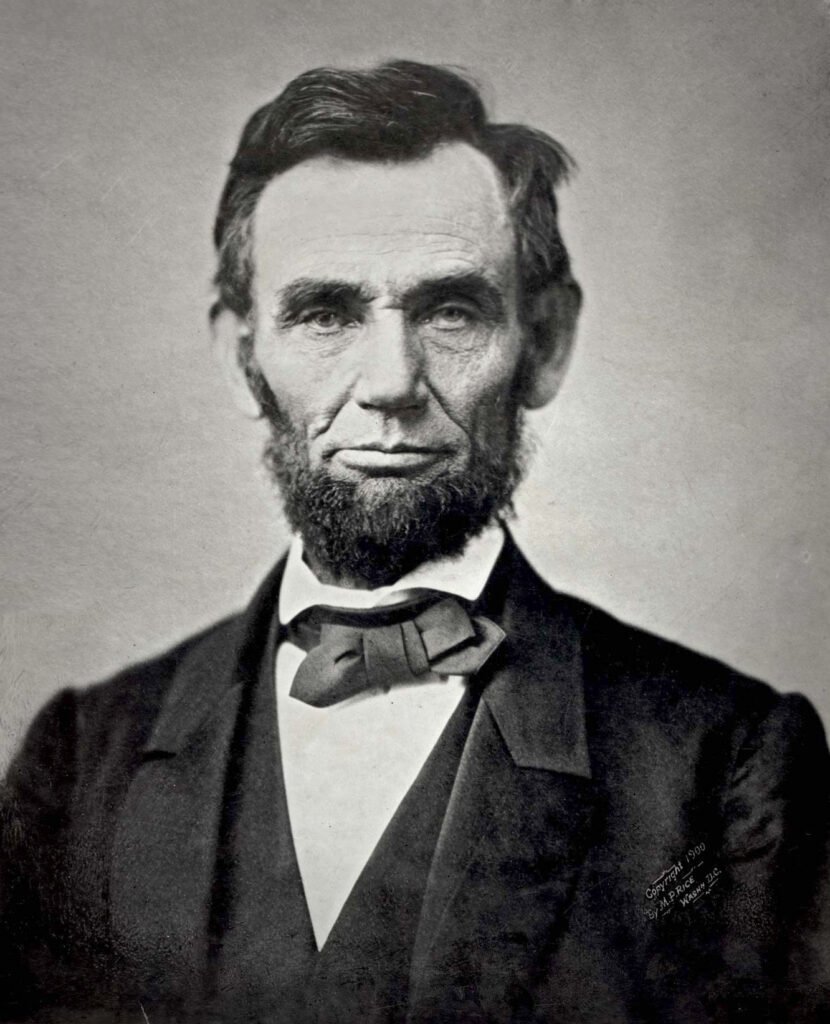
Abraham Lincoln (1809 to 1865) was the sixteenth president of the United States, serving from 1861 until his assassination in 1865. He led the country through the Civil War, issued the Emancipation Proclamation and supported the Thirteenth Amendment, which abolished slavery. He was shot on 14 April 1865 and died the next morning. Early life
Abraham Lincoln Read More »
Sixteenth president of the United States who led the Union through the Civil War and issued the Emancipation Proclamation.
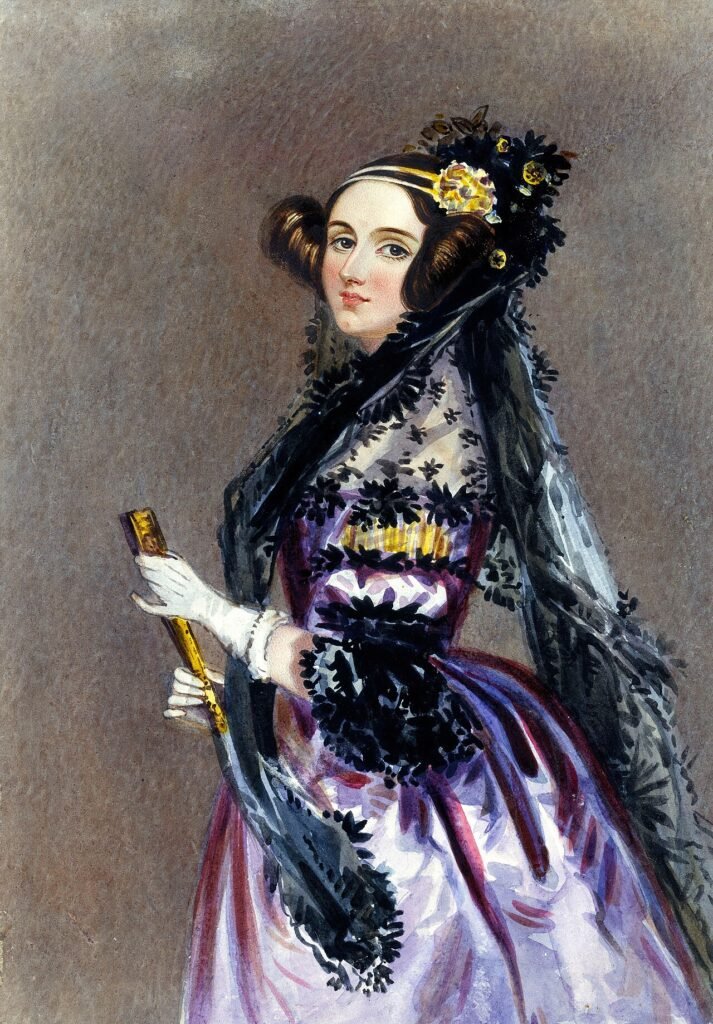
Ada Lovelace (1815 to 1852), born Augusta Ada Byron, was an English mathematician best known for her 1843 notes on Charles Babbage’s proposed Analytical Engine. The notes are widely cited as an early description of how a general-purpose computer could be given instructions. She was the only legitimate child of the poet Lord Byron. Early
Ada Lovelace Read More »
Ada Lovelace was an English mathematician who wrote extensive notes in 1843 on Charles Babbage's proposed Analytical Engine, an early vision of general-purpose computing.
Al-Khwarizmi (about 780 to about 850) was a mathematician and astronomer who worked in Baghdad under the Abbasid caliph al-Ma’mun. His book on solving equations gave the world the word algebra, and the Latin form of his name gave it the word algorithm. Early life of al-Khwarizmi Very little is known for certain about his
Al-Khwarizmi Read More »
Al-Khwarizmi was a Baghdad mathematician whose book on equations gave algebra its name and whose Latinized name gave us the word algorithm.
Alan Turing (1912 to 1954) was a British mathematician and logician whose work laid theoretical foundations for computer science. During World War II he helped break German Enigma ciphers at Bletchley Park, and in 1950 he proposed a test for machine intelligence. He was convicted in 1952 under laws that criminalized homosexuality, and he was
Alan Turing Read More »
Alan Turing was a British mathematician who founded the theory of computation, helped break Enigma ciphers at Bletchley Park, and proposed the Turing test.
Albert Einstein (1879 to 1955) was a German-born theoretical physicist who developed the theories of special and general relativity and helped lay the foundations of quantum theory. In 1905, while working as a patent clerk, he published papers that changed how scientists think about space, time, light and matter. He received the 1921 Nobel Prize
Albert Einstein Read More »
German-born physicist who developed the theories of special and general relativity and helped found quantum theory.
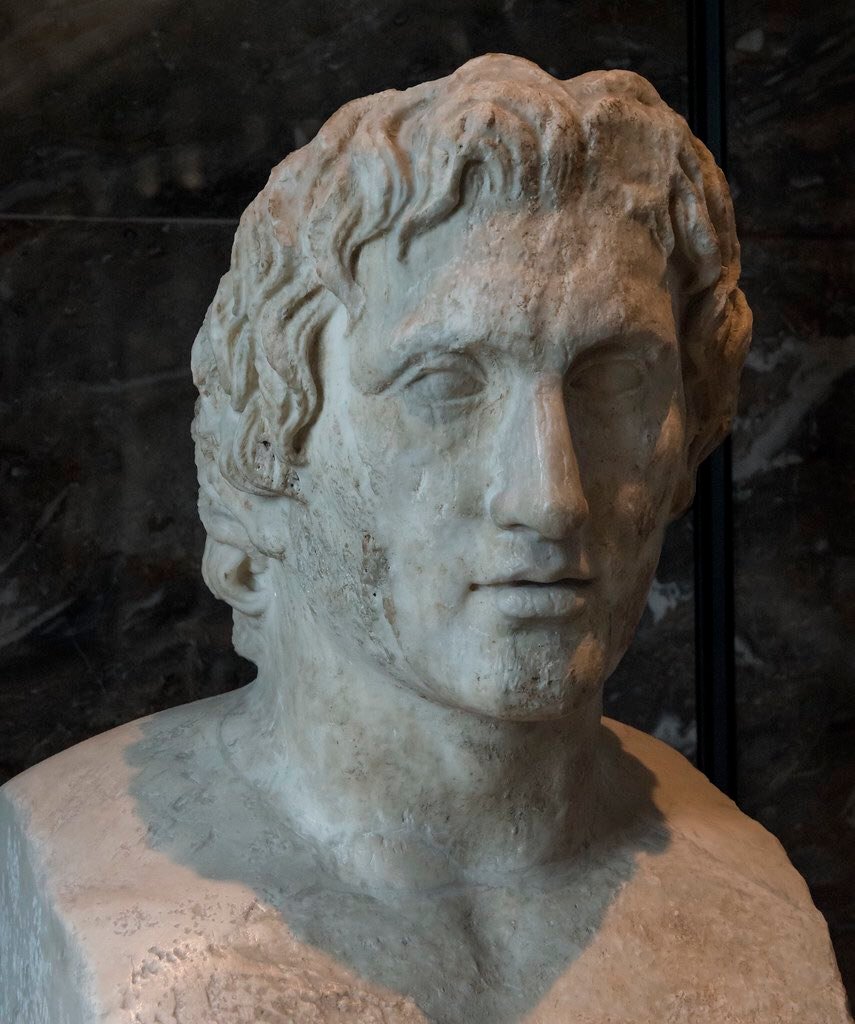
Alexander the Great, or Alexander III of Macedon, was a king who lived from 356 BCE to 323 BCE and conquered the Persian Empire. Beginning as king of Macedonia in 336 BCE, he led his army through Anatolia, Egypt, Mesopotamia and Persia to the Indus valley before his death in Babylon. His campaigns spread Greek
Alexander the Great Read More »
Macedonian king (356 to 323 BCE) who conquered the Persian Empire and spread Greek culture from Egypt to the Indus valley.
Archimedes was a Greek mathematician, physicist and engineer from Syracuse in Sicily who lived from about 287 BCE until 212 BCE. He worked out the mathematics of the lever, floating bodies, the sphere and the circle, and he is credited with devices such as the Archimedes screw. He was killed when Roman forces captured Syracuse
Archimedes Read More »
Greek mathematician and engineer from Syracuse (about 287 to 212 BCE) who bounded pi, founded hydrostatics and devised the Archimedes screw.
Aristotle (384 to 322 BCE) was an ancient Greek philosopher and scientist who studied under Plato, tutored Alexander the Great and founded his own school, the Lyceum, in Athens. He wrote on logic, metaphysics, ethics, politics, poetry and biology. Only about thirty-one of his works survive, but they shaped philosophy in Europe, the Middle East
Aristotle Read More »
An ancient Greek philosopher and scientist, Plato's student and Alexander the Great's tutor, who founded the Lyceum and shaped logic, ethics and science.
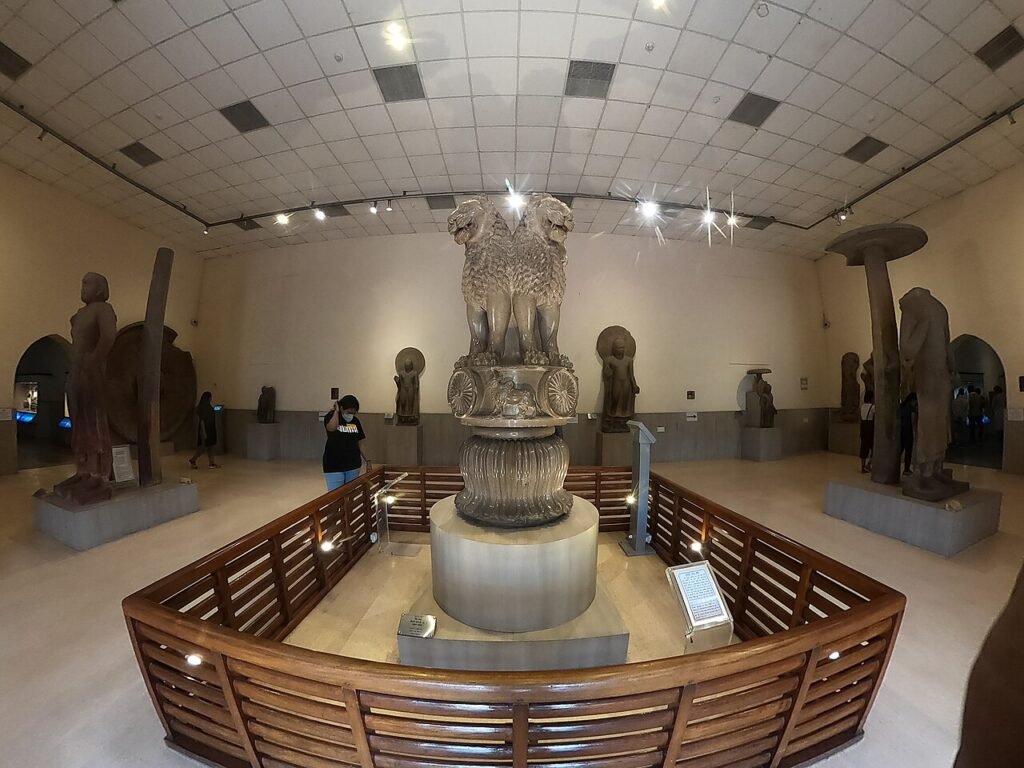
Ashoka (reigned about 268 to 232 BCE), also spelled Asoka, was the third emperor of the Maurya dynasty and ruled most of the Indian subcontinent from his capital at Pataliputra. He is remembered for expressing regret over a brutal war, for promoting a code of ethical conduct called dhamma, and for supporting the spread of
Ashoka Read More »
Ashoka was the third Maurya emperor of India, who ruled about 268 to 232 BCE and promoted ethical rule and Buddhism after the Kalinga War.
Charles Darwin (1809 to 1882) was an English naturalist who explained how species change over time through natural selection. His book On the Origin of Species, published in November 1859, made the case for evolution by this mechanism and became one of the most influential works in the history of science. Alfred Russel Wallace reached
Charles Darwin Read More »
An English naturalist who proposed that species evolve through natural selection, set out in On the Origin of Species in 1859.