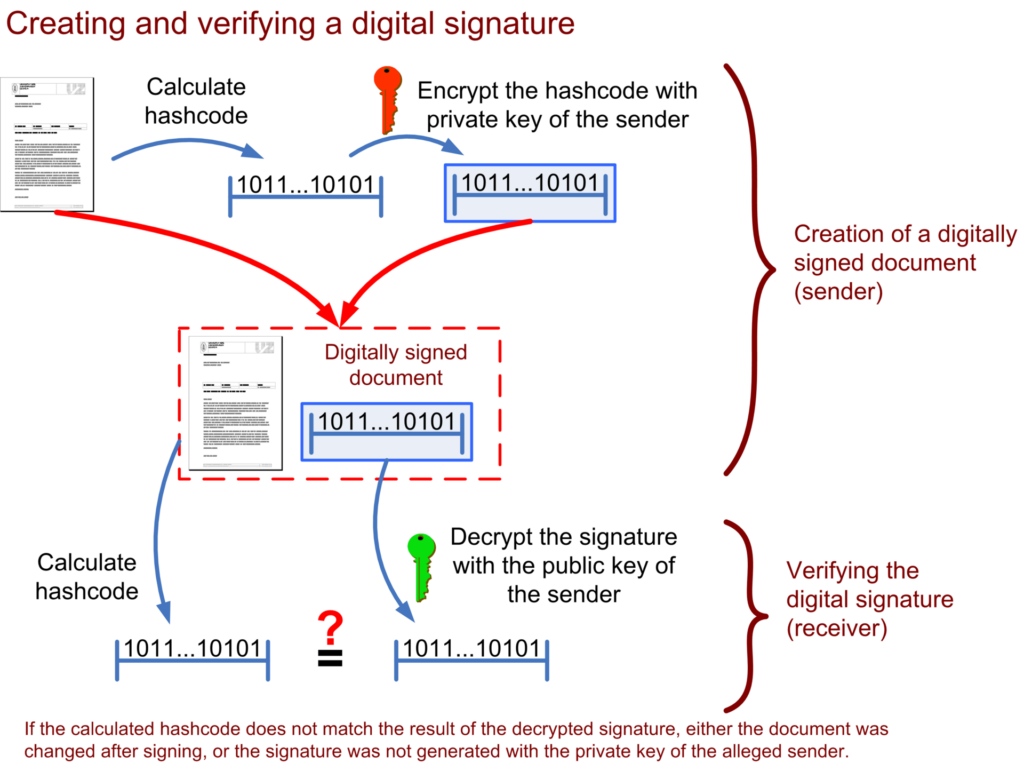
Content authentication refers to methods that let people check where a piece of digital media came from and whether it has been changed. As realistic synthetic images, voices and videos have become easy to produce, proving what is authentic has become as important as detecting what is fake. The leading approach attaches tamper-evident, cryptographically signed provenance information to a file, recording its source and its edit history. Content authentication complements AI watermarking, helps limit AI misuse and supports AI transparency.
The problem it addresses
Detection tools try to spot fakes after the fact, but they are in an arms race with generators and make mistakes. Content authentication reverses the question: rather than proving that something is fake, it lets creators and tools prove that something is genuine, or at least show its history. A photo agency, news outlet or camera maker can sign its content at creation, and viewers can later check the signature. The aim is to give audiences more context, not to decide what is true.
How provenance works
### Signed manifests
A provenance record, called a manifest, lists facts about the file: who created it, with what device or software, when, and what edits were made, including whether generative AI was used. The manifest is bound to the file with a cryptographic hash, so that any change to the pixels invalidates the link, and it is signed with the creator’s private key. Anyone can verify the signature with the matching public key and a trusted certificate. See the discussion of digital signatures in AI cybersecurity.
### Edit chains
When an editor modifies the file, the tool adds a new signed entry that references the earlier one, building a chain of custody. Viewers can inspect the chain to see what changed, such as cropping, color changes or AI-generated elements.
### Hard and soft bindings
Because metadata can be stripped when a platform re-encodes a file, provenance systems pair the signed record with a soft binding, such as an invisible watermark or a fingerprint, that lets a lost record be found again in a registry. This links content authentication to watermarking.
The C2PA standard and Content Credentials
The Coalition for Content Provenance and Authenticity, founded by technology, media and camera companies, publishes an open specification for such manifests [1]. The public-facing label is called Content Credentials, and the Content Authenticity Initiative promotes adoption by cameras, editing software, AI generators and publishers [2]. Users can inspect credentials through viewers and browser tools that show the history of an image. Support is growing but uneven, and features vary by product.
Other approaches
- Secure capture. Cameras and phones that sign images at the moment of capture using hardware keys.
- Blockchain and registries. Public ledgers or databases that record hashes of content.
- Authentication of audio and call identity. Verified caller identity and voice challenge steps to block voice-cloning scams.
- Document signing. Digital signatures for PDFs and official records.
- Detection classifiers. Models that estimate whether content is synthetic, used as a supplement; see deepfake.
Policy and law
Governments are moving toward disclosure and marking of synthetic media. The EU AI Act requires deployers to disclose deepfakes and providers to mark synthetic content in a machine-readable form [3]. The United States has issued guidance encouraging content provenance, and other countries have introduced rules on labeling. Because details change, readers should check current official sources; see AI regulation.
Limits and risks
- Absence is not proof of fakery. Most existing content has no credentials, and many legitimate tools do not add them.
- Credentials prove origin, not truth. A signed photo can still be staged or misleading.
- Stripping and re-encoding. Platforms may remove metadata, so recovery depends on soft bindings.
- Trust in signers. The system relies on certificate authorities and on devices not being compromised.
- Privacy and safety. Provenance can reveal a photographer’s identity or location, a danger for journalists and activists, so systems let creators omit sensitive details.
- Adoption gaps. Without wide use across cameras, platforms and viewers, benefits are limited.
- User understanding. Labels must be clear to avoid confusion or false confidence.
A worked example
A photographer for a news agency takes a picture with a camera that signs images at capture. In an editing program that supports Content Credentials, she crops the photo and adjusts exposure, and the tool records those steps. The agency publishes the image, and its website shows a small credentials icon. A reader clicks it and sees the camera model, the capture date, the editing steps and the agency’s signature. Later, someone circulates a version with a added crowd; the manipulated copy fails verification because the pixels no longer match the signed hash, and fact-checkers point to the original. Meanwhile, an unrelated user-generated video without credentials is judged through other checks, since the lack of credentials says nothing either way.
Who uses content authentication
Adoption spans several groups. News organizations use credentials to show that a photo or video came from a verified source and to let audiences see edits. Camera and phone makers add signing at capture. Software companies record whether generative tools were used in an edit. Social platforms and search engines can read credentials and show labels or choose how to rank content. Governments and courts consider provenance when assessing digital evidence, and businesses use it to protect brand imagery and to verify documents. Individual creators, including artists and photographers, can attach credentials to show authorship and to state that their work should not be used for model training, although such statements depend on others honoring them.
Building a verification habit
For readers, the most useful habit is to treat provenance as one clue among several. A viewer can check for credentials, look at who published the content and whether other reliable sources report the same event, run a reverse image search, look for context such as time and place and be careful with emotionally charged content that spreads quickly. Newsrooms and schools can teach these steps as part of media literacy. Organizations can add rules for high-risk requests, such as payments, so that a convincing video or voice message is never the only basis for action; see AI phishing for related scams.
FAQs
What is content authentication? It is a set of methods for verifying the origin and edit history of digital media, often using cryptographically signed provenance records.
What is C2PA? The Coalition for Content Provenance and Authenticity, which publishes an open standard for signed provenance metadata known as Content Credentials.
How is content authentication different from deepfake detection? Authentication proves where genuine content came from. Detection tries to identify fakes by analyzing the content.
Can content credentials be removed? Metadata can be stripped, which is why systems add watermarks or fingerprints to help recover the record.
Does a credential mean the content is true? No. It shows origin and edits, not whether the scene itself is accurate.
More in Cybersecurity
Key facts
- The Coalition for Content Provenance and Authenticity (C2PA) released its technical specification for Content Credentials in 2021 and has updated it since1.
- Content Credentials attach signed metadata describing a file's origin and edits, and are supported by a growing set of cameras, editing tools and AI generators2.
- The European Union's AI Act requires deepfakes to be disclosed and synthetic content to be marked in a machine-readable way3.
Related concepts
Quick checkWhat is content authentication?Show answer
Content authentication is the set of methods, such as cryptographically signed provenance records, that let people verify where a digital image, video, audio file or document came from and whether and how it has been altered.
Sources
- Coalition for Content Provenance and Authenticity, C2PA Technical Specification, https://c2pa.org/specifications/
- Content Authenticity Initiative, How it works, https://contentauthenticity.org/how-it-works
- European Union, Regulation (EU) 2024/1689 (Artificial Intelligence Act), Article 50, https://eur-lex.europa.eu/eli/reg/2024/1689/oj
Editorially reviewed by Specialty Digest Editorial TeamLast reviewed November 17, 2026Researched and drafted with AI assistanceReport an issue