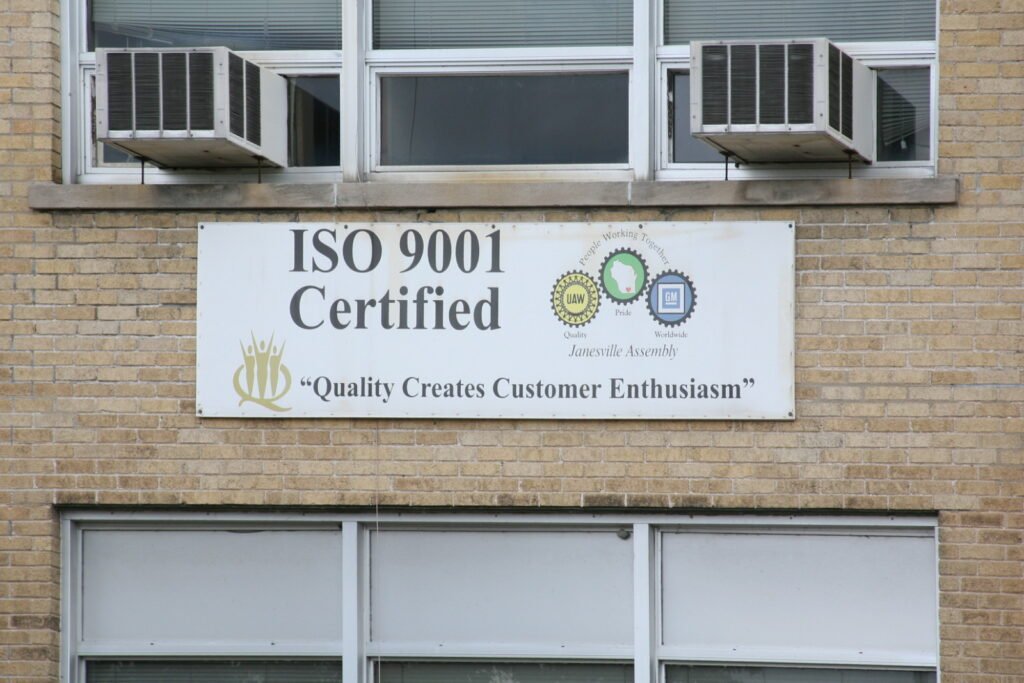
The International Organization for Standardization (ISO) is an independent, non-governmental organization of national standards bodies that develops voluntary international standards. It was formally established on 23 February 1947, and its Central Secretariat is in Geneva, Switzerland.
History of ISO
Efforts to create global standards began in the early twentieth century. The International Federation of the National Standardizing Associations (ISA), founded in 1926, focused mainly on mechanical engineering and suspended its activities during World War II. In 1944 the United Nations Standards Coordinating Committee was set up to support cooperation during postwar reconstruction.
In October 1946 delegates from 25 countries met in London to discuss a new approach, and that meeting led to ISO being formally established on 23 February 1947. The structure and procedures of the new body were strongly influenced by those of the ISA. ISO’s own descriptions differ slightly on the date: one article says the organization was established in 1946, while its history article gives the 1947 date for formal establishment.
At its founding ISO created 67 technical committees, each dedicated to a field such as screw threads, marine technology, food, textiles, paints and laboratory equipment. Its secretariat was set up in Geneva, where it remains, and in the early 1950s it had only five staff members. Its first standard, ISO/R 1:1951, set the standard reference temperature for industrial length measurements. Standards were then called recommendations.
Over the following decades ISO widened its reach. It published ISO 31 on quantities and units, and it adapted its membership model so that developing countries could stay informed even if they could not afford full membership. In 1987 it published the ISO 9000 series on quality management, which became some of the most widely used standards in the world. It launched its first website in 1995 and published ISO 14001 on environmental management in 1996.
Structure and membership
ISO is a network of national standards bodies. Most of its current articles count 173 member countries, although its history article gives 163 and a U.S. member body describes members from more than 160 countries. Membership is limited to one organization per country, usually the foremost national standards organization, and individuals and companies cannot join.
There are three categories of members. Full members, also called member bodies, vote in technical and policy meetings, and they sell and adopt ISO standards nationally. Correspondent members attend as observers without voting and may sell and adopt standards in their territory. Subscriber members, typically from smaller economies, keep up to date with ISO’s work but do not take part in developing standards or sell them.
The General Assembly is ISO’s highest governing body and meets once a year. It consists of all members and the principal officers, decides strategic direction and approves budgets. The ISO Council, which meets three times a year, is the core governance body. It has 20 member bodies, ISO officers and the chairs of three policy committees on conformity assessment, consumer issues and developing countries. The Technical Management Board oversees the technical committees, and day-to-day operations are run by the Central Secretariat under the Secretary-General.
Council membership rotates to keep representation broad. Its standing committees handle finance, strategy and policy, nominations for governance posts and governance oversight, and advisory groups give guidance on commercial policy and information technology.
How ISO develops standards
Experts nominated by national members work in technical committees to draft and review proposals. Voting and structured comment ensure that each standard reflects input from different countries and stakeholders. The procedures are set out in the ISO/IEC Directives, which are designed to keep the process transparent and fair. The Central Secretariat in Geneva coordinates this work and encourages participation from every region of the world, regardless of country or stakeholder group.
Stakeholders such as industry, regulators, governments and consumer groups take part through their national standards body. The American National Standards Institute, for example, is the sole U.S. member and a founding member of ISO. It reports that it participates in 79 percent of active ISO technical committees and holds the secretariat of 15 percent of them. ISO also works with the IEC and the ITU on joint activities such as World Standards Day.
ISO says it has published over 22,000 standards. Its standards cover health, information technology, transport, energy, building and construction, food and agriculture, and safety and risk management. The entries on food safety standards and the safety management system describe two areas where such standards are applied.
Funding of ISO
ISO describes itself as funded primarily through the sale of standards documents, a model it says maintains independence from outside influence. National members also sell and adopt the standards in their own countries, which is one reason full and correspondent members carry out that role.
Beyond writing standards, ISO offers members a range of services. It raises public awareness of standards, promotes education through joint academic programs, provides training and gives awards for achievement in international standardization. It also supports research with a research grant, an innovation network and a research library on standardization trends.
ISO says its work is guided by inclusiveness, objectivity and global participation. The experts who write standards are nominated by members, and their work is organized through national bodies.
Legacy and impact
ISO’s name is not an acronym. It comes from the Greek word isos, meaning equal, and ISO chose it to reflect a mission of consistency and uniformity that does not change from one language to another.
The organization calls itself the world’s largest developer of voluntary international standards, and its ISO 9000 and ISO 14001 families are among the best-known examples. Because its standards are voluntary, their effect depends on whether companies, regulators and customers choose to adopt them.
Key facts
- ISO was formally established on 23 February 1947 after a meeting of delegates from 25 countries in London in October 1946.1
- ISO has its Central Secretariat in Geneva, Switzerland.2
- ISO has 173 national members in three categories: full, correspondent and subscriber.3
- ISO published its first standard, ISO/R 1:1951, which set the standard reference temperature for industrial length measurements.1
- The ISO 9000 quality management series appeared in 1987 and ISO 14001 on environmental management in 1996.1
- ISO says it has published over 22,000 standards.1
- ISO is funded primarily through the sale of standards documents.2
In the news
Quick checkWhy is the International Organization for Standardization called ISO?Show answer
ISO is not an acronym. The name comes from the Greek word isos, meaning equal, and it stays the same in every language.
Sources
- International Organization for Standardization, History of ISO (ISO Help Centre, 31 July 2025), https://help.iso.org/en/articles/376239-history-of-iso
- International Organization for Standardization, About ISO (ISO Help Centre, 31 July 2025), https://help.iso.org/en/articles/376235-about-iso
- International Organization for Standardization, ISO Members: Categories, Rights, and Participation (ISO Help Centre), https://help.iso.org/en/articles/376252-iso-members-categories-rights-and-participation
- International Organization for Standardization, ISO Structure and Governance (ISO Help Centre), https://help.iso.org/en/articles/376248-iso-structure-and-governance
- American National Standards Institute, Overview of ANSI's Role as a U.S. Member in ISO, https://www.ansi.org/iso/us-representation-in-iso/introduction
Editorially reviewed by Specialty Digest Editorial TeamLast reviewed November 4, 2026Researched and drafted with AI assistanceReport an issue