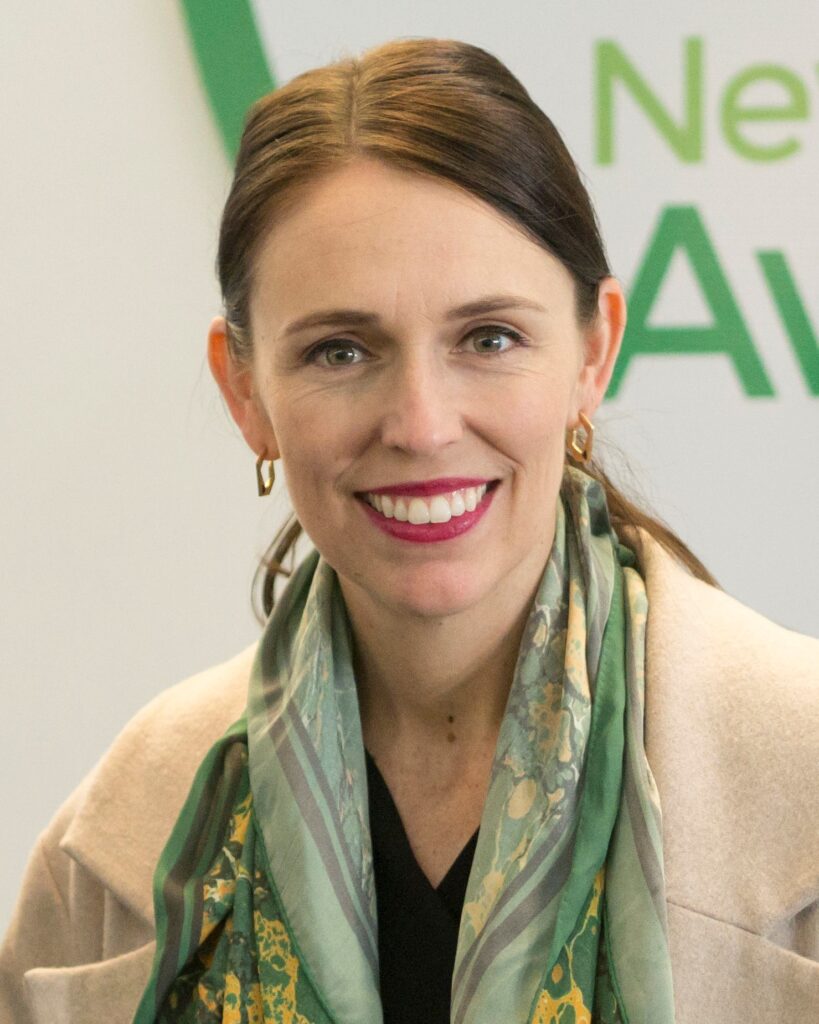
Jacinda Ardern (born 1980) is a New Zealand politician who served as Prime Minister of New Zealand from 2017 to 2023, becoming the youngest female head of government in the world at the time of her election and one of the most internationally recognized leaders of her generation. Her tenure was marked by her government’s response to the 2019 Christchurch mosque shootings, the COVID-19 pandemic, and a leadership style that drew significant global attention for its emphasis on empathy and communication.
Jacinda Ardern at a Glance
| Full name | Jacinda Kate Laurell Ardern |
| Born | July 26, 1980, Hamilton, New Zealand |
| Known for | Prime Minister of New Zealand 2017-2023; response to the Christchurch mosque shootings; COVID-19 pandemic management |
| Occupation | Politician |
| Major events | Election as Prime Minister in 2017; Christchurch mosque shootings response in 2019; COVID-19 pandemic response beginning 2020; resignation in 2023 |
| Nationality | New Zealander |
Early Life and Education
Ardern was born in Hamilton, New Zealand, and raised in a Mormon household before later leaving the faith, spending part of her childhood in the rural town of Murupara. She studied communication studies at the University of Waikato, graduating with a degree that provided a foundation for her early career in political communications and public relations before she moved into full-time politics.
Early Political Career
Ardern worked as a researcher in the office of Prime Minister Helen Clark before gaining international experience working in the Cabinet Office of the United Kingdom government under Prime Minister Tony Blair. She was elected to the New Zealand Parliament in 2008 as a Labour Party list member, gradually building experience and influence within the party over the following years.
Rise to Labour Party Leadership
Ardern became deputy leader of the Labour Party in 2017 and was elevated to party leader just weeks before that year’s general election following the sudden resignation of her predecessor, a dramatic last-minute leadership change that significantly energized the party’s campaign. This rapid ascent, sometimes referred to in New Zealand media as “Jacindamania,” helped reverse the Labour Party’s declining poll numbers in the weeks leading up to the election.
Becoming Prime Minister
Following the 2017 general election, Ardern became Prime Minister of New Zealand at the head of a coalition government, becoming at 37 years old the youngest person to hold the position in over 150 years. Her early government focused on housing affordability, child poverty reduction, and climate change policy, establishing priorities that would remain central themes throughout her time in office.
Response to the Christchurch Mosque Shootings
In March 2019, Ardern led New Zealand’s response to the mass shootings at two Christchurch mosques that killed 51 people, an attack that became one of the deadliest acts of terrorism in the country’s history. Her government’s swift legislative response, including new gun control measures enacted within weeks of the attack, along with her widely noted public expressions of solidarity with the Muslim community, drew significant international attention and praise for her crisis leadership.
Response to the COVID-19 Pandemic
Ardern’s government pursued an aggressive elimination strategy against COVID-19 beginning in 2020, implementing strict border controls and nationwide lockdowns that kept New Zealand’s case and death rates significantly lower than most other developed nations during the pandemic’s early phases. This approach received substantial international attention and contributed to her landslide re-election in the 2020 general election, though the strategy faced growing domestic criticism as the pandemic extended into 2021 and 2022.
The White Island Volcanic Eruption
Ardern’s government also managed the aftermath of the December 2019 eruption of Whakaari, also known as White Island, which killed 22 people and injured dozens of tourists and tour guides visiting the active volcano. Her government’s response included a subsequent review of adventure tourism safety regulations in New Zealand.
Economic and Social Policy
Ardern’s government pursued a range of domestic policy initiatives, including increases to the minimum wage, expanded paid parental leave, and a Child Poverty Reduction Act intended to establish measurable targets for reducing childhood poverty in New Zealand. Her administration also faced significant challenges related to housing affordability, an issue that remained only partially addressed despite being an early priority of her government.
International Profile and Diplomacy
Ardern gained substantial international recognition during her tenure, including for bringing her infant daughter to the United Nations General Assembly in 2018 and for co-founding the Christchurch Call, an international initiative aimed at eliminating terrorist and violent extremist content online following the Christchurch attacks. Her communication style and public leadership during successive crises made her one of the most closely observed political figures globally during her time in office.
Resignation and Departure from Office
Ardern announced her resignation as Prime Minister in January 2023, stating that she no longer had “enough in the tank” to continue leading the country effectively, a departure that was widely noted for its candor about the personal toll of sustained political leadership. Her resignation took effect the following month, concluding a tenure that had included some of the most significant crises in recent New Zealand history.
Environmental and Climate Policy
Ardern’s government declared a climate emergency in 2020 and pursued a range of environmental initiatives, including commitments to significantly reduce New Zealand’s greenhouse gas emissions and a controversial ban on new offshore oil and gas exploration permits. These policies positioned New Zealand as a vocal participant in international climate discussions, though the pace of domestic emissions reduction remained a subject of ongoing debate among environmental advocates and industry groups throughout her tenure.
Later Career and Academic Work
Following her resignation as Prime Minister, Ardern took on academic and fellowship positions at several international universities, including Harvard University, where she lectured and researched topics related to political leadership and crisis management. She also continued to speak publicly on issues related to online extremism and global cooperation, building on the international initiatives she had championed while in office, and she published a memoir reflecting on her life and time in political leadership.
Legacy
Jacinda Ardern remains a widely recognized figure in contemporary international politics, remembered for her crisis leadership following the Christchurch shootings, her government’s pandemic response, and her communication style that drew global attention to New Zealand politics during her six years in office. Her tenure left a significant and often studied imprint on crisis management and political communication, and her approach to leadership continues to be examined by political scientists and communications scholars.
References
- New World Encyclopedia – Jacinda Ardern
- History.com – Jacinda Ardern
- History.com – Jacinda Ardern (New Zealand)
Frequently Asked Questions
What is Jacinda Ardern best known for? She is best known as Prime Minister of New Zealand from 2017 to 2023, particularly for her leadership following the 2019 Christchurch mosque shootings and her government’s COVID-19 pandemic response.
How old was Ardern when she became Prime Minister? She became Prime Minister at 37 years old in 2017, making her the youngest person to hold the position in New Zealand in over 150 years.
What was the Christchurch Call? It was an international initiative Ardern co-founded aimed at eliminating terrorist and violent extremist content online, launched following the 2019 Christchurch mosque shootings.
Why did Ardern resign as Prime Minister? She announced her resignation in January 2023, stating that she no longer had enough energy left to continue leading the country effectively after six years in office.
Editorially reviewed by Specialty Digest Editorial TeamLast reviewed November 29, 2026Researched and drafted with AI assistanceReport an issue