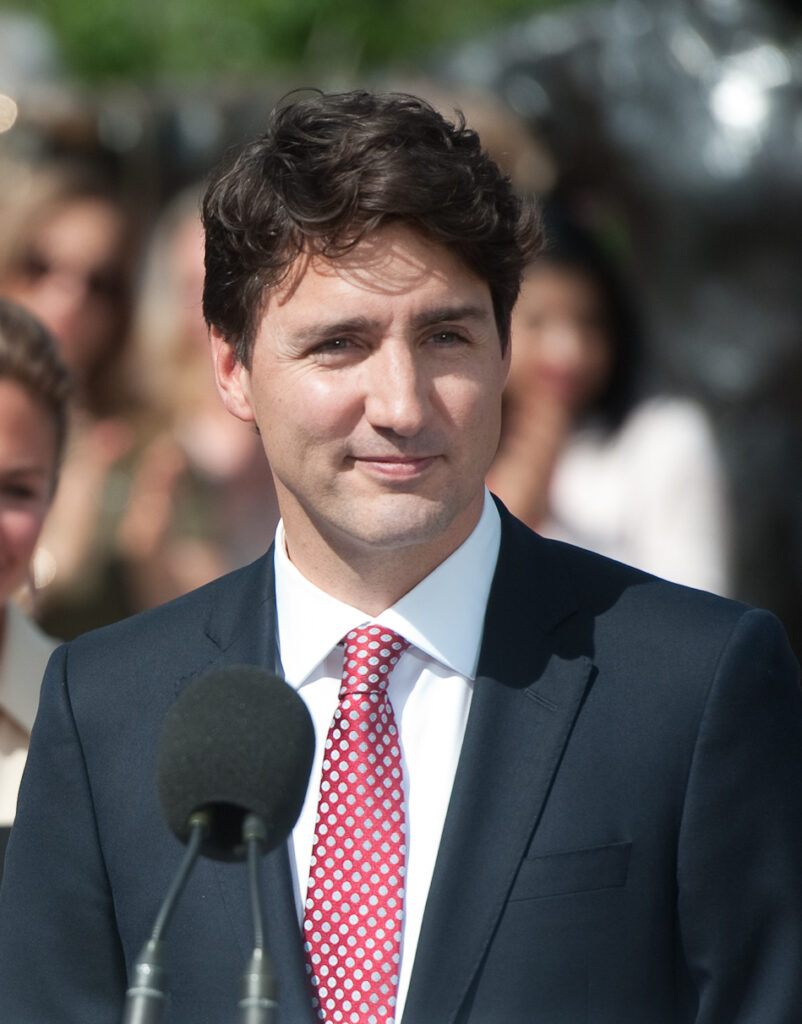
Justin Trudeau (born 1971) is a Canadian politician who served as Prime Minister of Canada from 2015 to 2025, leading the Liberal Party of Canada through three general elections and a decade marked by significant social policy initiatives, trade negotiations, and the national response to the COVID-19 pandemic. The son of former Prime Minister Pierre Trudeau, he brought a prominent political lineage and a background in teaching and advocacy to one of the longest prime ministerial tenures in recent Canadian history.
Justin Trudeau at a Glance
| Full name | Justin Pierre James Trudeau |
| Born | December 25, 1971, Ottawa, Ontario, Canada |
| Known for | Prime Minister of Canada 2015-2025; legalization of cannabis; climate and trade policy initiatives |
| Occupation | Politician, former teacher |
| Major events | Election as Prime Minister in 2015; legalization of cannabis in 2018; negotiation of the United States-Mexico-Canada Agreement; resignation announcement in 2025 |
| Nationality | Canadian |
Early Life and Family Background
Trudeau was born in Ottawa during the prime ministership of his father, Pierre Trudeau, who served as Canada’s prime minister for a cumulative fifteen years across the 1960s, 1970s, and 1980s. Growing up partly in the public eye as the son of a prominent national leader, he was educated at McGill University and the University of British Columbia, where he studied literature and later earned a degree in education.
Career Before Politics
Before entering politics, Trudeau worked as a teacher at several schools in British Columbia, teaching French and mathematics, and became involved in various charitable and advocacy causes, including environmental and youth-oriented organizations. He also gained public recognition for a notable boxing match in 2012 against a sitting Canadian senator, an event that raised his public profile ahead of his later political career.
Entry into Federal Politics
Trudeau was elected to the Canadian House of Commons in 2008, representing the Montreal riding of Papineau, and gradually built a political profile within the Liberal Party during a period when the party had fallen to third-place status in Parliament. He was elected leader of the Liberal Party in 2013, taking on the task of rebuilding the party’s electoral fortunes ahead of the 2015 federal election.
Becoming Prime Minister
Trudeau led the Liberal Party to a decisive majority victory in the 2015 federal election, a significant electoral turnaround that brought the party back to government after nearly a decade in opposition. His government took office with a cabinet that was explicitly structured for gender parity, a decision that attracted considerable domestic and international attention as a symbolic marker of his administration’s priorities.
Legalization of Cannabis
Trudeau’s government legalized recreational cannabis use nationwide in 2018, making Canada one of the first major industrialized nations to do so, a policy that fulfilled a central campaign promise and represented a significant shift in national drug policy. This legalization effort required extensive coordination with provincial governments to establish regulatory frameworks for production, sale, and taxation across the country.
Trade Policy and the USMCA
Trudeau’s government navigated significant trade policy challenges during his tenure, including the renegotiation of the North American Free Trade Agreement into the United States-Mexico-Canada Agreement amid considerable pressure from the United States government. These negotiations required balancing Canadian economic interests, particularly in agriculture and manufacturing, against the demands of a renegotiation process that unfolded over an extended and often contentious period.
Climate and Environmental Policy
Trudeau’s government implemented a national carbon pricing system intended to reduce greenhouse gas emissions, a policy that generated significant political debate both for its economic implications and for disagreements between federal and provincial governments over environmental jurisdiction. His administration also pursued pipeline infrastructure decisions that drew criticism from both environmental advocates and the energy industry, reflecting the complex political balancing required across Canada’s diverse regional economic interests.
Response to the COVID-19 Pandemic
Trudeau’s government managed Canada’s response to the COVID-19 pandemic beginning in 2020, implementing public health measures, economic support programs, and a nationwide vaccination campaign in coordination with provincial governments. His administration’s substantial pandemic-related spending programs became a significant element of Canada’s fiscal policy during this period and a notable point of subsequent political debate.
Indigenous Reconciliation Efforts
Trudeau’s government pursued various initiatives related to reconciliation with Indigenous peoples in Canada, including responses to the findings of unmarked graves at former residential school sites and commitments to implement recommendations from Canada’s Truth and Reconciliation Commission. These efforts represented a significant policy priority throughout his tenure, though progress on specific commitments remained a subject of ongoing public discussion.
Resignation and Departure from Office
Trudeau announced his resignation as Liberal Party leader and Prime Minister in January 2025, following a decline in his government’s public support and internal party pressure, stepping down after serving in office for nearly a decade. His departure marked the end of one of the more consequential prime ministerial tenures in recent Canadian political history, with a new Liberal leader subsequently taking over the government.
Immigration and Refugee Policy
Trudeau’s government maintained a generally open approach to immigration and refugee resettlement throughout his tenure, notably welcoming tens of thousands of Syrian refugees shortly after taking office in 2015 and later expanding immigration targets to address demographic and labor market needs. This approach positioned Canada distinctly among Western nations during a period when several other countries adopted more restrictive immigration policies, though the policy also became a subject of growing domestic debate in the later years of his government.
Foreign Policy and International Relations
Trudeau pursued an active foreign policy agenda emphasizing multilateralism and international cooperation, maintaining close ties with European allies while managing an often complex relationship with the United States across two different American presidential administrations. His government also navigated increasingly strained diplomatic relations with China following a significant legal and diplomatic dispute that began in 2018, which had lasting effects on Canada-China relations throughout the remainder of his tenure.
Electoral History
Trudeau led the Liberal Party through three consecutive federal elections, winning a majority government in 2015 and subsequently forming minority governments following the 2019 and 2021 elections as Liberal support gradually declined from its initial 2015 peak. Despite these shifting parliamentary arrangements, he maintained his position as prime minister throughout this period by securing the confidence of the House of Commons through various legislative agreements with other parties.
Legacy
Justin Trudeau remains a significant figure in contemporary Canadian political history, remembered for his decade of leadership, the legalization of cannabis, his government’s gender-balanced cabinet approach, and his navigation of major trade negotiations with the United States. His tenure left a substantial and often debated imprint on Canadian domestic and foreign policy, and his record continues to be studied and discussed by historians and political analysts.
References
- New World Encyclopedia – Justin Trudeau
- History.com – Justin Trudeau
- History.com – Justin Trudeau (Canada)
Frequently Asked Questions
What is Justin Trudeau best known for? He is best known as Prime Minister of Canada from 2015 to 2025, overseeing the legalization of cannabis and the renegotiation of North American trade agreements.
What did Trudeau do before becoming Prime Minister? He worked as a schoolteacher in British Columbia and was involved in various charitable and advocacy causes before being elected to Parliament in 2008.
Who was Justin Trudeau’s father? His father was Pierre Trudeau, who served as Prime Minister of Canada for a cumulative fifteen years across the 1960s, 1970s, and 1980s.
When did Justin Trudeau leave office? He announced his resignation as Liberal Party leader and Prime Minister in January 2025, stepping down after nearly a decade in office.
Editorially reviewed by Specialty Digest Editorial TeamLast reviewed November 29, 2026Researched and drafted with AI assistanceReport an issue