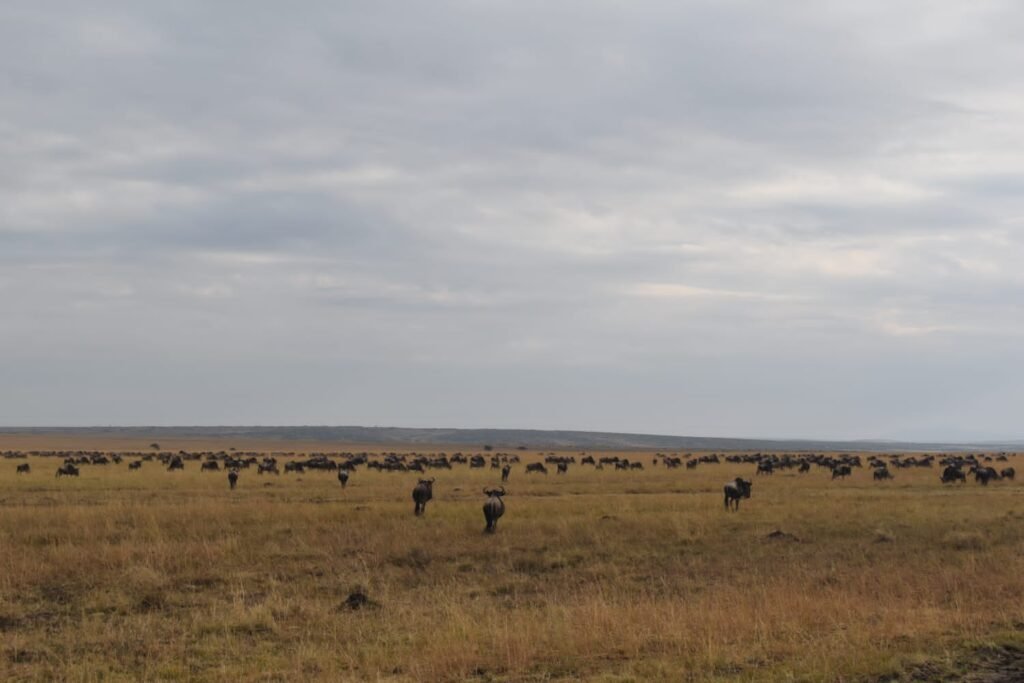
Kenya is a country in East Africa known for the Great Rift Valley, world-renowned long-distance runners, and some of the continent’s most celebrated wildlife reserves, above all the Maasai Mara, where vast herds cross the plains each year in one of the largest land-animal migrations on Earth.
Where Is Kenya Located?
Kenya straddles the equator in East Africa, bordered by Ethiopia to the north, Somalia to the east, Tanzania to the south, Uganda to the west, and South Sudan to the northwest, with a coastline on the Indian Ocean. The Great Rift Valley runs north to south through the country, and Mount Kenya, Africa’s second-highest peak, rises near the center. Nairobi, in the country’s south-central highlands, is the capital and largest city.
A Brief History
Kenya has some of the world’s oldest evidence of early human ancestors, drawn from fossil sites in the Rift Valley. Various Bantu, Nilotic and Cushitic peoples settled the region over centuries, and the coast developed as a hub of Indian Ocean trade under Swahili and later Arab and Portuguese influence. Britain established the East Africa Protectorate in 1895 and later Kenya Colony, and Kenya gained independence in 1963 following an anti-colonial struggle that included the Mau Mau uprising of the 1950s, becoming a republic under its first president, Jomo Kenyatta, the following year.
Government and Economy Today
Kenya is a presidential republic. According to the World Bank, the country’s macroeconomic management has delivered some gains, including inflation within the central bank’s target range and a stable exchange rate, but fiscal vulnerabilities remain significant, with public debt at 70.6 percent of GDP and about a third of government revenue absorbed by interest payments. Despite two decades of economic growth, poverty reduction has been gradual, as weak productivity growth and a narrow export base have left many workers in low-productivity informal jobs. The World Bank classifies Kenya as a lower-middle-income economy.
Culture and People
Kenya’s population was approximately 57.5 million in 2025, according to the World Bank. Swahili and English are both official languages, and the country is home to more than 40 ethnic groups. Kenya has produced a disproportionate share of the world’s elite distance runners, particularly from communities in the Rift Valley highlands, and Nairobi is a major regional hub for technology, finance and international organizations, including United Nations agencies.
What Is Kenya Known For?
Kenya is best known internationally for safari tourism and wildlife conservation, and above all for the Maasai Mara National Reserve, where the annual wildebeest migration between the Mara and Tanzania’s Serengeti sees more than a million wildebeest and hundreds of thousands of zebras cross the plains and the Mara River, drawing visitors and researchers from around the world.
Key Takeaways
- Kenya straddles the equator in East Africa, bordered by Ethiopia, Somalia, Tanzania, Uganda and South Sudan, with Nairobi as its capital.
- It gained independence from Britain in 1963 after a colonial period that included the Mau Mau uprising.
- Kenya is a lower-middle-income economy facing significant public debt pressures alongside sustained growth.
- The country has produced many of the world’s leading long-distance runners.
- The Maasai Mara National Reserve and its annual wildebeest migration are Kenya’s most iconic natural feature.
Key facts
Quick checkWhat is Kenya's most iconic natural feature?Show answer
The Maasai Mara National Reserve, home to the annual wildebeest migration between the Mara and the Serengeti, one of the largest land-animal migrations on Earth.
Sources
- World Bank. Kenya, Population total. 2025 (accessed Accessed 2026)
- World Bank. Kenya Overview. Accessed 2026 (accessed 2026)
Editorially reviewed by Specialty Digest Editorial TeamLast reviewed September 27, 2026Researched and drafted with AI assistanceReport an issue