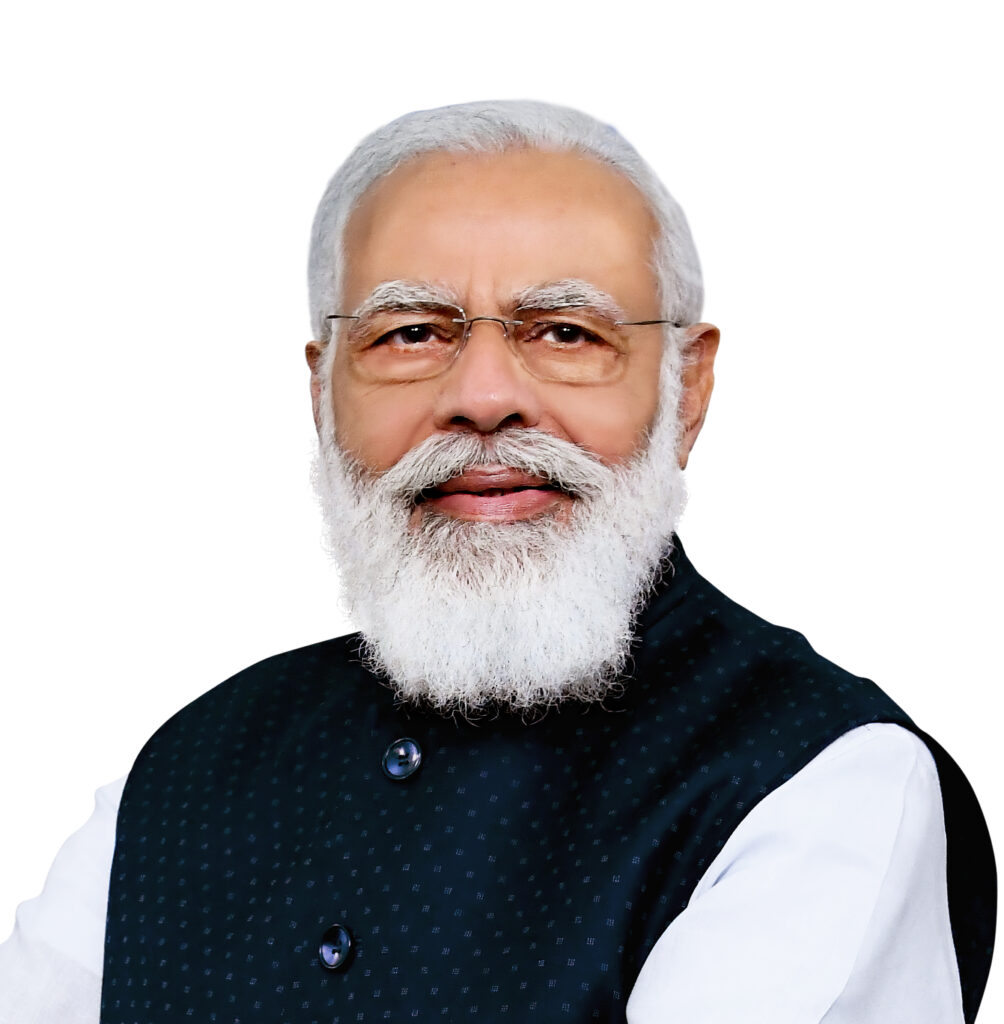
Narendra Modi (born 1950) is an Indian politician who has served as Prime Minister of India since 2014, leading the country through a period of significant economic reform, infrastructure expansion, and shifting international alignment. A longtime member of the Bharatiya Janata Party, he previously served as Chief Minister of the state of Gujarat for over a decade before rising to national leadership, and his tenure as prime minister has made him one of the most prominent and closely watched political figures in contemporary global affairs.
Narendra Modi at a Glance
| Full name | Narendra Damodardas Modi |
| Born | September 17, 1950, Vadnagar, Bombay State, India |
| Known for | Prime Minister of India since 2014; former Chief Minister of Gujarat; economic reform initiatives |
| Occupation | Politician |
| Major events | Election as Chief Minister of Gujarat in 2001; election as Prime Minister in 2014; Goods and Services Tax reform in 2017 |
| Nationality | Indian |
Early Life and Background
Modi was born in Vadnagar, a small town in what was then Bombay State and is now the Indian state of Gujarat, into a family of modest means. He has described helping his father sell tea at a local railway station during his youth, an experience that has become a prominent part of his public biography and political narrative as a leader who rose from humble circumstances to national prominence.
Early Involvement with the RSS
Modi became associated with the Rashtriya Swayamsevak Sangh, a Hindu nationalist volunteer organization, from a young age, eventually becoming a full-time worker for the organization. This early involvement shaped his political orientation and provided him with an extensive organizational network that would later prove significant in his rise through the ranks of the Bharatiya Janata Party, which has historical ties to the RSS.
Entry into the Bharatiya Janata Party
Modi formally joined the Bharatiya Janata Party in 1987 and quickly distinguished himself as an effective organizer, eventually rising to national leadership positions within the party. His organizational skill and effectiveness in party campaigns during the 1990s established his reputation as a capable political operative, setting the stage for his appointment to lead the party in his home state of Gujarat.
Chief Minister of Gujarat
Modi became Chief Minister of Gujarat in 2001 and went on to serve in that role for more than thirteen years, during which he became closely associated with a development-focused governance model that emphasized infrastructure investment, industrial growth, and economic liberalization. Gujarat’s economic performance during his tenure as chief minister became a central element of his political identity and later served as a key platform for his national political campaign.
Rise to National Leadership
Modi was selected as the Bharatiya Janata Party’s candidate for prime minister ahead of the 2014 general election, leading an energetic national campaign that emphasized economic development and governance reform. The party secured a decisive majority in that election, the first time a single party had won an outright parliamentary majority in India in three decades, and Modi was sworn in as Prime Minister in May 2014.
Economic Policy and Demonetization
Modi’s government pursued several significant economic initiatives, most notably the 2016 demonetization of high-value currency notes, which aimed to curb unreported wealth and counterfeit currency but generated substantial short-term economic disruption and extensive public debate regarding its effectiveness. His administration also launched programs intended to expand financial inclusion, including efforts to provide banking access to previously unbanked segments of the Indian population.
Goods and Services Tax Reform
Modi’s government implemented a nationwide Goods and Services Tax in 2017, consolidating numerous separate state and central taxes into a unified system, a long-debated reform that previous governments had attempted but failed to enact. This reform represented one of the most significant changes to India’s tax and economic structure in decades, aimed at simplifying compliance and creating a more unified national market.
Infrastructure and Development Initiatives
Modi’s government launched numerous infrastructure and development programs during his tenure, including the Swachh Bharat sanitation campaign, initiatives to expand rural electrification, and significant investment in highway and railway infrastructure. His administration also promoted the Make in India initiative, intended to encourage domestic manufacturing and attract foreign investment into India’s industrial sector.
Re-election and Continued Leadership
Modi led the Bharatiya Janata Party to a second consecutive decisive election victory in 2019 and a third term following the 2024 general election, extending his tenure as prime minister into a second decade of continuous national leadership. His sustained electoral success across multiple national elections reflects his enduring political organization and the continued appeal of his development-oriented political messaging to large segments of the Indian electorate.
Foreign Policy and International Relations
Modi has pursued an active foreign policy agenda, cultivating relationships with a wide range of global powers while positioning India as an increasingly significant player in international diplomacy and global economic affairs. His government has emphasized India’s strategic autonomy while expanding economic and defense cooperation with the United States, European nations, and other major international partners.
Response to the COVID-19 Pandemic
Modi’s government managed India’s response to the COVID-19 pandemic, implementing a nationwide lockdown in 2020 and later overseeing one of the largest vaccination campaigns in the world, which played a significant role in India’s recovery from the pandemic’s economic and public health impact. The scale of the vaccination effort, reaching hundreds of millions of people, became a notable element of his government’s pandemic response.
Digital Governance Initiatives
Modi’s administration has emphasized digital governance and technology-driven public service delivery, expanding the Aadhaar biometric identification system and promoting digital payment infrastructure that has significantly increased electronic transactions across the Indian economy. These initiatives have been credited with improving the efficiency of government service delivery and expanding financial access across much of the country.
Domestic Social Policy
Modi’s government has pursued a range of domestic social and legal reforms during his tenure, including changes to the constitutional status of Jammu and Kashmir in 2019 and the enactment of new citizenship legislation that generated substantial public debate and protest. His administration has also overseen the construction of major public infrastructure projects tied to religious and cultural sites, reflecting the emphasis his government has placed on cultural and civilizational themes alongside economic policy.
Legacy
Narendra Modi remains one of the most significant and closely observed political figures in contemporary global politics, remembered for his sustained electoral dominance, his emphasis on economic development and infrastructure investment, and his effort to position India as a major global economic and diplomatic power. His continuing tenure as prime minister places him among the most consequential leaders in India’s history as an independent nation, and his policies continue to be studied and debated by economists, historians, and political analysts.
References
- New World Encyclopedia – Narendra Modi
- History.com – Narendra Modi
- History.com – Narendra Modi (India)
Frequently Asked Questions
What is Narendra Modi best known for? He is best known as Prime Minister of India since 2014, overseeing major economic reforms including the Goods and Services Tax and significant infrastructure development initiatives.
What did Modi do before becoming Prime Minister? He served as Chief Minister of the state of Gujarat for more than thirteen years, from 2001 to 2014, where he became associated with a development-focused governance model.
What was demonetization under Modi’s government? In 2016, his government withdrew high-value currency notes from circulation to curb unreported wealth and counterfeit currency, a move that generated significant economic disruption and debate.
How many terms has Modi served as Prime Minister? He has served three consecutive terms, winning national elections in 2014, 2019, and 2024.
Editorially reviewed by Specialty Digest Editorial TeamLast reviewed November 29, 2026Researched and drafted with AI assistanceReport an issue