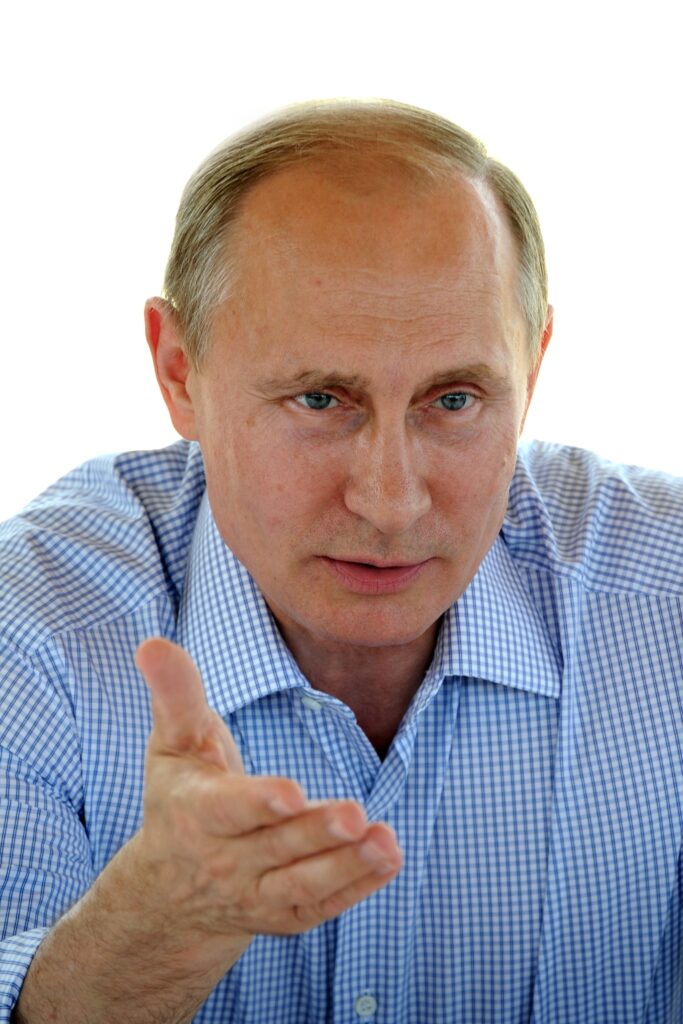
Vladimir Putin (born 1952) is a Russian politician who has served as President of Russia for multiple terms since 1999, with an intervening term as Prime Minister, making him the dominant figure in Russian politics for over two decades. A former intelligence officer in the Soviet KGB, he rose through the ranks of the post-Soviet Russian government to become one of the most consequential and closely watched world leaders of the early twenty-first century.
Vladimir Putin at a Glance
| Full name | Vladimir Vladimirovich Putin |
| Born | October 7, 1952, Leningrad, Soviet Union |
| Known for | President of Russia since 1999 (with an intervening term as Prime Minister); former KGB intelligence officer |
| Occupation | Politician, former intelligence officer |
| Major events | Appointment as Prime Minister in 1999; first presidential term beginning 2000; annexation of Crimea in 2014; full-scale invasion of Ukraine in 2022 |
| Nationality | Russian |
Early Life and KGB Career
Putin was born in Leningrad, now Saint Petersburg, and studied law at Leningrad State University before joining the Soviet Committee for State Security, commonly known as the KGB, in 1975. He served in the KGB for sixteen years, including a lengthy posting in Dresden, East Germany, during the final years of the Cold War, an experience that significantly shaped his later worldview and approach to international affairs.
Transition to Civilian Government
Following the collapse of the Soviet Union, Putin left the KGB and entered local government administration in Saint Petersburg, working closely with reformist mayor Anatoly Sobchak during the turbulent early years of post-Soviet Russia. This period provided him with valuable administrative experience and political connections that would prove instrumental when he moved to Moscow to take up positions within the federal government in the late 1990s.
Rise to the Presidency
Putin was appointed Prime Minister of Russia by President Boris Yeltsin in August 1999 and became acting president when Yeltsin unexpectedly resigned on the final day of that year, a transition that positioned Putin as Yeltsin’s chosen successor. He won his first presidential election in March 2000 and was re-elected in 2004, establishing himself as the dominant figure in Russian politics during a period of relative economic stabilization following the turbulence of the 1990s.
Presidential Term Limits and the Medvedev Period
Due to constitutional term limits preventing a third consecutive presidential term, Putin stepped aside in 2008 and served as Prime Minister under President Dmitry Medvedev, while remaining widely regarded as the country’s most powerful political figure during this period. Putin returned to the presidency in 2012 following a constitutional amendment extending presidential terms, a transition that generated significant public protest and became a notable moment in contemporary Russian political history.
Economic Policy and Governance
Putin’s government has overseen significant changes to Russia’s economic structure, including increased state control over major energy and natural resource companies, which has been central to the country’s economic and geopolitical strategy. His administration has also pursued broader efforts to consolidate political authority, reducing the influence of regional governors and independent media relative to the more decentralized arrangements of the 1990s.
Annexation of Crimea
In 2014, following political upheaval in Ukraine, Russian forces occupied and Russia subsequently annexed the Crimean Peninsula, a move that was not internationally recognized by most countries and led to significant economic sanctions against Russia from the United States, the European Union, and other nations. This episode marked a major turning point in Russia’s relations with Western countries and significantly altered the post-Cold War security arrangement in Eastern Europe.
The 2022 Invasion of Ukraine
In February 2022, Putin ordered a full-scale military invasion of Ukraine, launching the largest armed conflict in Europe since the Second World War and triggering extensive international sanctions along with a significant reorientation of European security and defense policy. This conflict has become the defining event of Putin’s later presidency, with far-reaching consequences for Russia’s economy, international standing, and relationships with both Western nations and other global powers.
Foreign Policy and International Relations
Putin has pursued a foreign policy aimed at restoring Russian influence on the global stage and resisting the expansion of Western political and military institutions into the former Soviet sphere of influence. His government has cultivated relationships with China and other non-Western powers while increasingly positioning Russia in opposition to the United States and European nations across a range of diplomatic and security issues.
Domestic Political Control
Putin’s extended tenure has been marked by sustained efforts to consolidate political authority, including constitutional changes approved in 2020 that reset his term limits and allowed the possibility of his continued presidency into the 2030s. His government has maintained significant control over major media outlets and has limited the operating space for organized political opposition throughout his time in power.
Military and Security Policy
Putin has overseen a significant modernization of the Russian armed forces throughout his tenure, investing heavily in military equipment, nuclear capability, and strategic deterrence as part of a broader effort to restore Russia’s standing as a major military power following the diminished capacity of the post-Soviet 1990s. His government has also conducted military operations in several regions beyond Ukraine, including interventions in Georgia in 2008 and Syria beginning in 2015, reflecting a broader pattern of assertive Russian military engagement abroad.
Energy Policy and Global Influence
Putin’s government has leveraged Russia’s extensive oil and natural gas reserves as a central instrument of economic and geopolitical influence, particularly in relations with European countries that have historically depended on Russian energy exports. This energy relationship became a significant point of leverage and later a point of substantial disruption following the imposition of sanctions and the broader reorientation of European energy policy after 2022.
Domestic Economic Development
Putin’s early presidency coincided with a period of significant economic growth in Russia, driven substantially by rising global energy prices and a stabilization of the financial system following the turmoil of the 1990s. His government pursued infrastructure investment and debt reduction during this period, though Russia’s economy has since faced significant challenges related to sanctions, reduced foreign investment, and structural dependence on natural resource exports.
Legacy
Vladimir Putin remains one of the most significant and closely observed political figures of the early twenty-first century, remembered for his sustained consolidation of power in Russia, his central role in the annexation of Crimea and the invasion of Ukraine, and his effort to reassert Russian influence on the global stage. His more than two decades of cumulative leadership have left a profound and lasting imprint on Russian politics and international relations, and his policies continue to be studied and debated by historians, political scientists, and international relations scholars.
References
- New World Encyclopedia – Vladimir Putin
- History.com – Vladimir Putin
- History.com – Vladimir Putin (Russia)
Frequently Asked Questions
What is Vladimir Putin best known for? He is best known as President of Russia for multiple terms since 1999, overseeing the 2014 annexation of Crimea and the 2022 full-scale invasion of Ukraine.
What did Putin do before entering politics? He served sixteen years as an intelligence officer in the Soviet KGB, including a lengthy posting in Dresden, East Germany, before entering civilian government administration.
Why did Putin serve as Prime Minister instead of President from 2008 to 2012? Constitutional term limits prevented him from serving a third consecutive presidential term, so he served as Prime Minister under President Dmitry Medvedev before returning to the presidency in 2012.
What happened in Crimea in 2014? Russian forces occupied and Russia subsequently annexed the Crimean Peninsula from Ukraine, a move not internationally recognized by most countries and followed by significant Western sanctions.
Editorially reviewed by Specialty Digest Editorial TeamLast reviewed November 29, 2026Researched and drafted with AI assistanceReport an issue