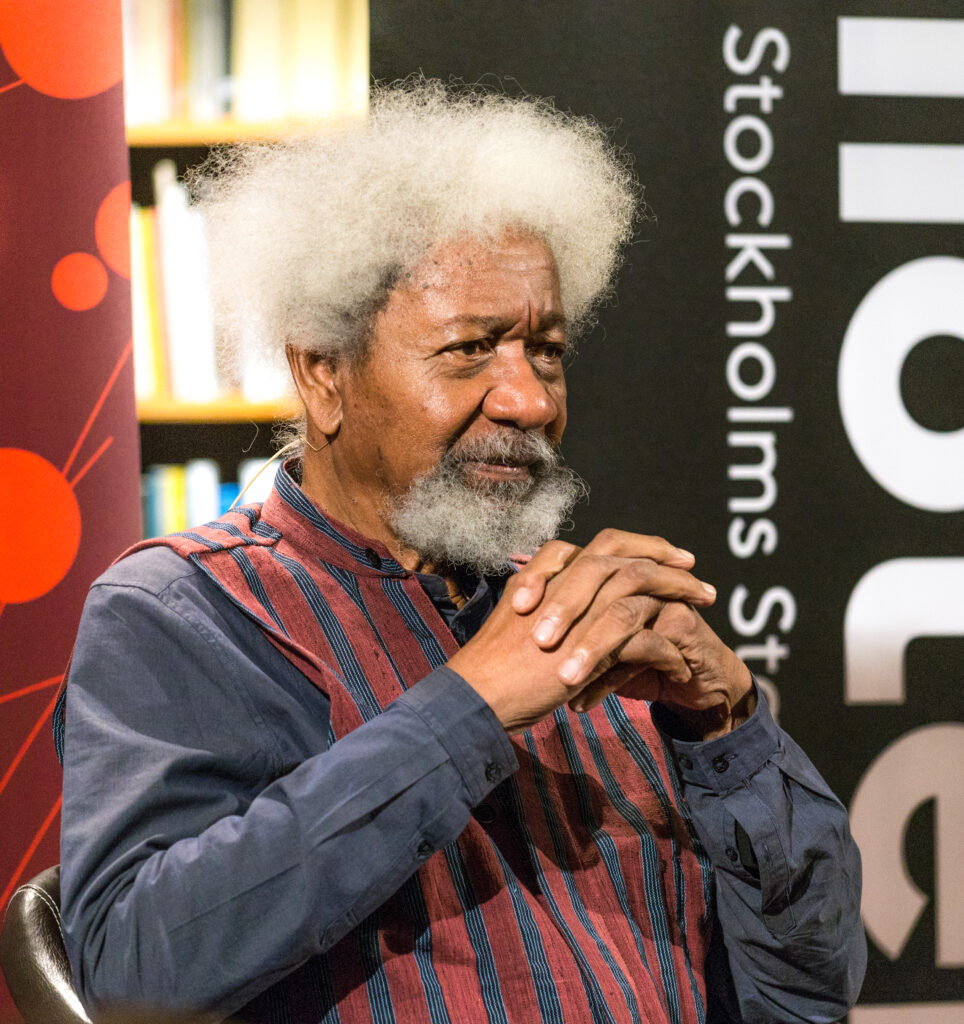
Wole Soyinka (born 1934) is a Nigerian playwright, poet, novelist, and essayist who became the first African writer to receive the Nobel Prize in Literature, awarded to him in 1986. His extensive body of dramatic and literary work, deeply informed by Yoruba culture and mythology alongside Western literary traditions, established him as one of the most significant literary figures to emerge from the African continent in the modern era.
Wole Soyinka at a Glance
| Full name | Akinwande Oluwole Babatunde Soyinka |
| Born | July 13, 1934, Abeokuta, Nigeria |
| Known for | Playwright, poet, and novelist; Nobel Prize in Literature laureate 1986 |
| Occupation | Playwright, poet, novelist, essayist |
| Major events | Wrote “A Dance of the Forests” 1960; awarded Nobel Prize in Literature 1986 |
| Nationality | Nigerian |
Early Life and Education
Wole Soyinka was born in Abeokuta, in what was then colonial Nigeria, into a family with strong connections to both traditional Yoruba culture and Western education, an upbringing that would later inform the distinctive blend of influences in his literary work. He pursued higher education at University College Ibadan before continuing his studies at the University of Leeds in England, where he developed a deep engagement with Western dramatic traditions alongside his existing cultural background.
Early Theatrical Career
Following his studies in England, Soyinka worked at the Royal Court Theatre in London, gaining valuable practical experience in theatrical production and playwriting before returning to Nigeria as the country approached independence. This early theatrical training in London provided him with technical skills in dramatic writing and production that he would subsequently apply to developing a distinctively African theatrical voice upon his return home.
Return to Nigeria and Independence-Era Drama
Soyinka returned to Nigeria in 1960, the year of the country’s independence from British colonial rule, and wrote “A Dance of the Forests,” a play commissioned for the independence celebrations that offered a notably unsentimental perspective on Nigeria’s future rather than straightforward celebratory nationalism. This work established a pattern that would continue throughout his career, in which he used drama to offer critical, complex perspectives on African political and social life rather than simple affirmation.
Development of a Distinctive Dramatic Voice
Throughout the 1960s and subsequent decades, Soyinka developed an extensive body of dramatic work that drew on Yoruba mythology, ritual, and performance traditions while incorporating sophisticated engagement with Western dramatic forms and techniques. His plays, including works such as “The Lion and the Jewel” and “Death and the King’s Horseman,” established him as a dramatist capable of bridging African and Western theatrical traditions in artistically significant ways.
Political Activism and Imprisonment
Soyinka’s career has been marked by sustained political engagement with Nigerian and broader African political affairs, including outspoken criticism of authoritarian governance that at times placed him in direct conflict with ruling authorities. During the Nigerian Civil War in the late 1960s, he was imprisoned for over two years, largely in solitary confinement, for his attempts to mediate between warring factions, an experience that profoundly influenced his subsequent writing and political outlook.
Literary Output Beyond Drama
In addition to his extensive work as a playwright, Soyinka produced significant work across multiple literary forms, including poetry, novels, memoirs, and essays addressing a wide range of political, cultural, and philosophical themes. His prison memoir and other autobiographical writings provided significant insight into his personal experiences and political views, extending his literary reputation well beyond his dramatic work alone.
The Nobel Prize in Literature
In 1986, Soyinka was awarded the Nobel Prize in Literature, becoming the first writer from the African continent to receive the honor, a landmark recognition that significantly elevated international attention to African literature more broadly. The award recognized his work as a dramatist who, in the words of the Nobel committee, fashioned the drama of existence in a wide cultural perspective and with poetic overtones, drawing extensively on African traditions while engaging with universal literary themes.
Continued Political Engagement
Following the Nobel Prize, Soyinka remained an outspoken commentator on Nigerian and African political affairs, continuing to criticize authoritarian governance and advocate for democratic reform across the continent throughout subsequent decades. His willingness to speak out against political repression, even at considerable personal risk, including periods of exile from Nigeria, reinforced his reputation as a writer deeply committed to using his literary platform for political and social engagement.
Academic Career and International Recognition
Throughout his career, Soyinka held numerous academic appointments at universities in Nigeria, the United Kingdom, and the United States, contributing to the study of African literature and drama while continuing his own creative writing. His extensive international academic presence helped establish African literature as a serious subject of scholarly study within universities worldwide, extending his influence into educational and critical discourse beyond his own creative output.
Engagement with Pan-African Literary Movements
Soyinka’s career unfolded alongside a broader flowering of African literary and intellectual life in the decades following independence across the continent, and he engaged closely with fellow writers, critics, and intellectuals working to establish African literature as a distinct and significant field within world letters. His own insistence on approaching African subject matter through forms that drew equally on indigenous performance traditions and international dramatic technique helped shape ongoing debates among African writers about language, form, and audience that continued throughout the twentieth century.
Essays and Cultural Criticism
Beyond his creative writing, Soyinka produced a substantial body of essays and critical writing addressing African culture, politics, and the role of the writer in society, establishing him as an important voice in broader intellectual debates extending well beyond literary criticism narrowly defined. His critical writing often engaged directly with questions of African identity, the legacy of colonialism, and the responsibilities of artists and intellectuals in newly independent nations, complementing his creative output with a sustained body of analytical and argumentative work.
Honors and Later Recognition
In the decades following his Nobel Prize, Soyinka received numerous additional honors and honorary degrees from universities and cultural institutions around the world, reflecting his sustained international stature as one of the preeminent literary figures of his generation. These accumulated honors, spanning literature, human rights, and broader cultural achievement, underscored the breadth of his influence across multiple fields well beyond drama and poetry alone, cementing his position as an elder statesman of African letters.
Legacy
Wole Soyinka remains one of the most significant figures in the history of African and world literature, remembered as the first African writer to win the Nobel Prize in Literature and for his sustained contributions to drama, poetry, and political discourse across more than six decades. His work’s distinctive fusion of Yoruba cultural traditions with sophisticated dramatic and literary craft established a legacy that continues to influence writers and scholars of African literature worldwide.
References
Frequently Asked Questions
What is Wole Soyinka best known for? He is best known for his work as a playwright and for becoming the first African writer to win the Nobel Prize in Literature, awarded in 1986.
Why was Wole Soyinka imprisoned? He was imprisoned for over two years during the Nigerian Civil War in the late 1960s for his attempts to mediate between warring factions, largely held in solitary confinement.
What literary traditions influenced Soyinka’s work? His writing draws extensively on Yoruba mythology, ritual, and performance traditions while engaging sophisticated Western dramatic forms and techniques.
Why did Soyinka win the Nobel Prize in Literature? He won in 1986 for fashioning the drama of existence in a wide cultural perspective with poetic overtones, becoming the first African Nobel laureate in literature.
Editorially reviewed by Specialty Digest Editorial TeamLast reviewed November 29, 2026Researched and drafted with AI assistanceReport an issue