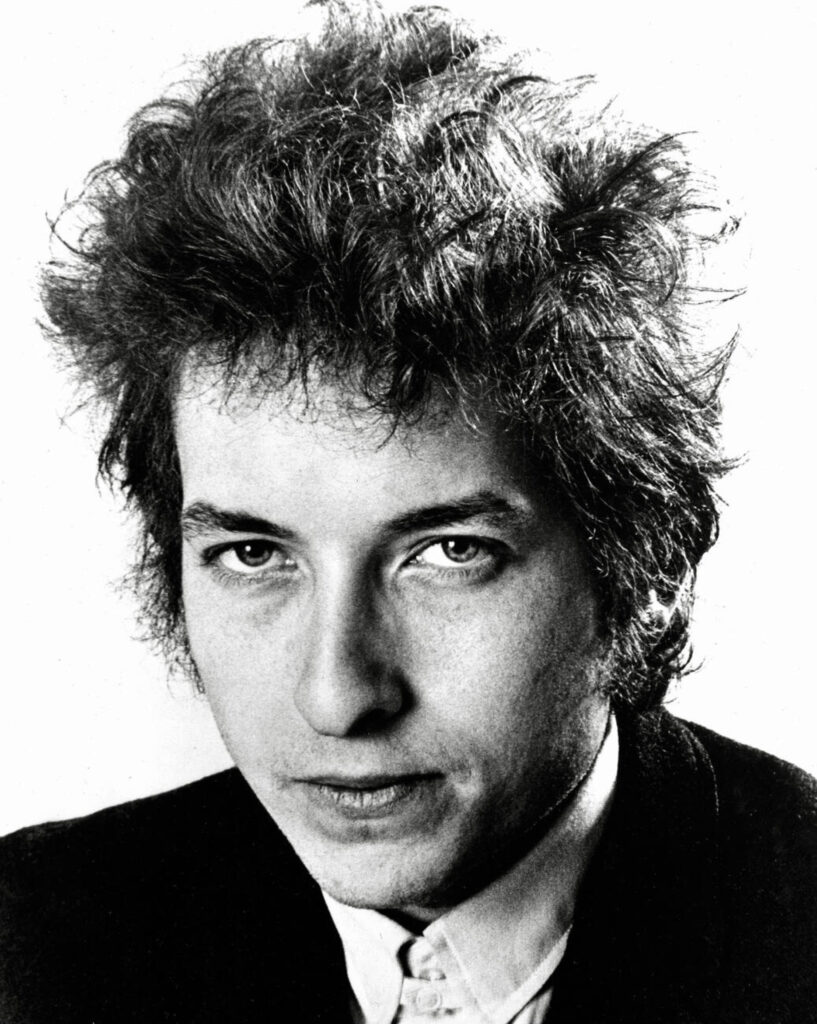
Bob Dylan (born 1941) is an American singer-songwriter and musician whose work fundamentally transformed popular music through its literary ambition and poetic lyricism, establishing him as one of the most influential cultural figures of the twentieth century. His extensive body of work, spanning folk, rock, and numerous other musical genres over more than six decades, earned him the Nobel Prize in Literature in 2016, making him the first musician to receive the honor.
Bob Dylan at a Glance
| Full name | Robert Allen Zimmerman |
| Born | May 24, 1941, Duluth, Minnesota |
| Known for | Singer-songwriter and musician; Nobel Prize in Literature laureate 2016 |
| Occupation | Musician, singer-songwriter, author |
| Major events | Released debut album 1962; “Like a Rolling Stone” released 1965; awarded Nobel Prize in Literature 2016 |
| Nationality | American |
Early Life and Musical Influences
Bob Dylan was born Robert Allen Zimmerman in Duluth, Minnesota, and grew up in nearby Hibbing, where he developed an early interest in music, drawing inspiration from blues, folk, and early rock and roll recordings. His formative exposure to the music of artists including Woody Guthrie proved particularly influential, shaping the folk-oriented direction his own early songwriting would take once he began performing professionally.
Arrival in New York and Early Career
In 1961, Dylan moved to New York City, where he became immersed in the vibrant folk music scene centered in Greenwich Village, performing in local clubs and coffeehouses while developing his distinctive songwriting voice. This period proved formative for his artistic development, as he absorbed influences from the broader folk revival movement while beginning to establish his own reputation as a promising young performer and songwriter.
Debut Album and Early Recognition
Dylan released his self-titled debut album in 1962, a collection consisting largely of traditional folk songs that, while not immediately commercially successful, established his presence within the recording industry. His subsequent albums throughout the early 1960s, featuring increasingly original compositions, gradually built his reputation as a significant new voice within American folk music.
Protest Songs and the Folk Movement
During the early 1960s, Dylan became closely associated with the American folk music revival and its connection to the civil rights and social protest movements of the era, writing songs that addressed social and political themes with considerable lyrical sophistication. Songs from this period became closely associated with the broader cultural movements of the time, cementing his reputation as a songwriter capable of capturing significant social and political currents in his work.
The Transition to Electric Music
In 1965, Dylan made the significant artistic decision to incorporate electric instrumentation into his music, a departure from his earlier acoustic folk sound that initially generated considerable controversy among segments of his existing folk audience. This transition, most famously marked by his performance at the Newport Folk Festival and the release of albums including Highway 61 Revisited, ultimately proved to be a pivotal moment in expanding the artistic possibilities of popular music.
“Like a Rolling Stone” and Artistic Innovation
The 1965 release of “Like a Rolling Stone” represented a landmark moment in Dylan’s career and in popular music more broadly, combining an unconventional song structure and length with lyrics of unusual complexity and literary ambition for commercial popular music. The song’s critical and commercial success demonstrated that popular music could successfully incorporate the kind of sophisticated lyrical content more commonly associated with literary poetry, significantly expanding expectations for what songwriting could achieve.
Continued Artistic Evolution
Throughout the following decades, Dylan continued to evolve artistically across a remarkable range of musical styles, incorporating elements of country, gospel, blues, and numerous other genres into an extensive catalog of recordings that consistently defied easy categorization. This sustained willingness to experiment and change direction throughout his career became a defining characteristic of his artistic identity, distinguishing him from many contemporaries who maintained more consistent stylistic approaches.
Songwriting and Literary Influence
Dylan’s songwriting has been extensively studied and celebrated for its literary qualities, drawing on influences ranging from American folk traditions to classic literature and poetry, and incorporating complex imagery, narrative techniques, and wordplay rarely associated with popular song lyrics. This literary dimension of his work significantly influenced subsequent generations of songwriters, who increasingly viewed song lyrics as a legitimate form of poetic expression capable of serious literary merit.
The Nobel Prize in Literature
In 2016, Dylan was awarded the Nobel Prize in Literature for having created new poetic expressions within the great American song tradition, becoming the first musician to receive the prize and generating considerable discussion about the boundaries between musical and literary art forms. The award represented unprecedented recognition of song lyrics as a legitimate literary medium, significantly elevating critical and academic consideration of songwriting as a serious literary craft.
Extensive Touring and Performance Career
Throughout much of his career, Dylan maintained an extensive touring schedule, frequently reworking and reinterpreting his own songs in live performance in ways that distinguished his concerts from more conventional approaches to presenting a recording artist’s established catalog. This sustained commitment to live performance across several decades reflected his broader approach to his material as something to be continually reinterpreted rather than fixed in its original recorded form.
Visual Art and Other Creative Pursuits
Beyond his musical career, Dylan has pursued visual art extensively, producing paintings and sculptures that have been exhibited in galleries and museums internationally, reflecting a broader creative range beyond songwriting and performance. This parallel artistic practice, developed and exhibited publicly over several decades, demonstrated the breadth of his creative interests beyond the musical work for which he remains most widely known.
Influence on Subsequent Generations of Musicians
Dylan’s approach to songwriting and his willingness to continually reinvent his musical style exerted a profound influence on generations of subsequent musicians across numerous genres, many of whom cited his work as a formative influence on their own artistic development. This widespread influence extended well beyond folk and rock music into broader popular culture, as songwriters across diverse musical traditions adopted elements of the literary ambition and lyrical complexity he helped establish as possible within popular song.
Legacy
Bob Dylan remains one of the most significant and influential figures in the history of American popular music, remembered for his transformative songwriting and for expanding the artistic and literary possibilities of popular song across a career spanning more than six decades. His Nobel Prize in Literature and his sustained influence on generations of subsequent musicians and songwriters established a legacy as one of the defining creative voices of modern American culture.
References
Frequently Asked Questions
What is Bob Dylan best known for? He is best known for his influential career as a singer-songwriter and for becoming the first musician to win the Nobel Prize in Literature, awarded in 2016.
Why did Bob Dylan’s shift to electric music cause controversy? His 1965 transition from acoustic folk to electric instrumentation departed from the folk tradition his earlier audience associated him with, generating significant debate at the time.
What is “Like a Rolling Stone” known for? It is a landmark 1965 song noted for its unconventional structure and literary lyrical ambition, widely regarded as a pivotal moment in popular music history.
Why did Dylan win the Nobel Prize in Literature? He won in 2016 for having created new poetic expressions within the great American song tradition, the first time a musician received the honor.
Editorially reviewed by Specialty Digest Editorial TeamLast reviewed November 29, 2026Researched and drafted with AI assistanceReport an issue