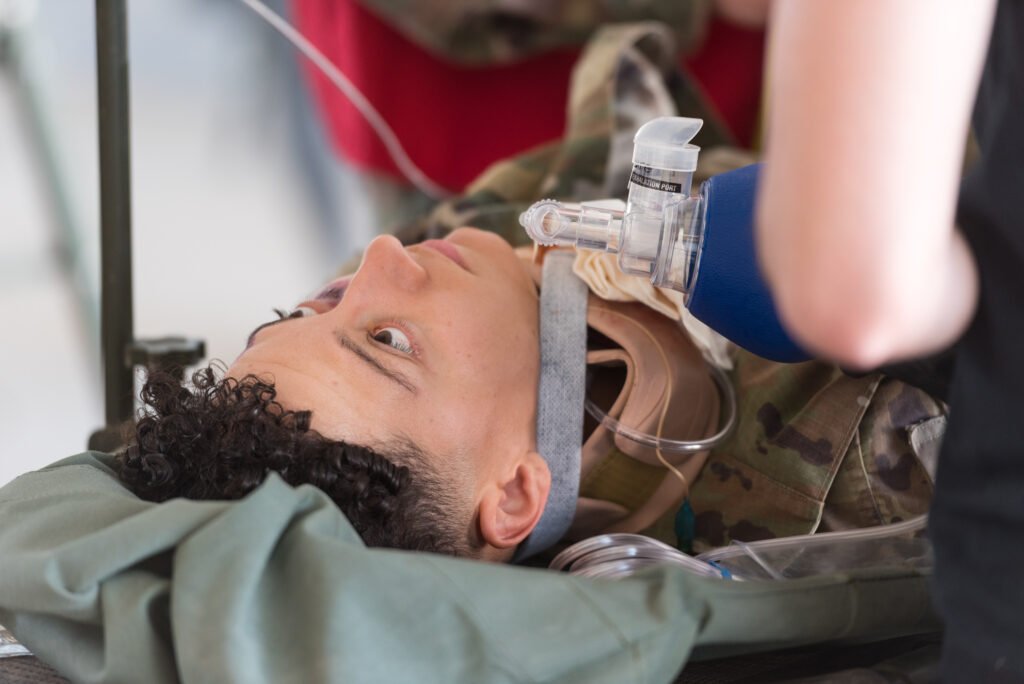
A mass casualty incident is an emergency event that produces a number of patients exceeding what the responding emergency medical system can manage through its normal day-to-day operating procedures, requiring activation of expanded protocols, additional resources, and modified triage approaches. The defining characteristic is this mismatch between patient needs and available resources, rather than any specific casualty threshold, since the same event could be routine in one jurisdiction and overwhelming in another.
Common Causes
Mass casualty incidents arise from a wide range of events, including transportation accidents such as bus or train crashes, natural disasters such as earthquakes or severe storms, industrial accidents involving hazardous materials or structural failures, and deliberate acts of violence including active shooter situations or bombings. Each type of event can present distinct patterns of injury and distinct operational challenges, requiring emergency medical systems to maintain flexible protocols capable of adapting to the specific scenario encountered.
Response Protocols
Responding to a mass casualty incident typically involves rapid triage to identify and prioritize patients, establishment of designated treatment and transportation areas to organize the scene, and activation of mutual aid agreements to bring in additional ambulances, personnel, and hospital capacity from surrounding areas. Effective response depends heavily on advance planning and regular exercises, since the specific coordination challenges of a mass casualty incident differ substantially from routine single-patient emergency calls that most personnel handle far more frequently.
Scalable Response Protocols
Emergency medical systems typically maintain tiered mass casualty response protocols that scale based on the number of patients involved, with smaller incidents requiring modest adjustments to normal operations while larger events trigger full activation of mutual aid, incident command structures, and expanded triage areas. This scalability allows a single protocol framework to address everything from a multi-vehicle highway crash to a large-scale industrial explosion without requiring an entirely separate plan for every possible scale of incident.
Psychological Impact on Responders
Mass casualty incidents place extraordinary psychological demands on responders, who must make rapid life-and-death triage decisions while witnessing severe trauma, often involving multiple patients simultaneously competing for limited attention and resources. Recognizing this impact, many emergency medical systems now incorporate post-incident psychological support and debriefing as a standard part of mass casualty response protocols, acknowledging that the emotional toll of these events requires deliberate attention rather than being left for responders to manage entirely on their own.
Hospital Surge Capacity
A mass casualty incident places demands not only on field response resources but also on receiving hospitals, which must rapidly expand their own surge capacity to accommodate a sudden influx of patients beyond their normal operating volume. Hospital emergency preparedness plans typically address this surge capacity directly, including procedures for activating additional staff, converting non-emergency spaces for patient care, and coordinating with other area hospitals to distribute patients according to available capacity and specialized treatment needs.
Communication Challenges
Mass casualty incidents often strain communication systems precisely when clear communication matters most, as multiple responding agencies, hospitals, and command personnel all attempt to coordinate simultaneously, sometimes overwhelming radio channels or cellular networks already stressed by public use during a visible emergency. Many jurisdictions have developed dedicated communication protocols and backup systems specifically to address this challenge, recognizing that communication failure during a mass casualty incident can be just as damaging to outcomes as any physical resource shortage.
After-Action Review and Lessons Learned
Following a mass casualty incident, agencies typically conduct structured after-action reviews examining what worked well and what did not across every phase of the response, from initial dispatch through hospital discharge of the last patient. These reviews feed directly into revised protocols, additional training, and sometimes changes to resource allocation or equipment, reflecting an ongoing commitment to improving mass casualty response capability based on genuine operational experience rather than assumption alone.
Looking Ahead
As the range of events capable of producing mass casualties continues to broaden, including concerns about large-scale coordinated attacks and infrastructure failures affecting dense populations, emergency medical systems continue to invest in scalable protocols, cross-training, and regional coordination mechanisms designed to handle an increasingly varied set of potential mass casualty scenarios.
Summary of Protective Role
Ultimately, the mass casualty incident concept exists precisely to trigger the expanded protocols, mutual aid, and modified triage approaches needed once an event exceeds routine capacity, ensuring that the response scales appropriately to match the true scope of need rather than remaining locked into procedures designed for ordinary, single-patient calls.
Role of Regional Trauma Systems
Established regional trauma systems, which coordinate pre-designated roles and transfer protocols among hospitals of varying trauma care capability, significantly improve mass casualty incident outcomes by ensuring that severely injured patients are directed to facilities actually equipped to manage their specific injuries, rather than overwhelming the nearest hospital regardless of whether it has the specialized capability a particular patient actually needs.
That continuous refinement is what allows mass casualty response capability to keep improving even as the specific events that test it remain mercifully rare for any given community.
Investing in that preparation before an incident occurs is what ultimately determines how well a community responds when one finally does.
Final Considerations
Every community benefits from knowing, well before any crisis, exactly how its systems would scale if local capacity were ever truly overwhelmed.
That advance planning makes all the difference when minutes truly count.
That foresight saves lives when it matters most.
It is foresight that pays for itself many times over.
Communities that plan ahead consistently fare better than those that do not.
More in Emergency Management and Response
Key facts
- Defined by resource availability relative to patient needs rather than a fixed casualty count
- Requires activation of expanded triage protocols and mutual aid resources
- Can result from transportation accidents, natural disasters, industrial incidents, or acts of violence
Related concepts
Sources
- Federal Emergency Management Agency
- National Association of Emergency Medical Technicians
Editorially reviewed by Specialty Digest Editorial TeamLast reviewed November 3, 2026Researched and drafted with AI assistanceReport an issue