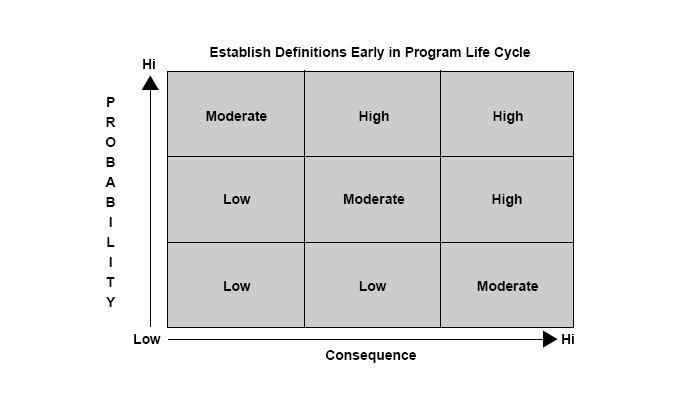
A risk assessment matrix is a structured visual tool used to evaluate and prioritize identified hazards by plotting the likelihood of an incident occurring against the severity of its potential consequences, typically arranged as a grid with multiple levels along each axis. By converting the comparison of different risks into a shared visual format, the matrix helps organizations allocate limited safety resources toward the hazards that genuinely pose the greatest combined threat rather than those that happen to be most visible or recently discussed.
Matrix Structure and Scoring
Most risk matrices use a grid ranging from three-by-three to five-by-five categories, with likelihood ranging from rare to almost certain and severity ranging from negligible to catastrophic, producing a combined score or color code, commonly green for low risk, yellow for moderate risk, and red for high risk, at the intersection of each pairing. This visual simplicity allows safety personnel and managers without specialized risk analysis training to quickly understand relative risk levels across many different hazards evaluated using the same consistent scale.
Limitations and Proper Use
While valuable for prioritization, risk matrices have recognized limitations, including the inherent subjectivity involved in assigning likelihood and severity ratings, the tendency for different assessors to rate the same hazard differently without calibration training, and the risk of oversimplifying genuinely complex hazards into a single combined score. Organizations that use risk matrices effectively typically supplement them with clear rating definitions, assessor training, and periodic calibration exercises to improve consistency across different evaluators and over time.
Customizing the Matrix
Organizations often customize risk matrix definitions to reflect their specific operating context, since a severity level that might be considered catastrophic in one industry, such as a single fatality, might require different calibration in another context involving different scales of potential harm, such as environmental or financial consequences in addition to safety impacts. This customization ensures the matrix produces genuinely meaningful prioritization for the specific organization using it rather than applying generic categories that may not fit its actual risk profile.
Integration with Broader Risk Management
A risk assessment matrix typically functions as one component within a broader risk management process, feeding its prioritized output into subsequent steps such as control selection, resource allocation, and entry into a formal risk register for ongoing tracking. Used in isolation, without this connection to subsequent action, a matrix exercise risks becoming merely an academic classification activity rather than a genuine driver of improved safety outcomes.
Training Assessors for Consistency
Because risk matrix ratings ultimately depend on human judgment, training assessors to apply likelihood and severity definitions consistently is essential to producing meaningful, comparable results across an organization. Calibration exercises, in which multiple assessors independently rate the same set of sample hazards and then discuss discrepancies, help identify and correct systematic differences in interpretation before they distort organization-wide risk prioritization decisions based on inconsistent underlying ratings.
Communicating Risk to Non-Specialists
One of the matrix greatest practical strengths lies in its ability to communicate relative risk levels to audiences without specialized safety training, including senior executives, board members, or external stakeholders who need to understand prioritization decisions without working through detailed technical analysis themselves. The visual, color-coded format allows these audiences to grasp at a glance which risks demand the most urgent attention, supporting more informed decision making even among those without deep technical expertise in risk assessment methodology.
Summary of Protective Role
Despite its inherent simplifications, the risk assessment matrix remains a foundational tool precisely because it translates complex, multi-dimensional risk comparisons into a format that drives consistent, communicable prioritization decisions, provided organizations remain mindful of its limitations and invest in the assessor training needed to apply it reliably across many different hazard scenarios.
Role in Regulatory Compliance Demonstration
Many regulatory frameworks expect organizations to demonstrate a systematic approach to risk assessment, and a documented risk matrix process provides tangible evidence that hazards were evaluated using a consistent, defensible methodology rather than through ad hoc or undocumented judgment. This documentation can prove valuable not only for regulatory compliance but also in the event of litigation following an incident, where a demonstrated systematic risk assessment process can support an organization position that it acted reasonably given available information.
Used thoughtfully, with attention to its limitations, the matrix continues to earn its place as one of the most widely applied tools in occupational risk management.
Final Considerations
Few tools manage to combine this much analytical structure with this much ease of communication, which explains its persistence across industries with otherwise very different risk profiles and regulatory contexts.
Its simplicity is, in many respects, precisely the source of its lasting value as a practical safety management tool.
Closing Perspective
As organizations face an increasingly complex mix of hazards, from traditional physical risks to emerging technological and psychosocial concerns, the matrix flexible, scalable structure helps ensure that new categories of risk can be incorporated into existing prioritization processes without requiring an entirely new assessment framework each time.
It will likely remain a default starting point for risk prioritization for a long time to come.
That consistency, paired with its visual clarity, keeps it relevant even as the specific hazards organizations face continue to change.
Organizations that invest in using it well consistently make better-informed, more defensible safety decisions.
A risk assessment matrix earns its value only when it is applied consistently across teams and revisited as conditions change. Organizations that treat the matrix as a living reference, rather than a static chart filed away after one meeting, tend to make steadier safety progress over time.
More in Workplace Risk and Hazard Assessment
Key facts
- Typically organized as a grid with likelihood on one axis and severity on the other
- Produces a risk rating, often color-coded, that guides prioritization of control measures
- Simplifies complex risk comparisons into a consistent, easily communicated visual format
Related concepts
Sources
- Occupational Safety and Health Administration
- International Organization for Standardization
Editorially reviewed by Specialty Digest Editorial TeamLast reviewed November 3, 2026Researched and drafted with AI assistanceReport an issue