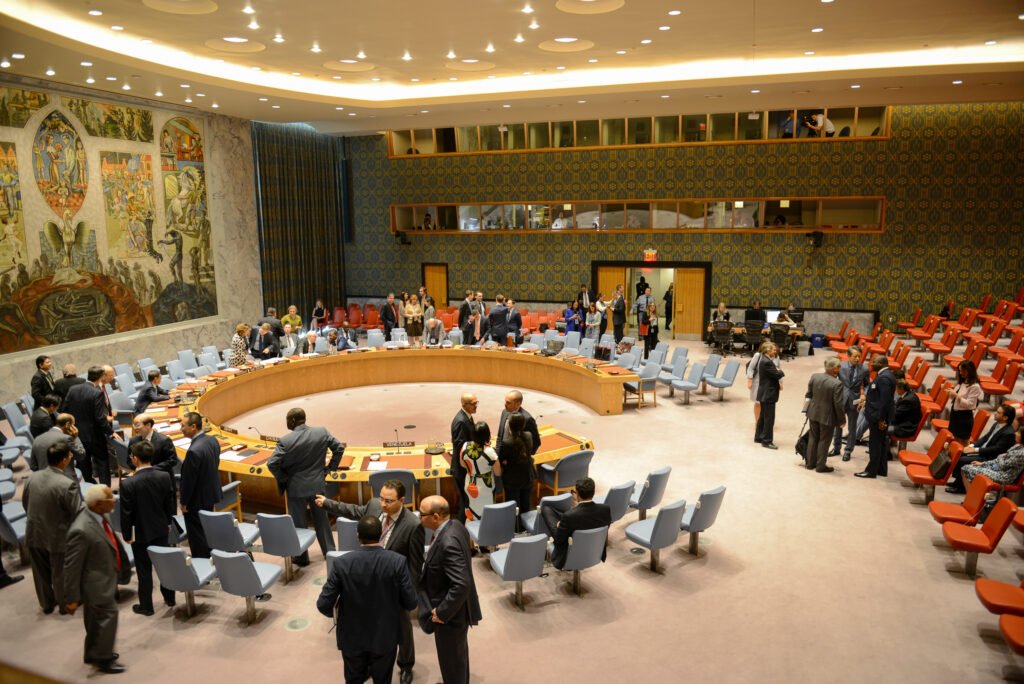
Overview
Geopolitical risk analysis is the discipline of assessing how political instability, conflict, and shifting alliances abroad might affect the interests of a government, military, or company. It blends regional expertise with economic and military data to produce forward-looking judgments rather than simple historical accounts of what has already happened.
Applications
National security planners use geopolitical risk analysis to anticipate crises before they erupt, informing decisions about troop deployments, diplomatic posture, and alliance commitments. Multinational corporations rely on similar analysis to decide where to invest, how to insure supply chains against disruption, and when to pull staff out of a deteriorating country. Analysts typically build scenarios around key uncertainties, such as an election outcome or a border dispute, rather than offering a single forecast.
Methods and Tools
Analysts combine several methods to produce usable geopolitical risk assessments. Country specialists contribute deep regional knowledge about political institutions, elite rivalries, and historical grievances that shape how a crisis might unfold. Economists supply data on trade dependencies, currency stability, and fiscal health, since economic stress often precedes or accompanies political instability. Scenario planning exercises force analysts to consider multiple plausible futures rather than a single forecast, helping decision-makers prepare contingencies for outcomes that may seem unlikely but would be highly consequential if they occurred.
Private Sector Applications
Multinational corporations maintain or contract geopolitical risk teams to guide decisions about where to build factories, source materials, or station employees. A company with supply chains running through a politically volatile region may use risk analysis to diversify suppliers, purchase political risk insurance, or build contingency plans for evacuating staff, treating geopolitical instability as a business risk comparable to currency fluctuation or natural disaster.
Limitations of Forecasting
Geopolitical risk analysis faces an inherent limitation: political events, especially sudden ones like coups, assassinations, or popular uprisings, are notoriously difficult to predict with precision even by experienced specialists. Analysts therefore often frame their work in terms of probability ranges and warning indicators rather than confident single-outcome predictions, acknowledging that surprise remains a persistent feature of international politics despite ever more sophisticated analytical tools.
Indicators Analysts Track
Risk analysts monitor a recurring set of indicators thought to precede instability, including rising inflation, youth unemployment, contested elections, and signs of factional splits within a ruling elite. No single indicator reliably predicts a crisis on its own, so analysts weigh combinations of signals against a countrys specific history and institutional strength, recognizing that similar indicators can produce very different outcomes depending on local context.
Integration with Other Disciplines
Geopolitical risk analysis overlaps substantially with traditional intelligence analysis, though it often serves commercial as well as governmental clients and draws more heavily on open economic and financial data than on classified sources. Many practitioners move between government intelligence careers and private risk consultancies, carrying analytic frameworks developed in one setting into the other and gradually blurring the line between public and private sector risk assessment practice.
Data Challenges
Reliable data is often scarcest in precisely the countries where geopolitical risk is highest, since authoritarian governments may suppress or manipulate economic statistics, and ongoing conflict can make independent verification of conditions on the ground difficult or dangerous. Analysts must therefore triangulate among official statistics, satellite imagery, social media activity, and field reporting from journalists or local contacts, each carrying its own biases and limitations that must be weighed carefully.
Risk Analysis and Policy Response
Governments use geopolitical risk assessments not only to anticipate crises but to shape preventive policy, such as targeted diplomatic engagement, economic assistance, or quiet contingency planning well before a situation becomes acute. Early identification of rising risk can open a window for diplomatic intervention that narrows considerably once a crisis becomes public and entrenched positions harden among the parties involved.
Scenario Planning in Practice
Beyond single forecasts, many risk teams build structured scenario sets describing several plausible paths a situation could take, each paired with specific indicators that would signal movement toward that path. This approach helps decision-makers prepare flexible contingency plans rather than betting entirely on one predicted outcome, which proves especially valuable given how often real events combine elements of multiple anticipated scenarios rather than following any single one precisely.
Emerging Risk Categories
Analysts increasingly incorporate newer risk categories into traditional frameworks, including climate-driven resource scarcity, pandemic disruption, and the destabilizing effects of disinformation campaigns, each of which can interact with more familiar political and economic risk factors in ways that make a nations overall risk profile more complex than older frameworks focused narrowly on conflict and regime stability alone.
Communicating Risk to Decision-Makers
Translating complex analysis into clear, actionable guidance for executives or officials without specialized regional expertise is itself a distinct skill, requiring risk analysts to convey genuine uncertainty honestly while still giving decision-makers enough clarity to act, a balance that separates effective risk communication from either false confidence or unhelpful hedging that leaves no clear guidance at all.
As global interdependence deepens, geopolitical risk analysis increasingly matters not only to governments and large corporations but to a widening circle of institutions, insurers, investors, and even universities, that must account for instability abroad when planning their own long-term commitments.
Universities and think tanks increasingly offer dedicated graduate programs in geopolitical and political risk analysis, reflecting growing recognition of the field as a distinct professional discipline rather than simply a subset of broader international relations or economics training.
Some firms now supplement traditional analyst judgment with machine learning models trained on historical instability data, though most practitioners treat these tools as a useful input rather than a replacement for the contextual judgment that experienced regional specialists bring to any assessment.
More in National Security and Intelligence
Key facts
- Used by governments, militaries, and multinational corporations alike.
- Draws on country expertise, economic data, and scenario planning.
Related concepts
Quick checkWho uses geopolitical risk analysis?Show answer
Governments, intelligence agencies, militaries, and multinational businesses planning around instability abroad.
Sources
- World Economic Forum, Global Risks Report
Editorially reviewed by Specialty Digest Editorial TeamLast reviewed November 4, 2026Researched and drafted with AI assistanceReport an issue