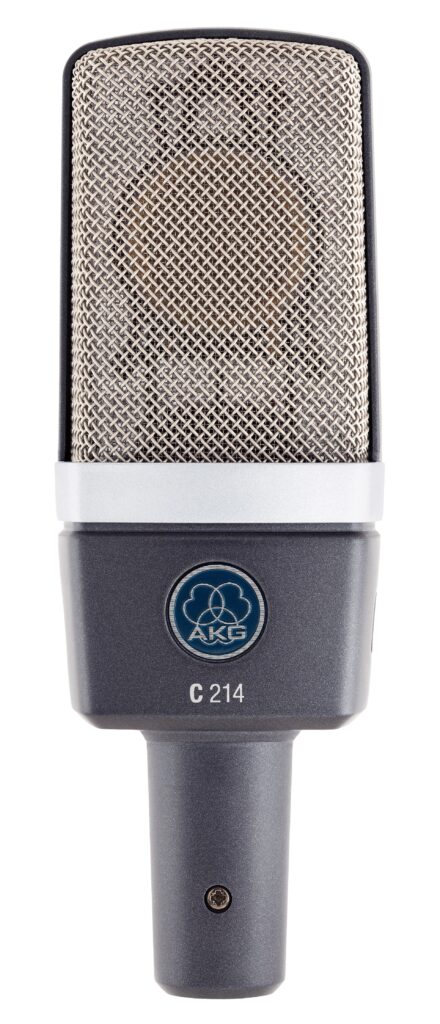
Speech generation is the use of artificial intelligence to produce spoken language. The most common form turns written text into audio, which is called text-to-speech or speech synthesis. Other forms convert one person’s voice into another’s, translate speech from one language to another while keeping the voice, or produce spoken replies in a conversation with a digital assistant. It is a major part of audio generation and a basic building block of conversational AI, accessibility tools, audiobooks and digital characters.
History of speech generation
People have tried to build talking machines for centuries. In 1939, Bell Labs demonstrated the Voder, a keyboard-operated device that produced recognizable speech. Computer synthesis began in the 1950s and 1960s, and in the 1980s, the DECtalk system became known as the voice of physicist Stephen Hawking. Concatenative methods in the 1990s stitched together recorded units of speech, which sounded natural but was inflexible. Statistical parametric methods using hidden Markov models were more flexible but sounded buzzy. In 2016, DeepMind’s WaveNet generated raw audio with a neural network and set a new standard of naturalness. Tacotron, FastSpeech, VITS and later diffusion and language-model-based systems made synthetic voices expressive, fast and able to imitate new speakers from a few seconds of audio.
How speech generation works
A typical neural pipeline has these stages.
- Text analysis: the system normalizes the text, expanding numbers, dates and abbreviations, and converts it into phonemes, the basic units of sound.
- Prosody and acoustic modeling: a neural network, often a transformer, predicts pitch, rhythm, duration and a spectrogram, which is a picture of how sound energy is spread across frequencies over time.
- Vocoding: a neural vocoder, such as HiFi-GAN, converts the spectrogram into a waveform.
- Conditioning on speaker and style: speaker embeddings, emotion tags or prompts let one model speak in many voices and moods.
Newer end-to-end systems perform these steps in a single model, and some treat speech as discrete tokens that a language model predicts, so that a short audio sample serves as a prompt for the voice.
Types of speech generation
- Text-to-speech: reads written text aloud. See text-to-speech.
- Voice cloning: reproduces a particular person’s voice from a recording.
- Voice conversion: changes the identity of a speaker while keeping the words and timing.
- Speech-to-speech translation: translates spoken language and speaks the result in the target language.
- Conversational speech: produces real-time spoken replies with natural pauses and intonation for voice assistants.
Applications
Speech generation reads screens and documents for blind and low-vision users, gives a voice to people who cannot speak through augmentative communication devices, and helps people with dyslexia. It narrates audiobooks, news and online courses, powers navigation and smart speakers, answers customer calls, dubs films and videos into other languages and voices characters in games. Banks, hospitals and transport systems use it for automated announcements. Voice banking lets people at risk of losing speech preserve a synthetic version of their own voice.
Quality and evaluation
Quality is judged by intelligibility, naturalness, speaker similarity and emotional appropriateness. Listeners score samples on a five-point mean opinion scale, and researchers also measure word error rate by running a speech recognizer on the output. See speech-to-text. Latency matters for conversation, since a long delay makes dialogue unnatural.
Limitations
Models may mispronounce names, foreign words or homographs such as read and lead, and may produce the wrong emphasis for a sentence. Emotional range can be limited or inconsistent. Performance varies across languages and accents, with fewer high-quality voices for languages with little data. Long recordings can drift in tone. Cloned voices may not reproduce the speaker’s habits in unusual situations.
Risks and ethics
The same technology that helps people can deceive them. Scammers have cloned voices of family members or executives to demand money, and synthetic speech has been used in robocalls that impersonated political figures. See deepfake. Voice actors fear unauthorized use of their voices. Good practice requires clear consent from the speaker, disclosure that a voice is synthetic, secure handling of voice data, and watermarking or detection tools. Regulators in several countries have restricted deceptive synthetic voices in calls and elections.
A worked example
A library wants to offer audio versions of local history pamphlets. Staff choose a licensed text-to-speech service with a calm voice, prepare the text by spelling out abbreviations and adding pronunciation hints for place names, and generate the audio. A volunteer listens to each recording and corrects errors. The library labels the recordings as synthetic voice and publishes transcripts, so that the material is available to listeners and readers alike.
Speech generation in accessibility and education
For many users, synthetic speech is not a novelty but a daily tool. Screen readers let blind users browse the web, read messages and write documents. Students with reading difficulties follow along with highlighted text while a natural voice reads aloud. Language learners use synthetic voices to hear pronunciation at slow and normal speeds, and teachers create listening exercises in minutes. Because modern voices can be adjusted for speed, pitch and style, users can choose a voice they find comfortable for long periods of listening.
Design choices for builders
Teams that add speech generation to a product face practical decisions. Cloud services give high quality and many voices but send text to a provider and add latency, while on-device models protect privacy and work offline but are smaller. Developers should offer speed controls, support markup that specifies pronunciation, test with real names and technical terms and provide a text alternative. They should also decide whether the voice will present itself as human. Many guidelines advise telling users when they are talking to a synthetic voice, especially in customer service and healthcare calls.
Future directions
Researchers are working on voices that express emotion more subtly, handle interruptions and overlapping speech in conversation, switch languages within a sentence and require very little data to adapt to a new speaker. Better watermarking and detection are also active areas, because trust in recorded speech depends on the ability to verify its source.
FAQs
Is speech generation the same as text-to-speech? Text-to-speech is the most common type. Speech generation also includes voice conversion, cloning and conversational replies.
Can AI speak in my own voice? Yes, with a recording of your voice, some services can build a clone, and you should use only services that require your consent.
How can I tell whether a voice is synthetic? It is difficult by ear alone, so look for disclosure labels, provenance data and trusted sources.
More in Generative AI
Key facts
- Early speech synthesizers such as Bell Labs' Voder, shown in 1939, produced speech through human operated controls.1
- Neural models such as WaveNet and Tacotron made synthetic voices much more natural from 2016 onward.2
- Voice cloning from short samples raises risks of fraud, impersonation and non-consensual use of a person's voice.3
Related concepts
Quick checkHow does a modern system turn text into speech?Show answer
It converts text into phonetic and prosodic features, uses a neural acoustic model to predict a spectrogram, and then a vocoder turns that spectrogram into an audio waveform.
Sources
- Taylor, Text-to-Speech Synthesis, Cambridge University Press, https://www.cambridge.org/core/books/texttospeech-synthesis/
- Shen et al., Natural TTS Synthesis by Conditioning WaveNet on Mel Spectrogram Predictions, https://arxiv.org/abs/1712.05884
- U.S. Federal Trade Commission, Preventing the Harms of AI-enabled Voice Cloning, https://www.ftc.gov/policy/advocacy-research/tech-at-ftc/2024/11/preventing-harms-ai-enabled-voice-cloning
Editorially reviewed by Specialty Digest Editorial TeamLast reviewed November 17, 2026Researched and drafted with AI assistanceReport an issue