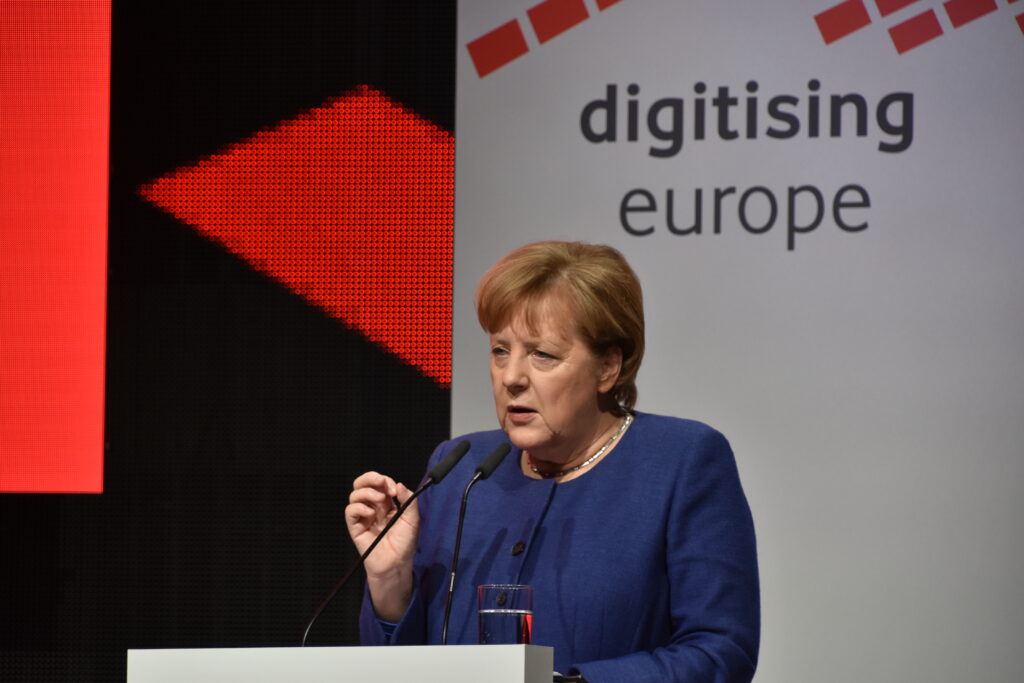
Angela Merkel (born 1954) is a German politician who served as Chancellor of Germany from 2005 to 2021, becoming the first woman to hold the office and one of the longest-serving heads of government in modern German history. Her sixteen-year tenure placed her at the center of major European and global events, including the eurozone financial crisis, the 2015 European migration crisis, and the early stages of the COVID-19 pandemic, establishing her as one of the most influential political leaders of the early twenty-first century.
Angela Merkel at a Glance
| Full name | Angela Dorothea Merkel (nee Kasner) |
| Born | July 17, 1954, Hamburg, West Germany |
| Known for | Chancellor of Germany 2005-2021; leadership during the eurozone crisis and 2015 migration crisis |
| Occupation | Politician, former research scientist |
| Major events | Election as Chancellor in 2005; eurozone debt crisis response; 2015 refugee policy |
| Nationality | German |
Early Life and Scientific Career
Merkel was born in Hamburg, West Germany, but grew up in East Germany after her father, a Lutheran pastor, relocated the family shortly after her birth. She studied physics at the University of Leipzig and went on to earn a doctorate in quantum chemistry, working as a research scientist at the Central Institute for Physical Chemistry in East Berlin until the fall of the Berlin Wall in 1989 opened new political opportunities.
Entry into Politics
Merkel entered politics during the tumultuous period of German reunification, joining the Democratic Awakening movement before aligning with the Christian Democratic Union, which became her political home for the remainder of her career. Her rapid political rise was aided by Chancellor Helmut Kohl, who appointed her to cabinet positions early in her career, giving her a foundation of experience in federal governance during the 1990s.
Rise to Party Leadership
Merkel became leader of the Christian Democratic Union in 2000 following a party financing scandal that damaged the standing of several senior party figures, positioning her as a reform candidate relatively untainted by the controversy. Her ascent to party leadership was notable both for her gender and her East German background, both unusual characteristics for a leader of a historically West German, male-dominated conservative party.
Becoming Chancellor
Merkel led the Christian Democratic Union to victory in the 2005 federal election, becoming Chancellor of Germany at the head of a coalition government and the first woman to hold the office in German history. Her initial government formed a grand coalition with the rival Social Democratic Party, a governing arrangement she would return to multiple times during her chancellorship depending on electoral outcomes.
Response to the Global Financial Crisis
Merkel’s government navigated the 2008 global financial crisis and its aftermath, implementing measures to stabilize the German banking sector while advocating for fiscal discipline across the broader European Union. Her approach to crisis management established her reputation for cautious, methodical decision-making that would characterize her leadership style throughout her chancellorship.
The Eurozone Debt Crisis
Merkel played a central role in managing the eurozone sovereign debt crisis that began in 2009, working with other European leaders and institutions to develop financial rescue packages for Greece and other struggling eurozone economies. Her insistence on austerity measures and fiscal responsibility as conditions for financial assistance made her a pivotal and sometimes controversial figure in European economic policy during this period, with supporters crediting her approach for preserving the eurozone and critics arguing the austerity measures deepened economic hardship in affected countries.
The 2015 Migration Crisis
Merkel’s government made the significant decision in 2015 to keep German borders open to hundreds of thousands of refugees arriving primarily from Syria and other conflict zones, a policy that became one of the defining and most debated decisions of her chancellorship. This decision generated substantial domestic political controversy and contributed to the rise of right-wing political movements in Germany, while also establishing Merkel as an internationally recognized figure for her stance on humanitarian response to the crisis.
Energy Policy Decisions
Merkel’s government made significant changes to German energy policy during her tenure, most notably accelerating the phase-out of nuclear power following the 2011 Fukushima nuclear disaster in Japan, a decision that significantly reshaped Germany’s energy infrastructure planning. Her administration also pursued expanded renewable energy development as part of Germany’s broader energy transition policy known as the Energiewende.
International Diplomacy and Leadership
Merkel established herself as a central figure in international diplomacy throughout her chancellorship, maintaining working relationships with successive American presidents, Russian leadership, and other heads of state while representing German and European interests on the global stage. Her diplomatic approach was widely characterized as pragmatic and consensus-oriented, and she was frequently described by international commentators as a de facto leader of the European Union during periods of crisis.
Domestic Policy Achievements
Merkel’s government implemented various domestic policy initiatives during her sixteen years in office, including expansions to childcare provisions, minimum wage legislation, and continued investment in German infrastructure and industrial competitiveness. Her government also navigated Germany through demographic and economic challenges associated with an aging population and the ongoing integration of the former East German states.
Leadership During the COVID-19 Pandemic
Merkel led Germany’s initial response to the COVID-19 pandemic beginning in 2020, implementing public health measures and economic support programs while drawing on her scientific background to communicate pandemic response policy to the German public. Her approach during this period, in the final years of her chancellorship, was widely credited with helping Germany navigate the early stages of the pandemic relatively effectively compared to some other major economies.
Departure from Office
Merkel announced in 2018 that she would not seek a fifth term as Chancellor, stepping back from the leadership of her party before ultimately leaving the chancellorship following the 2021 federal election, which brought a coalition government led by her eventual successor to power. Her decision to step away from a position she had held for sixteen years was widely regarded as a deliberate and carefully managed political transition, unusual in its orderliness among long-serving heads of government.
Legacy
Angela Merkel remains one of the most significant political figures of the early twenty-first century, remembered for her steady leadership through multiple overlapping crises and for breaking significant barriers as the first woman to lead Germany. Her sixteen years in office left a lasting imprint on German and European politics, and her approach to crisis management, European integration, and international diplomacy continues to be studied and debated by historians and political analysts.
References
- New World Encyclopedia – Angela Merkel
- History.com – Angela Merkel
- History.com – Angela Merkel (Germany)
Frequently Asked Questions
What is Angela Merkel best known for? She is best known as the first woman to serve as Chancellor of Germany, leading the country through the eurozone crisis and the 2015 migration crisis.
How long did Angela Merkel serve as Chancellor? She served as Chancellor of Germany from 2005 to 2021, one of the longest tenures of any modern German head of government.
What was Angela Merkel’s background before politics? She trained as a physicist and earned a doctorate in quantum chemistry, working as a research scientist in East Germany before entering politics in 1989.
What was Merkel’s response to the 2015 migration crisis? Her government kept German borders open to hundreds of thousands of refugees, a decision that became one of the most debated of her chancellorship.
Editorially reviewed by Specialty Digest Editorial TeamLast reviewed November 29, 2026Researched and drafted with AI assistanceReport an issue