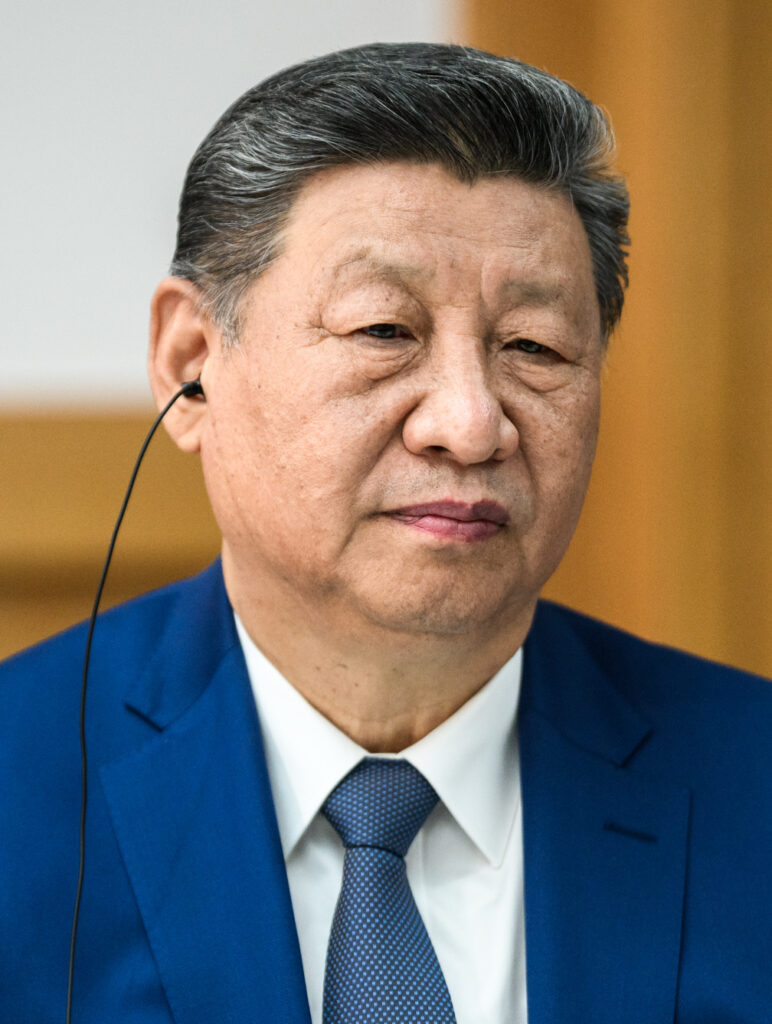
Xi Jinping (born 1953) is a Chinese politician who has served as General Secretary of the Communist Party of China since 2012 and President of the People’s Republic of China since 2013, making him the most powerful Chinese leader in decades. His tenure has been marked by a significant consolidation of political authority, an ambitious foreign policy agenda, and sweeping economic and anti-corruption initiatives that have reshaped China’s role on the world stage.
Xi Jinping at a Glance
| Full name | Xi Jinping |
| Born | June 15, 1953, Beijing, China |
| Known for | General Secretary of the Communist Party of China since 2012; President of China since 2013; Belt and Road Initiative |
| Occupation | Politician |
| Major events | Election as General Secretary in 2012; launch of the Belt and Road Initiative in 2013; removal of presidential term limits in 2018 |
| Nationality | Chinese |
Early Life and the Cultural Revolution
Xi Jinping was born in Beijing, the son of Xi Zhongxun, a prominent Communist Party revolutionary and official who later fell from political favor during internal party purges. As a teenager during the Cultural Revolution, Xi was sent to work in rural Yanchuan County in Shaanxi province, an experience of hard agricultural labor that he has since described as formative to his political development and personal resilience.
Early Party Career
Xi joined the Communist Party of China in 1974 and began a steady rise through provincial party administration, holding a series of positions in Hebei, Fujian, and Zhejiang provinces over more than two decades. His provincial leadership roles, particularly in Fujian and Zhejiang, were associated with significant economic development and growing administrative reputation that positioned him for advancement to national leadership.
Rise to National Leadership
Xi was appointed to the Politburo Standing Committee, the Communist Party’s highest decision-making body, in 2007, and was widely viewed from that point as the leading candidate to succeed Hu Jintao as China’s top leader. He was elected General Secretary of the Communist Party of China in November 2012 and assumed the presidency of the People’s Republic of China in March 2013, consolidating the country’s most senior party and state positions.
Anti-Corruption Campaign
Xi launched an extensive anti-corruption campaign shortly after assuming power, targeting officials across all levels of the party and government, including senior military and political figures previously considered untouchable. This campaign has been credited with addressing genuine corruption concerns within the party while also serving, according to many analysts, as a mechanism for consolidating Xi’s political authority by removing potential rivals from positions of influence.
The Belt and Road Initiative
Xi launched the Belt and Road Initiative in 2013, a massive global infrastructure and investment program intended to expand trade connectivity between China and countries across Asia, Africa, Europe, and beyond. This initiative has become one of the signature elements of Xi’s foreign policy legacy, substantially expanding Chinese economic influence and infrastructure investment across dozens of participating countries.
Constitutional Changes and Term Limits
In 2018, China’s National People’s Congress approved constitutional amendments removing presidential term limits, a change that cleared the way for Xi to remain in power indefinitely beyond the previous two-term limit established in the 1980s. This constitutional revision represented a significant departure from the collective leadership norms that had generally characterized Chinese politics since the era of Deng Xiaoping.
Economic Policy
Xi’s economic agenda has emphasized a blend of continued market-oriented growth alongside expanded state control over strategic industries, technology development, and financial regulation. His government has pursued initiatives aimed at reducing economic inequality, promoting domestic technological self-sufficiency, and managing the challenges posed by a slowing growth rate following decades of rapid economic expansion.
Foreign Policy and International Relations
Xi has pursued an assertive foreign policy agenda, expanding China’s global diplomatic and military presence while navigating increasingly complex relationships with the United States and other major powers. His government has emphasized China’s growing role as a global power, pursuing expanded influence in international institutions and positioning China as an alternative pole of global leadership alongside the United States.
Response to the COVID-19 Pandemic
Xi’s government implemented an extensive and strict pandemic response strategy, including extended lockdowns and mass testing programs, that kept reported case numbers relatively low for much of the pandemic before the policy was significantly relaxed in late 2022. The scale and duration of China’s pandemic response became one of the most closely observed public health policies globally during this period.
Military Modernization
Xi has overseen a significant modernization and expansion of the People’s Liberation Army during his tenure, emphasizing naval expansion, technological advancement, and increased military readiness as part of a broader strategy to enhance China’s regional and global military standing. This modernization effort has been closely watched by neighboring countries and international observers given its implications for regional security dynamics in East Asia.
Ideology and Party Doctrine
Xi’s political philosophy, formally titled Xi Jinping Thought on Socialism with Chinese Characteristics for a New Era, was enshrined in the Communist Party constitution in 2017, placing his ideological contributions alongside those of prior paramount leaders such as Mao Zedong and Deng Xiaoping. This formal elevation of his political thought into party doctrine is widely regarded by analysts as a significant marker of his consolidated authority within the party’s ideological and institutional structure.
Environmental and Technology Policy
Xi’s government has pursued significant investment in renewable energy and environmental initiatives, positioning China as a major global producer of solar panels, electric vehicles, and other clean energy technologies, even as the country has continued to rely heavily on coal for domestic energy production. His administration has similarly emphasized developing domestic capacity in semiconductors and advanced technology sectors, an effort shaped in part by growing international trade and technology restrictions affecting Chinese firms.
Cross-Strait Relations
Xi’s government has maintained a firm position on the eventual reunification of Taiwan with mainland China, increasing military and diplomatic pressure on the self-governing island while continuing to assert that the issue remains a core matter of Chinese sovereignty. This policy stance has become one of the most closely monitored elements of Xi’s foreign policy agenda given its significant implications for regional stability and relations with the United States and other Pacific nations.
Legacy
Xi Jinping remains one of the most powerful and closely observed political leaders in the contemporary world, remembered for his consolidation of political authority, his ambitious global infrastructure initiatives, and his effort to position China as a leading global power. His continuing leadership of both the Communist Party and the Chinese state places him among the most consequential figures in modern Chinese history, and his policies continue to be studied and debated by economists, historians, and international relations scholars.
References
Frequently Asked Questions
What is Xi Jinping best known for? He is best known as General Secretary of the Communist Party of China and President of China, known for consolidating political power and launching the global Belt and Road Initiative.
When did Xi Jinping come to power? He was elected General Secretary of the Communist Party of China in November 2012 and became President of China in March 2013.
What happened to China’s presidential term limits under Xi? In 2018, China’s National People’s Congress removed constitutional term limits on the presidency, allowing Xi to remain in power beyond the previous two-term restriction.
What is the Belt and Road Initiative? It is a global infrastructure and investment program Xi launched in 2013 to expand trade connectivity between China and countries across Asia, Africa, Europe, and beyond.
Editorially reviewed by Specialty Digest Editorial TeamLast reviewed November 29, 2026Researched and drafted with AI assistanceReport an issue